





Turning Down the Lights
A 'Dark Sky Community' isn't just a place that's dark. It's a town or an organised community that has made a conscious, official decision to preserve the night. This involves adopting quality outdoor lighting policies, educating citizens, and enforcing
rules to minimise light pollution. Overseen by the global non-profit DarkSky International, the designation is a badge of honour, signaling a commitment to protecting our natural nocturnal environment. To become one, a community must actively manage its lighting, ensuring lights are shielded, pointed downwards, and use warmer tones to prevent the skyglow that washes out the stars in most urban areas. It’s a community-wide effort to bring back the brilliance of the cosmos.
India’s Celestial Awakening
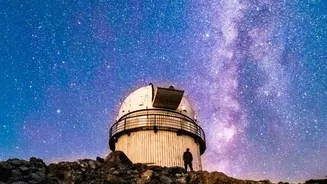
India is increasingly recognising the value of its dark skies. The benchmark was set in Ladakh with the establishment of the Hanle Dark Sky Reserve, the country's first. Situated high in the Himalayas, Hanle's pristine skies, free from city lights and pollution, made it a natural choice for both scientific research and tourism. The reserve, created through an agreement between local authorities and the Indian Institute of Astrophysics, restricts outdoor lighting and even vehicle headlights to protect the darkness. Following this success, Maharashtra's Pench Tiger Reserve became India's first Dark Sky Park in early 2024, blending wildlife conservation with astronomy. These pioneering projects have created a blueprint for other regions to follow.
Nashik’s Starry Ambition
The latest entrant in this movement is Udmal, a tribal village in Nashik's Surgana taluka, which is being developed as a Dark Sky Community. Recent reports from August 2026 confirm that the village gram sabha passed a resolution to conserve its dark skies. An administrative sanction of over ₹42 lakh has been approved to support this initiative, which includes assessing night-sky quality and installing responsible lighting. For Nashik, a district already famous for its vineyards and temples, this presents a new frontier for tourism. Its proximity to major urban centres like Mumbai and Pune makes it an ideal getaway for city dwellers yearning for a glimpse of the Milky Way, creating a new 'astro-tourism' circuit.
Udamalpet's Untapped Potential
While Nashik's Udmal is taking formal steps, the potential in Udamalpet, Tamil Nadu (often shortened to Udmal), is equally compelling. Located near the Anamalai Tiger Reserve, a biodiversity hotspot in the Western Ghats, the area possesses the natural darkness essential for a sky-gazing destination. The reserve's remote location and protected status mean light pollution is minimal. Developing astro-tourism here would complement its existing eco-tourism, which already attracts visitors for wildlife safaris and trekking. By promoting its dark skies, Udamalpet could attract a new kind of tourist—one who stays overnight, participates in guided astronomy sessions, and contributes to the local economy in a sustainable way.
The Economic Glow of Darkness
The benefits of becoming a dark sky destination extend far beyond pretty views. Astro-tourism is a growing global industry that can bring significant economic advantages. It encourages overnight stays, which leads to tourists spending more on accommodation, food, and local guides. Studies have shown that dark sky designations can dramatically increase visitor numbers and generate substantial local economic activity. This model promotes sustainable development, creating jobs and opportunities that don't rely on large-scale, environmentally damaging infrastructure. For communities in places like Nashik and the Anamalai region, it's a way to create a unique identity, attract high-value tourism, and preserve their natural heritage all at once.