





A Night for the History Books
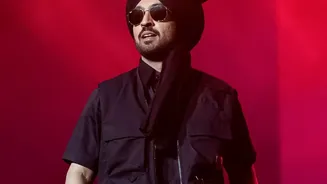
On September 12, 2026, London's iconic Wembley Stadium, a venue that has hosted legends like Queen and Michael Jackson, welcomed its first-ever Punjabi headliner. As Diljit Dosanjh appeared on stage, his now-famous declaration, “Punjabi aa gaye oye!”
was adapted for the moment: “Punjabi Aa Gaye Wembley Oye!”. The phrase wasn't just a greeting; it was a statement of arrival. The event, part of his 'Aura World Tour', saw nearly 90,000 fans turn the stadium into a massive celebration of Punjabi culture, music, and identity. For many in the diaspora, it was a moment of immense pride, watching an artist so firmly rooted in his heritage command one of the world's most famous stages.
The Art of the Tribute
While the night was filled with his own chart-topping hits like 'G.O.A.T.' and 'Lover', it was Dosanjh's handling of classic songs that truly stood out. A particularly powerful moment came when he performed a rendition of 'Sanson Ki Mala Pe', a qawwali famously associated with the legendary Ustad Nusrat Fateh Ali Khan. The atmosphere shifted from a high-energy bhangra party to a soulful, emotionally charged singalong, with thousands of phone lights illuminating the stadium. Dosanjh has often expressed his deep respect for the Pakistani maestro, acknowledging that singing his melodies is incredibly difficult but comes from a place of pure admiration. This wasn't an isolated event; he has consistently used his platform to honour the architects of Punjabi music, from Amar Singh Chamkila to Lal Chand Yamla Jatt and Kuldeep Manak.
More Than a Modern Remix
Dosanjh's approach goes far beyond simply remixing old songs. He acts as a cultural bridge, carefully selecting pieces of history and presenting them to a new, global audience that might otherwise never hear them. By performing Chamkila's songs, he not only pays homage but also re-contextualizes the folk legend's work for a generation that knows Dosanjh from Coachella and his film career. His method is not about overshadowing the original but about introducing it with reverence. He understands that for Punjabi music to have a future on the global stage, its past must be acknowledged and celebrated. This ability to blend traditional folk with modern hip-hop and pop sounds is a cornerstone of his international fame.
Connecting with the Global Diaspora
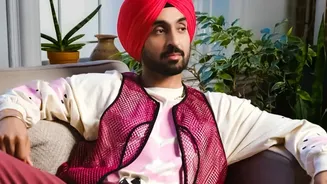
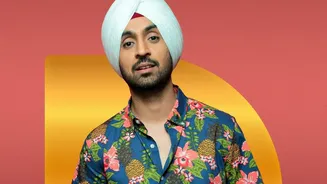
This unique blend of old and new is precisely why Dosanjh resonates so profoundly with the global South Asian diaspora. For second and third-generation Indians living in the UK, Canada, and the US, he provides a connection to their heritage that feels authentic yet contemporary. His music offers a sense of cultural pride without demanding assimilation. At the Wembley show, this was literally put on display with a “turban camp,” where anyone, regardless of background, could have a turban tied for free, transforming them into a “Punjabi for the night.” It’s this spirit of inclusivity and pride that has turned his concerts from mere musical events into cultural gatherings. He has made being Punjabi, and specifically a turban-wearing Sikh, a globally recognised symbol of style and confidence.