




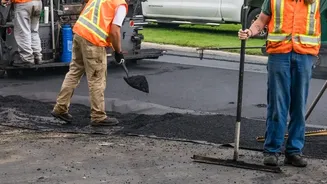


The Pothole Problem
Every driver in India knows the feeling: the bone-jarring thud of hitting an unexpected pothole. These menaces of the road are more than just an annoyance; they cause tyre damage, contribute to accidents, and cost municipal corporations crores in annual
repair costs. The primary culprit is water. Rainwater seeps into tiny, almost invisible microcracks in the asphalt. Over time, the pressure from traffic and temperature changes causes these small fissures to grow, eventually collapsing to form a pothole. Traditional repair methods are often a temporary fix, a patch on a recurring problem. But what if the road itself could fight back against this decay? Researchers are now turning to nature for a more durable solution.
The Science of Self-Healing Roads
The concept of self-healing asphalt mimics the way biological systems repair themselves. The technology works by embedding microscopic capsules containing a healing agent directly into the asphalt mix during production. These capsules lie dormant and protected until a microcrack forms. The stress of the crack ruptures the tiny capsules, releasing their contents. This healing agent then flows into the fissure, effectively sealing it from the inside before it can expand into a major pothole. Think of it like a built-in, automatic road crew that works at a microscopic level. There are several approaches being tested, but two of the most promising involve bio-binders: special oils and even living bacteria.
Bio-Binders: Just Add Water (or a Crack)
One of the most effective and sustainable healing agents is a familiar product: sunflower oil. Researchers have found that encapsulating oils like sunflower oil can effectively rejuvenate aged and brittle bitumen—the black, sticky binder that holds asphalt together. When a crack breaks the capsule, the oil is released, softening the aged binder and allowing it to flow and rebond, essentially healing the damage. Another futuristic approach uses specific strains of bacteria, such as Sporosarcina pasteurii. These microbes are mixed into the asphalt in dormant spore form, along with a calcium source and nutrients. When rainwater enters a new crack, it awakens the bacteria. As the bacteria feed, their metabolic process produces calcite, a form of limestone, which crystallises and seals the crack shut. This process is known as microbially induced calcium carbonate precipitation (MICP).
Benefits Beyond a Smoother Ride
The most obvious benefit of self-healing roads is a smoother, safer journey for commuters. But the advantages run much deeper. By healing microcracks as they form, the technology could dramatically extend the lifespan of our roads, potentially by 30-50%. This proactive repair reduces the need for constant, disruptive, and costly manual patching and resurfacing projects. This means less traffic congestion due to road work and significant long-term savings for taxpayers. Furthermore, using bio-based materials like oils derived from agricultural products or biomass waste offers a major environmental advantage. Indian institutions like CSIR have already developed 'bio-bitumen' from rice straw, reducing reliance on imported, fossil-fuel-based bitumen and providing a valuable use for agricultural waste.
From Lab to City Street
While much of the development has happened in labs, self-healing asphalt is no longer pure science fiction. Several pilot projects have been deployed around the world. In the Netherlands, a pioneer in this field, stretches of highway have been paved with self-healing asphalt containing steel fibres that are heated by an induction machine to melt the bitumen and seal cracks. While different from the bio-binder approach, it proves the concept's real-world viability. In India, the focus on bio-binders aligns perfectly with the 'Waste-to-Wealth' mission. CSIR-CRRI has successfully constructed a trial road section using its bio-bitumen technology on a national highway, demonstrating its performance under real traffic conditions. As the technology becomes more cost-effective and scalable, it could become a standard component in building the next generation of India’s infrastructure.