



As India eagerly awaits the expansion of its Vande Bharat sleeper fleet, a subtle design detail has captured the attention of seasoned rail travellers. A specific arrangement near the coach entrance is drawing comparisons to the iconic Rajdhani Express.
A Common Passenger Grievance
For anyone who has undertaken an overnight journey on Indian Railways, the berths located near the coach entrance and toilets can be a mixed blessing. In many long-distance trains, including the premium Rajdhani Express, these berths are exposed to frequent foot traffic. The constant opening and closing of doors, the movement of passengers and vendors, and the ambient light and noise from the vestibule area can often lead to a disturbed night's sleep. This has been a long-standing point of feedback from passengers who find it difficult to rest in these particular spots. The issue is most pronounced in AC 3-tier coaches, where the high density of passengers means more movement throughout the journey.
Vande Bharat Sleeper's New Approach
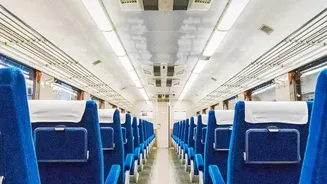
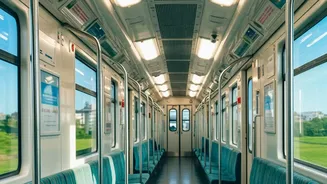
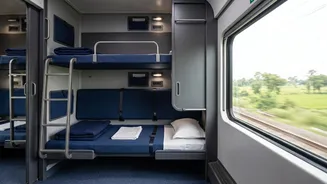
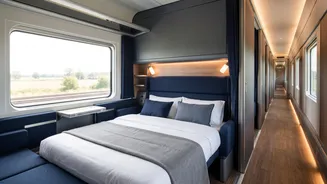
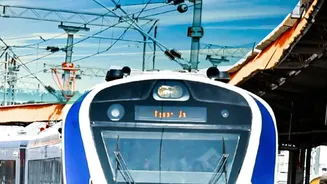
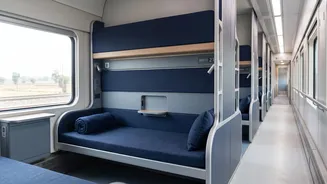
The new Vande Bharat sleeper trains, designed and manufactured by BEML in collaboration with Integral Coach Factory, appear to address this issue head-on. Recent videos and images of the prototype reveal a thoughtful change in the coach layout. The design introduces an automatic sliding door that separates the main passenger corridor from the entrance vestibule. Crucially, there is a distinct space or small passage between this sliding door and the first set of berths. This layout acts as a buffer zone, effectively distancing sleeping passengers from the noise and activity concentrated at the main coach door. A travel content creator, Dhananjay Kumar, recently highlighted this feature in a viral video, demonstrating how it creates a more secluded and quiet space for those occupying the first bay of berths.
The Rajdhani Comparison
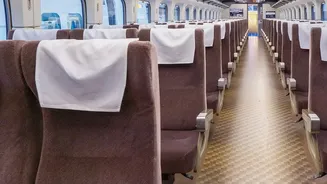
The comparison with Rajdhani Express is natural, as it has been the benchmark for premium overnight train travel in India for decades. In conventional Rajdhani coaches, especially older ones, the longitudinal berths are often immediately adjacent to the main passage leading to the exit, with only a curtain (in AC 2nd tier) or no partition at all (in AC 3rd tier) to shield them. While both trains aim to provide comfortable AC sleeper accommodation, the Vande Bharat is a self-propelled trainset, which allows for different internal configurations compared to the locomotive-hauled Rajdhani. The new design seems to leverage this flexibility to solve a classic passenger pain point, representing an evolution in coach layout focused on enhancing individual passenger experience.
More Than Just Doors and Berths
This design choice is part of a broader philosophy to elevate the entire journey experience on the Vande Bharat sleepers. Officials have highlighted that passenger comfort has been a primary focus, with features like betterer cushioned berths that surpass Rajdhani standards, improved ladders for accessing upper berths, and fully sealed gangways for a quieter, dust free environment. The trainsets are engineered for a jerk free ride at speeds up to 160 kmph, which, combined with noise insulation measures, aims to create a tranquil cabin space. The entrance redesign, while seemingly minor, is a key component of this mission, promising a more restful journey for everyone, regardless of their berth location.
The Passenger Verdict
The initial reaction to this design detail has been overwhelmingly positive online. Many social media users have praised the thoughtful layout, with some suggesting it should become the standard for all new coaches built for Indian Railways. The discussion highlights a growing appreciation for user centric design in public transport. While the overall aesthetics, speed, and modern amenities like sensor based lighting and advanced toilets are major selling points, it is often these practical, problem solving details that make the most significant difference in a traveller's journey. The new Vande Bharat sleeper, with its separated entrance area, seems to have already won over future passengers on this front.