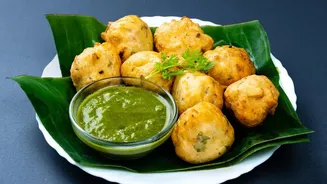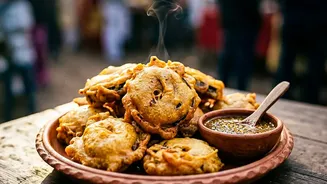

Perfect Your Batter Consistency
The single biggest reason for oily pakoras is a batter that is too thin. A runny batter doesn't cling to the bread properly and allows more oil to seep in. Your goal should be a medium-thick consistency, similar to a thick pancake batter, that smoothly
coats the back of a spoon without being watery. When mixing your besan (gram flour), add water gradually while whisking continuously to avoid lumps. If your batter becomes too thin, simply add a tablespoon of besan at a time until you reach the desired thickness. A well-made batter is your first line of defence against excess oil.
The Secret Ingredient for Crunch
To achieve that signature street-style crispiness, many vendors and chefs add a second flour to their besan. Incorporating a small amount of rice flour or cornstarch is a game-changing trick. Rice flour is lighter than besan and absorbs less oil, creating a delicate, shatteringly crisp crust. A good rule of thumb is to use a ratio of about 2-3 tablespoons of rice flour for every cup of besan. This combination gives you the nutty flavour of gram flour with the superior crunch and lower oil absorption of rice flour, helping the pakoras stay crispy for longer.
Master Your Oil Temperature
Frying at the wrong temperature is a guaranteed way to get greasy results. If the oil is not hot enough, the bread pakora will simply sit and soak it up like a sponge. If the oil is too hot, the outside will burn before the inside is cooked. The ideal temperature for deep frying is between 175°C and 180°C. If you don't have a kitchen thermometer, you can test the oil by dropping a tiny amount of batter into it. If the batter sizzles and rises to the surface immediately without turning dark too quickly, your oil is ready. Maintaining this temperature is crucial, so avoid overcrowding the pan, which causes the oil temperature to drop.
Consider the Double-Fry Method
A technique used by many professionals and street vendors for ultimate crispiness is double frying. This might sound counterintuitive if you're trying to reduce oil, but it works. The process involves frying the pakoras once on medium heat until they are lightly golden and cooked through. You then remove them from the oil and let them cool slightly. For the second fry, you increase the heat of the oil and fry them again for a shorter period, just 2-3 minutes, until they are deep golden brown and audibly crispy. This second, hotter fry drives out moisture and creates a harder, less penetrable crust.
The Final, Crucial Step: Draining
How you drain your pakoras is just as important as how you fry them. Piling them onto a plate lined with tissue paper can trap steam, making the bottom layer soggy. The best method is to remove the pakoras from the oil with a slotted spoon, allowing excess oil to drip back into the pan. Then, place them in a single layer on a wire rack. The wire rack allows air to circulate all around the pakora, keeping the crust crisp and letting any remaining surface oil drip away. This simple switch from a flat plate to a rack makes a noticeable difference.