





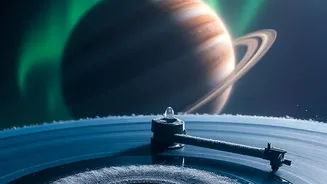

Saturn's Grand Opposition
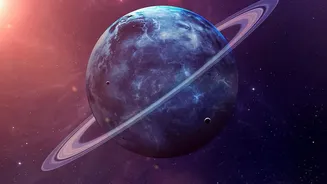
The highlight for stargazers this month is Saturn, which reaches opposition on October 4, 2026. In simple terms, opposition is when Earth passes directly between the Sun and an outer planet, in this case, Saturn. This alignment means Saturn is at its
closest point to Earth for the year, making it appear larger and brighter than at any other time. The planet will be visible all night long, rising in the east around sunset, climbing to its highest point around midnight, and setting in the west near sunrise. This provides a generous window for observation. The good news for viewers is that the opposition occurs during a moon-friendly week, with dark skies ensuring Saturn shines without interference.
How to Spot the Ringed Planet
You don't need special equipment to find Saturn. It will be visible to the naked eye as a steady, pale golden point of light in the faint constellation of Cetus. Since that part of the sky lacks bright stars, Saturn will be easy to pick out. While you can spot it from a city backyard, moving away from bright streetlights will improve your view. For those wanting a closer look, even a small telescope will reveal what makes Saturn so iconic: its magnificent rings. After being nearly invisible when they were edge-on to Earth in 2025, the rings are now tilted enough to be clearly seen again. A decent telescope may even allow you to spot Saturn's largest moon, Titan, appearing as a faint star nearby.
The Orionids: A Gift from Halley's Comet
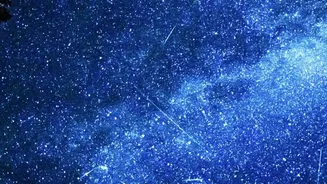
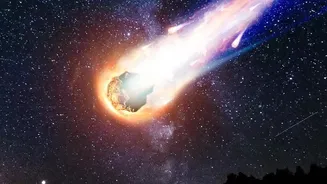
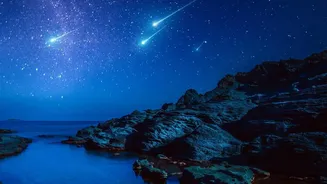
Later in the month, the sky puts on a different kind of show with the Orionid meteor shower. This annual event is caused by Earth passing through the trail of dusty debris left behind by the famous Halley's Comet. The shower will be active from early October to early November, but the best time to watch is during its peak on the night of October 21 and into the early morning of October 22. The Orionids are known for being bright and fast, sometimes leaving persistent, glowing trails that linger for a few seconds after the meteor has vanished. At its peak, you can expect to see up to 20 meteors per hour from a dark location.
Tips for Watching the Meteor Shower
Unlike viewing a planet, you need no telescope to enjoy a meteor shower. The key is to find a viewing spot away from city lights, as light pollution can obscure the fainter meteors. For the Orionids in 2026, the peak nights will have a bright waxing gibbous Moon. However, the Moon is expected to set a few hours before dawn, leaving a window of dark skies for prime viewing. The best time to watch will be in these pre-dawn hours. Find a comfortable spot, perhaps with a reclining chair or a blanket, lie back, and give your eyes about 20 to 30 minutes to fully adjust to the darkness. Then, just look up and be patient; the show will unfold across the entire sky.
More October Sky-Watching
While Saturn and the Orionids are the main attractions, October has a few other celestial treats. Early in the month, on October 8 and 9, the minor Draconid meteor shower will peak, best viewed in the early evening. On October 12, Mercury reaches its greatest eastern elongation, making it a good time to spot the elusive planet low in the western sky just after sunset. Finally, the month closes with the Hunter's Moon on October 26, the full moon for October. It will be a bright and beautiful sight, perfect for a casual evening of moon-gazing.