







The Problem with Standard Quizzes
Traditionally, quizzes and exams have been static. Every student in the class gets the same set of questions, regardless of their individual grasp of the subject. For a student who has mastered the material, the test can feel tedious and unchallenging.
For a student who is struggling, the same test can be a source of immense anxiety and demotivation, reinforcing a sense of failure. This static model measures performance at a single point in time but does little to foster actual learning. It tests memory more than understanding and fails to adapt to the unique learning pace of each individual, a significant challenge in India's diverse and crowded classrooms.
Enter Predictive Analytics
You have likely already encountered predictive analytics, even if you don't recognise the term. It’s the engine behind Netflix recommending your next binge-watch or Amazon suggesting a product you might like. In essence, it uses existing data to make educated guesses about future outcomes. In digital education, this technology analyses a student's performance data—right answers, wrong answers, time taken per question, topics they struggle with—to predict their knowledge level and what they are likely to struggle with next. It’s about creating a dynamic, responsive learning environment instead of a fixed, unchanging one.
How an Adaptive Quiz Works
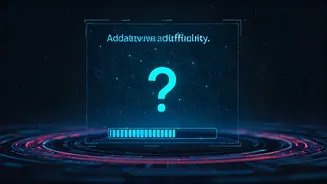
Imagine you're on an edtech platform preparing for an exam. You start a practice quiz. The first question is of medium difficulty. If you answer it correctly and quickly, the algorithm predicts you have a good handle on this topic. So, it serves you a slightly more difficult question to test the depth of your knowledge. If, however, you get it wrong, the system recalibrates. It might offer a slightly easier question on the same concept or a foundational question to check if you’ve missed a core idea. This continuous feedback loop happens in milliseconds. The quiz doesn’t just give you a score at the end; it actively adjusts to keep you in the 'Goldilocks zone' of learning—not too hard, not too easy, but just right to keep you challenged and engaged.
The Benefits for Student Learning
The primary benefit of this adaptive approach is personalised learning at scale. It prevents the frustration of being stuck on impossible problems and the boredom that comes from unchallenging ones. By constantly adjusting the difficulty, the system helps build a student's confidence, as they are more likely to experience a sense of progress. This is particularly valuable in the high-pressure environment of competitive exam preparation in India, where motivation is key. Furthermore, it generates incredibly detailed data for both the student and the educator, pinpointing exact areas of weakness that need more attention, moving beyond a simple pass/fail grade to provide a true diagnostic map of a student's understanding.
Are There Any Downsides?
While promising, this technology is not without its concerns. A major question revolves around the data itself. How is student performance data stored, used, and protected? There's also the risk of algorithmic bias. If the data used to train the system is flawed, it could inadvertently penalise certain types of learners. Over-reliance on such systems could also create an 'educational bubble,' where students are only exposed to content the algorithm thinks they can handle, potentially limiting their exposure to more complex, challenging ideas that foster true intellectual growth. Finally, it can't fully replace the intuition and emotional support of a great human teacher who can spot confusion or frustration in ways an algorithm cannot.