




The Foundation of Conservation: National Reports
You can't manage what you don't measure. This simple principle is at the heart of India's wildlife conservation strategy. The country relies on a series of comprehensive, recurring reports to create a scientific baseline for its efforts. Foremost among
these is the All-India Tiger Estimation, a massive exercise conducted every four years by the National Tiger Conservation Authority (NTCA) and the Wildlife Institute of India (WII). This census holds a Guinness World Record for its scale. Similarly, Project Elephant undertakes periodic population estimations to monitor the country's gentle giants. These flagship reports are complemented by assessments for other species like leopards, rhinos, and lions, as well as broader evaluations like the Management Effectiveness Evaluation (MEE) for protected areas. These documents are not just headcounts; they are detailed ecological health check-ups.
From Pugmarks to Pixels: High-Tech Tracking
The methods for gathering this crucial data have evolved dramatically. Early conservationists relied on tracking pugmarks (footprints), a technique now considered less accurate for precise population counts. Today, technology drives the process. The backbone of modern surveys is camera trapping. Thousands of motion-and-heat-sensing cameras are placed in forests. Because each tiger's stripe pattern is unique, like a human fingerprint, artificial intelligence can analyse the images to identify individual animals. This Capture-Mark-Recapture method allows scientists to create robust population estimates. For elephants, a recent census pioneered the use of DNA analysis from dung samples to create unique genetic fingerprints, preventing double counting. Field staff also use a mobile app called M-STrIPES to log geolocated data on animal signs, prey populations, and habitat conditions, ensuring a standardised, tech-driven approach.
Connecting Data to Action
These reports are far more than academic exercises; they directly inform policy and on-the-ground action. When a report reveals a declining population in a specific area, it triggers an investigation into threats like poaching or habitat loss. Conversely, when data shows tigers using a particular stretch of forest to move between protected areas, it provides the evidence needed to declare it an official wildlife corridor, offering it legal protection from disruptive infrastructure projects. The findings guide the allocation of resources, the deployment of anti-poaching forces like the Special Tiger Protection Force (STPF), and the approval of Tiger Conservation Plans. For instance, census data helps determine if a habitat's prey base is sufficient to support its predator population, flagging areas that need habitat restoration to support more herbivores.
Success Stories Written in Numbers
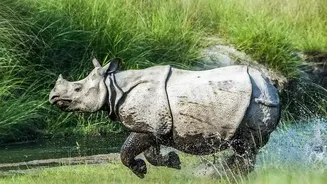
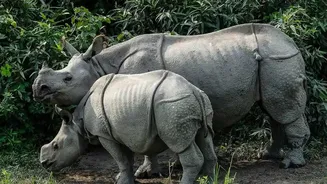
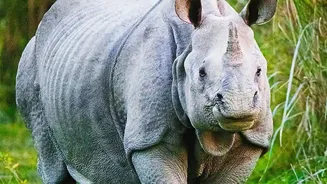
The results of this data-driven approach are encouraging. Against a backdrop of global biodiversity decline, India has recorded significant conservation wins. The tiger population has more than doubled from the numbers recorded in 2006, with the 2022 census estimating 3,682 individuals. This makes India home to nearly 70% of the world's wild tigers. Similar success stories can be seen with other species. The Asiatic lion population in Gujarat increased from 674 in 2020 to 891 in 2025. The greater one-horned rhinoceros population now exceeds 3,300. Even aquatic biodiversity is being systematically monitored, with the first-ever range-wide assessment for the Ganges river dolphin providing a critical population baseline. These numbers are a direct testament to the effectiveness of conservation strategies that are guided by scientific monitoring.
The Challenges Ahead
Despite these successes, the reports also highlight persistent challenges. Habitat loss and fragmentation, driven by infrastructure development and agriculture, remain the primary threats. A recent elephant census, for example, noted a population decline, pointing to the impact of fragmenting habitats and increasing human-elephant conflict. Experts also warn against focusing solely on charismatic megafauna like tigers and lions. While they are vital 'umbrella species'—protecting them indirectly conserves their entire ecosystem—many other less-known species of amphibians, birds, and reptiles are under threat and lack consistent data. Ensuring that conservation efforts are inclusive and address the health of the entire ecosystem, not just a few flagship species, is the next critical step for India's conservation journey.