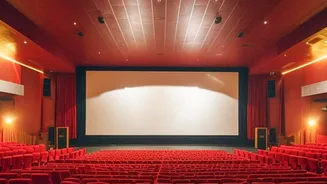







The Collective Emotional Experience
A streaming service can recommend a film, but it can’t cheer with you. The single greatest differentiator of the theatrical experience in India is the audience itself. It's the roar of applause when a beloved star makes their entry, the collective gasp
at a shocking plot twist, and the shared laughter that ripples through the auditorium. This active, vocal participation turns a private act of watching into a public, communal celebration. Whether it's whistling for a punchy dialogue or the pindrop silence during a tense scene, the energy of a packed hall is an essential part of the story. In India, film viewing has always been a social event, and the theatre is the arena where emotions are not just felt, but performed together.
A Temple for Spectacle
Indian cinema, particularly its mainstream blockbusters, is built for the big screen. The larger-than-life heroes, sprawling landscapes, and elaborate song-and-dance sequences are designed to overwhelm the senses in a way a television or laptop screen simply cannot. The immersive sound and towering visuals of a cinema hall provide the scale these films demand. For many filmmakers and fans, watching a big-budget spectacle at home feels like a compromise, a diminished version of the intended artistic vision. While not every film needs this treatment, for the epics that define Indian pop culture, the theatre is not just a venue; it is a crucial part of the experience, a temple built for the worship of spectacle.
The Ritual of a Social Outing
Going to the movies in India is rarely just about the film; it's an event. It's a plan made with family or friends, a reason to get dressed and leave the house. A survey showed that 90 per cent of Indians consider a trip to the movie theatre their go-to option for out-of-home leisure. This ritualistic aspect is something streaming cannot offer. The journey to the theatre, the buzz of the lobby, the pre-film discussions, and the post-film debates over dinner are all integral parts of the experience. It transforms movie-watching from a passive activity into a cherished social tradition, a way to connect and create shared memories outside the confines of home.
The Uniquely Indian Interval
The interval is not just a break; it's a fundamental part of the Indian cinema structure. This intermission is a social space unique to our film-going culture. It's the time to rush for samosas and cold drinks, dissect the first half of the film, and passionately predict what will happen next. It breaks the narrative tension and allows for a collective breather, a mid-point social huddle before diving back into the story. At home, the pause button is a solitary tool used for interruptions. In a theatre, the interval is a shared, communal experience, a designated time for discussion and socialising that is woven into the very fabric of the movie itself.
An Escape Without Distractions
At home, the film is just one of many things competing for your attention. There are phone notifications, household chores, and the constant temptation to 'second screen' by scrolling through social media. The cinema hall offers a rare and valuable proposition: a forced, focused immersion. In a dark room with your phone silenced, you give yourself over to the story completely. This distraction-free environment allows for a deeper connection with the film and its characters. It’s an escape in the truest sense, a temporary departure from the chaos of daily life that personalised streaming, with all its conveniences, struggles to provide.