







Understand What a Red Alert Means
First, it's vital to understand that a red alert is the highest level of weather warning issued by the India Meteorological Department (IMD). It signifies a forecast of extremely heavy rainfall—often over 204.5 mm in 24 hours. This level of rain in the Western
Ghats can trigger landslides, cause flash floods, and lead to the closure of roads. Local authorities, like the Satara district administration, often advise tourists to avoid visiting Mahabaleshwar and other hill stations during such alerts and may even close popular tourist spots for safety. A red alert isn't an invitation to witness extreme weather; it's a directive to stay put and prioritise safety.
Postpone, Don't Push: The Safest First Step
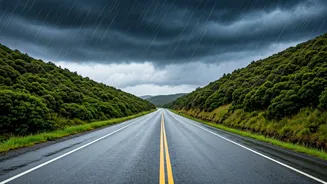
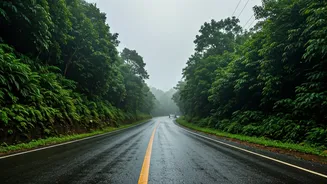
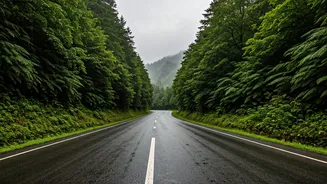
The single most important rule is to reconsider your travel plans. No scenic view is worth risking your life. During red alerts, authorities strongly advise against travel to the region. The primary danger isn't just the rain itself, but its consequences: roads can become slippery, visibility can drop to near-zero in fog and heavy downpours, and the risk of landslides blocking the ghat roads is incredibly high. Many hotels and resorts may offer flexibility with bookings during extreme weather warnings. Check your reservations and, if possible, postpone your trip until the alert is lifted and conditions are deemed safe by officials.
If You Must Travel: Pre-Trip Vehicle Checks
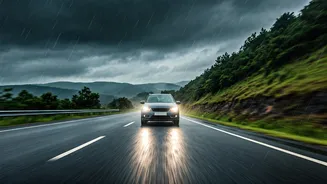
If travel is absolutely unavoidable, a thorough vehicle check is non-negotiable. Pay close attention to your tyres, brakes, and wipers. Ensure your tyres have adequate tread depth to grip the slippery roads. Check your brake fluid and ensure the brakes are responsive, as wet conditions increase stopping distances. Your windshield wipers must be in perfect condition to handle torrential rain. Also, check all your lights—headlights, taillights, and fog lamps—as you'll need them for visibility in the dense fog and rain that blankets the ghats. A full tank of fuel is also crucial, as you may face long delays or detours.
Navigating the Ghats: Defensive Driving is Key
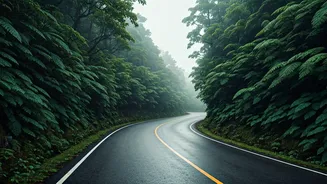
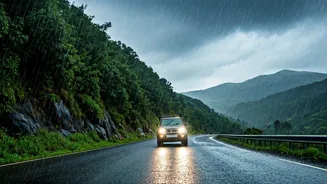
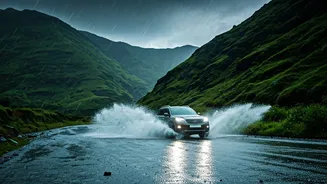
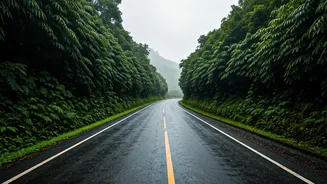
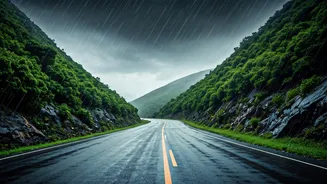
Driving on ghat roads during a downpour requires a complete change in technique. Drive significantly slower than you normally would. Use lower gears, especially while descending, to control your speed through engine braking and avoid overheating your brakes. Maintain a much larger following distance from the vehicle ahead. Honk around blind curves to alert oncoming traffic. A critical rule on narrow ghat roads is to give way to uphill traffic. Avoid any sudden acceleration, braking, or sharp turns, as these actions can easily lead to skidding on wet, mossy tarmac. Never attempt to drive through fast-flowing water on the road; its depth and force can be deceptive.
Watch for Landslides and Falling Debris
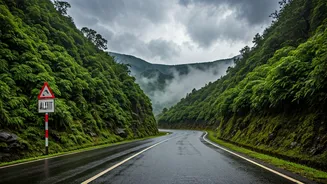
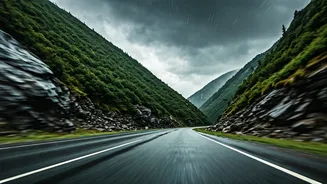
Landslides are the most significant threat when driving in the ghats during a red alert. Be extremely vigilant and watch the hillsides for any signs of rockfalls or mudslides. Avoid stopping in areas with steep, unstable-looking slopes above. Local authorities often identify and monitor high-risk zones, so be aware of any warnings or restricted areas. If you encounter a minor landslide or debris, do not attempt to clear it yourself. If you see a major one, do not try to cross it. The safest action is to turn back if possible and find a safe, stable location to wait before informing local police or disaster management authorities.
Pack an Emergency Road Trip Kit
Being stranded is a real possibility during a red alert. Your car should be equipped with an emergency kit. This should include a powerful, waterproof torch with extra batteries, a first-aid kit, a portable power bank for your phone, and jumper cables. Pack extra food (non-perishable snacks) and sufficient drinking water. Warm clothing and blankets are also essential, as it can get cold and you may be stuck without engine heat for a prolonged period. Keep emergency contact numbers for local police, disaster management, and roadside assistance saved and easily accessible.