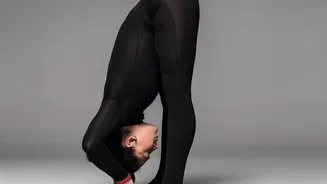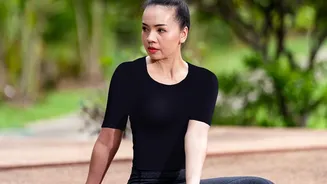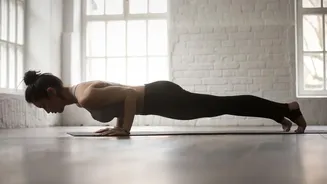

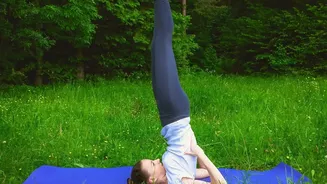
The Foundation: Mountain Pose (Tadasana)
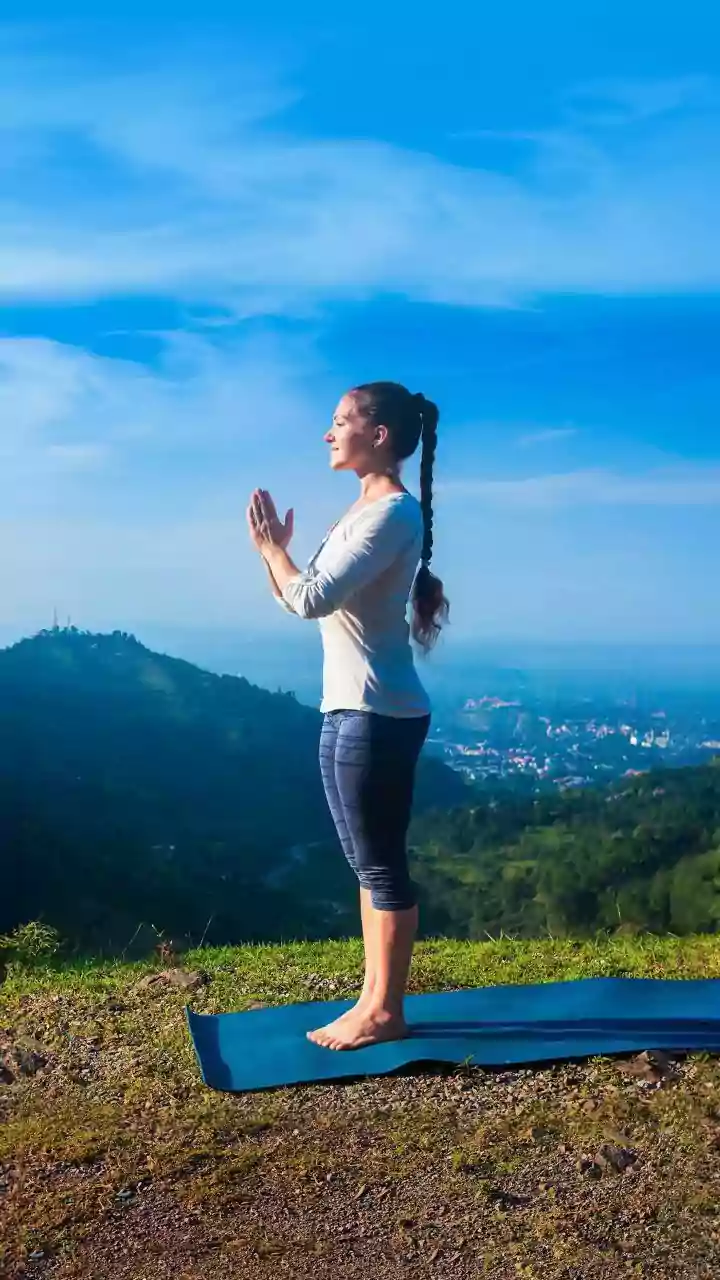
Before you can correct your posture, you need to understand what good posture feels like. Tadasana is the foundational blueprint for all other standing poses, teaching you how to align your body from the ground up. It cultivates awareness and stability,
training your muscles to hold a healthy, upright position naturally. How to do it: 1. Stand with your big toes touching and your heels slightly apart. 2. Gently lift and spread your toes, then place them softly back on the floor, finding your balance across all four corners of your feet. 3. Engage your thigh muscles and lift your kneecaps, but without locking your knees. 4. Lengthen your tailbone toward the floor and draw your navel in slightly to engage your core. 5. Roll your shoulders up, back, and then let them relax down, away from your ears. Allow your arms to hang by your sides with palms facing forward. 6. Keep your head balanced directly over your spine, with your chin parallel to the floor. Breathe deeply and hold for 30 to 60 seconds.
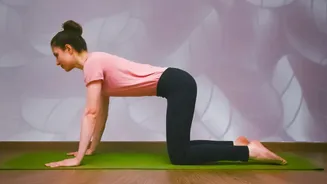
For Spinal Flexibility: Cat-Cow Pose (Marjaryasana-Bitilasana)
This dynamic duo is a gentle way to warm up the spine and increase its flexibility. The flowing movement between the two poses helps to relieve tension in the neck, shoulders, and back, making it an ideal starting point for anyone feeling stiff from prolonged sitting. It's excellent for promoting spinal mobility and coordinating breath with movement. How to do it: 1. Start on your hands and knees in a 'tabletop' position. Your wrists should be directly under your shoulders and your knees under your hips. 2. As you inhale (Cow Pose), drop your belly toward the mat, lift your chest and tailbone, and look forward or slightly up. 3. As you exhale (Cat Pose), round your spine toward the ceiling, tuck your chin to your chest, and press the mat away with your hands. 4. Continue flowing between Cat and Cow for 5 to 10 breath cycles, allowing your breath to guide the movement.
For Rounded Shoulders: Cobra Pose (Bhujangasana)
Modern life often has us hunching forward, which weakens the back and tightens the chest. Cobra Pose is a gentle backbend that specifically counteracts this forward slump. It strengthens the spine, opens the chest and shoulders, and improves overall posture by encouraging the natural curve of your back. How to do it: 1. Lie on your stomach with your legs extended, tops of your feet on the floor. 2. Place your palms on the mat under your shoulders, keeping your elbows tucked close to your body. 3. Press the tops of your feet and your hips firmly into the floor. 4. On an inhalation, begin to lift your head and chest off the floor, using your back muscles more than your arm strength. Keep your shoulders relaxed and away from your ears. 5. Lift only as high as is comfortable without straining your lower back. Your navel should ideally remain on the ground. Hold for 15-30 seconds while breathing steadily, then exhale and slowly lower back down.
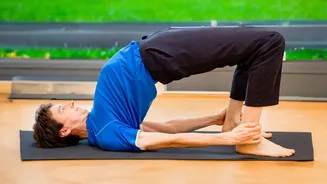
For Lower Back Strain: Bridge Pose (Setu Bandhasana)
This pose is a powerful yet accessible tool for strengthening the lower back and glutes, which are key supporters of good posture. By lifting the hips, Bridge Pose helps to open the chest and stretch the spine, providing relief from strain caused by sitting for long periods. It counteracts slouching and helps to decompress the vertebrae. How to do it: 1. Lie on your back with your knees bent and feet flat on the floor, hip-width apart. Your arms should be alongside your body with palms down. 2. Slide your feet close enough that you can just touch your heels with your fingertips. 3. On an exhalation, press your feet and arms into the floor as you lift your hips off the ground. 4. Keep your thighs parallel and engage your glutes. Clasp your hands together under your back and press your arms down to help lift your chest. 5. Hold the pose for 30 seconds to a minute, breathing smoothly. To release, unclasp your hands and slowly roll your spine back down to the floor.