



Why Europa? A Water World in Our Solar System
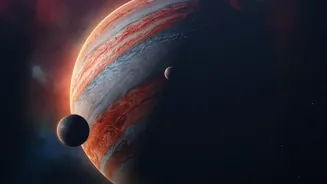
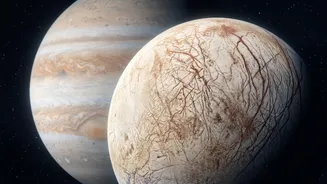
Slightly smaller than Earth's own Moon, Jupiter's moon Europa is one of the most compelling destinations in our cosmic neighbourhood. Scientists are almost certain that beneath a thick crust of ice, between 10 and 20 miles deep, lies a vast, globe-spanning
saltwater ocean. It’s believed this hidden ocean may contain more than twice the amount of water found in all of Earth's oceans combined. This fact alone makes it a prime candidate in the search for extraterrestrial life. Life, as we understand it, requires three key ingredients: liquid water, essential chemical elements, and a source of energy. Scientific models suggest Europa might have all three, making it a potentially habitable environment. The Europa Clipper mission is designed to be the first dedicated exploration of this tantalising ocean world.
Meet the Clipper: A Journey to Jupiter
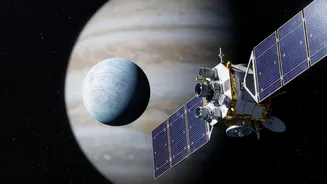
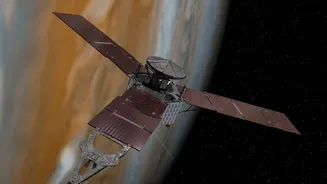
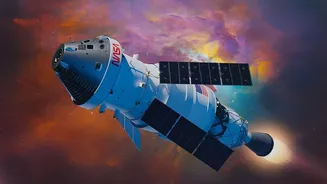
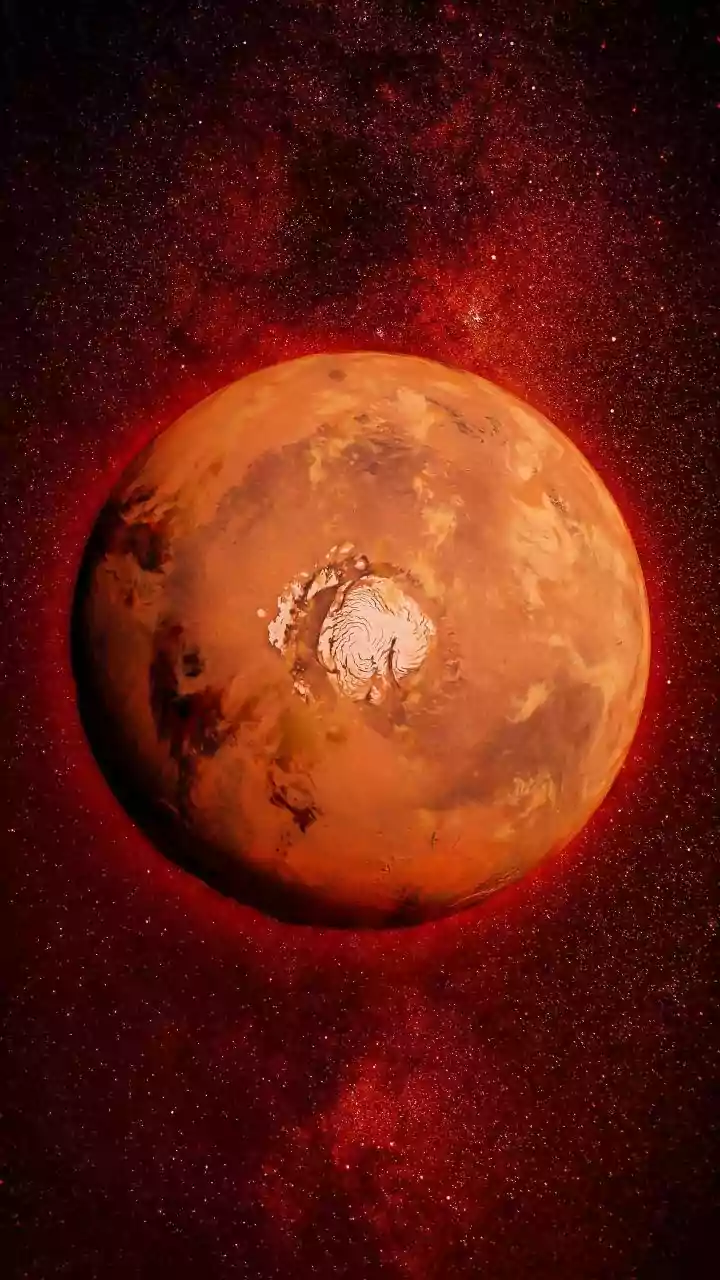
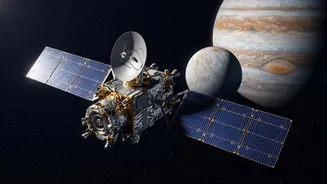
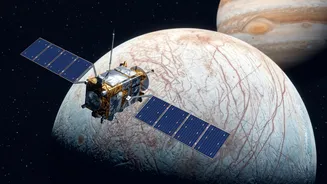
Launched in October 2024, the Europa Clipper is the largest interplanetary spacecraft NASA has ever built for a planetary mission. With its enormous solar arrays deployed, it spans the length of a basketball court. Currently, it is on a 1.8-billion-mile journey that will see it arrive in the Jupiter system in April 2030. The spacecraft is currently on a trajectory that includes a gravity-assist flyby of Mars in 2025 and a final one past Earth in December 2026 to gain the speed needed to reach the outer solar system. Instead of orbiting Europa directly—which would expose it to Jupiter’s lethally intense radiation—the Clipper will orbit Jupiter itself and perform dozens of close, rapid flybys of the icy moon. During these passes, it will swoop as low as 16 miles (25 kilometers) above the surface to gather data before retreating to a safer distance.
The Toolkit: Advanced Sensors for an Alien Ocean
To peer beneath the ice and analyse this alien world, Europa Clipper carries a suite of nine advanced science instruments. An ice-penetrating radar, called REASON, is designed to measure the thickness of the ice shell and search for pockets of water within it, or even the ocean itself. A magnetometer (ECM) will measure the magnetic field around Europa, which will help confirm the existence of the global ocean and even determine its depth and saltiness. Spectrometers like MISE and Europa-UVS will analyse the surface composition by studying reflected infrared and ultraviolet light, searching for salts and organic molecules that could be signs of the ocean's chemistry. Other instruments, including a thermal imager, will hunt for hotspots or recent eruptions of warmer water from below. A mass spectrometer (MASPEX) is even prepared to 'sniff' the moon's extremely thin atmosphere or any potential water plumes for clues about the ocean's composition.
Searching for Habitability, Not Aliens
It's important to understand that NASA has been clear: Europa Clipper is not a life-detection mission. It is not equipped to find living organisms. Instead, its primary goal is to determine if Europa has the right conditions to support life, a concept known as habitability. By characterising the ocean, mapping the moon's geology, and analysing its chemical makeup, the mission will create the most detailed picture yet of this mysterious world. The data will help scientists understand how the ocean and the icy surface interact, and whether there are energy sources and chemical building blocks available. Think of it as a reconnaissance mission; Clipper is scouting the territory to see if it's a place where life could exist, which would pave the way for future missions that might be designed to land and search for life directly.