



What is the 'No-Insurance-No-Fuel' Proposal?
In early August 2026, the Supreme Court of India, responding to the staggering number of uninsured vehicles on the roads, directed the government to explore a novel and stringent enforcement mechanism: a 'No Insurance, No Fuel' pilot project. The concept
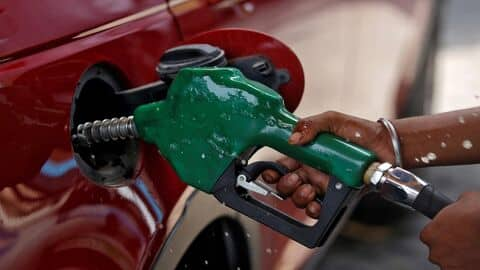
is straightforward: petrol pumps would be required to verify if a vehicle has a valid third-party insurance policy before dispensing fuel. If the insurance has lapsed, the pump could refuse service until a valid policy is presented. This directive tasks the Insurance Regulatory and Development Authority of India (IRDAI) and the Ministry of Road Transport and Highways (MoRTH) with designing and testing this system, potentially turning thousands of fuel stations into de facto compliance checkpoints.
Why is Such a Drastic Step Being Considered?
The proposal addresses a grave and persistent issue. According to recent court observations and government data, a shocking 44% to 56% of vehicles on Indian roads are uninsured. This translates to over 16 crore vehicles operating without the mandatory third-party liability cover required by the Motor Vehicles Act, 1988. The consequences are devastating. When an uninsured vehicle is involved in an accident, victims and their families are often left with no straightforward path to compensation, forcing them into prolonged and arduous legal battles. The Supreme Court highlighted that this situation defeats the very purpose of mandatory insurance, which is to provide a financial safety net and ensure accident victims are not left to fend for themselves.
The Real 'Money Question' for Vehicle Owners
The headline's 'money question' isn't about a new tax or fee. Third-party insurance has been mandatory for decades. The real financial shift is making a once-a-year, often-forgotten payment as non-negotiable as filling up your tank. For many, especially in the two-wheeler segment where non-compliance is highest, insurance is seen as a discretionary expense to be settled only when caught. This proposal fundamentally changes that calculation. It reframes insurance not as a piece of paper to be shown to the police, but as an essential prerequisite for a vehicle's daily operation. The financial pinch will be felt by those who are used to letting their policies lapse. They will now face an immediate, recurring decision: renew the policy or have their mobility curtailed. This enforces budget discipline, turning the abstract legal requirement into a tangible, routine check.
How Would It Work in Practice?
The proposed system relies on technology to make the process quick and seamless. The idea is to use Automatic Number Plate Recognition (ANPR) cameras at petrol pumps. These cameras would scan a vehicle's license plate, cross-reference it in real-time with the central VAHAN vehicle registration database and insurance records, and give a green or red light to the fuel attendant. The Ministry of Petroleum and Natural Gas has reportedly given its in-principle approval for such a system. The Supreme Court has also suggested equipping police with handheld devices linked to the same databases to enable on-the-spot verification during traffic stops. The 'pilot' nature of the project means it will be tested on select corridors first to iron out the kinks.
Hurdles on the Road Ahead
While the goal is laudable, the path to implementation is fraught with practical challenges. Critics and experts point to several potential issues. What happens if the database is down or the ANPR camera misreads a number plate? Will this create long, frustrating queues at already crowded fuel stations? There are also concerns about emergency situations—could a person be denied fuel while rushing to a hospital because of a data mismatch? Furthermore, questions remain about the burden placed on petrol pump operators, who would become frontline enforcers of insurance law. The success of this ambitious project hinges on creating a technologically flawless, legally sound, and user-friendly system that balances enforcement with the rights and convenience of vehicle owners.