



An Annual Health Crisis
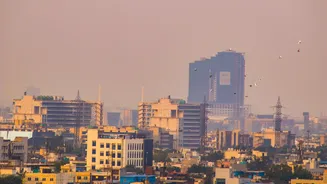
November in Delhi has become synonymous with a public health emergency. This year is no exception. On November 12, the city's air quality was recorded in the 'very poor' category, with the overall Air Quality Index (AQI) settling at 323. At several monitoring
stations, the situation was far worse, with locations like IIT Delhi recording 'severe' levels of 416. This follows a post-Diwali spike where pollution levels soared, aggravated by firecracker smoke and stubble burning from neighbouring states. An analysis found that Delhi's average PM2.5 concentration in the week before Diwali was the highest in three years, and early winter pollution levels are significantly worse than in previous years. These fine particulate matter (PM2.5) particles are so small they can penetrate deep into the lungs and enter the bloodstream, posing a severe health risk.
Beyond the Smoker's Cough
For years, the health narrative around Delhi's air was dominated by respiratory issues like coughs, wheezing, and breathing difficulties. Now, both residents and doctors are increasingly concerned with a much wider and more insidious range of ailments. Doctors are pointing to links between toxic air and up to 20 different conditions, including heart attacks, hypertension, strokes, and Type 2 diabetes. The impact on children is a source of growing alarm. Research highlights that long-term exposure can impair lung development and reduce lung capacity in adulthood. More frighteningly, new studies are drawing connections between PM2.5 exposure and neurological damage in children, affecting memory, attention, and even IQ scores. Studies have linked long-term exposure to changes in brain structure and accelerated brain ageing.
The Rise of the Health-Conscious Citizen
This deepening understanding of the health risks is fueling a tangible shift in public behaviour. Clean air is no longer taken for granted; it has become a commodity to be purchased. The market for air purifiers in India is projected to grow significantly, from approximately ₹904 crore in 2025 to over ₹4,094 crore by 2035. Delhi-NCR accounts for the lion's share of this demand, making up nearly 70% of the market. Retailers have reported a surge in sales, with some seeing demand double in a single week. Consumers are not just buying one purifier for the home but multiple units for different rooms, indicating a new level of caution. This defensive consumerism extends to wearing high-quality N95 masks, avoiding outdoor exercise during peak pollution hours, and keeping children indoors as much as possible.
From Personal Protection to Public Policy
The growing public anxiety is slowly translating into pressure for more robust government action. While emergency measures like school closures are now a familiar part of the winter playbook, there's a growing demand for more permanent solutions. In response, the Delhi government has rolled out a 'Winter Action Plan' for 2026, which includes restrictions on vehicles not meeting BS-VI emission standards, a 'No PUC, No Fuel' policy, and a mandatory 50% work_from_home policy for many offices to reduce traffic emissions. Construction and demolition activities also face stricter curbs. These measures, while disruptive, signal a recognition that the annual pollution cycle requires a pre_emptive and multi_pronged response rather than just reactive, emergency_level decisions.
A Future Framed by Air Quality
The pervasive impact of air pollution is reshaping life in Delhi. It's influencing daily routines, purchasing decisions, and long term health anxieties. While the effectiveness of government action plans remains a subject of debate, the shift in public consciousness is undeniable. The conversation has evolved from a passive acceptance of smoggy days to an active, health driven demand for cleaner air. Residents are no longer just asking what the AQI is; they are asking what it is doing to their bodies, their children's brains, and their future. This heightened awareness is a critical first step. The true test will be whether this sustained public concern can drive the systemic, long term changes needed to ensure that breathing clean air in the capital is a right, not a luxury purchased one air purifier at a time.