




The Goal: Soft, Bouncy Movement
Before diving into the great tool debate, let's define the desired look. We're not talking about pin-straight, blunt bangs. The goal for layered or curtain bangs is a soft, natural C-shaped curve that lifts at the root and sweeps gently away from the face.
This style requires volume and movement, creating a look that feels light and integrated with the rest of your hair, not like a separate, stiff accessory. It’s that 'effortless' bounce that makes a haircut look freshly styled, even if the rest of your hair is in a simple ponytail. Achieving this specific texture is where the choice between a round brush and a flat iron becomes critical.
Understanding the Flat Iron's Purpose
A flat iron works by clamping hair between two hot plates, using direct heat and compression to create a sleek, smooth finish. It excels at taming frizz and producing a pin-straight, polished look. For bangs, some stylists use a quick flick of the wrist to create a slight bend. However, this method comes with significant drawbacks for achieving natural bounce. The direct, high heat and clamping action are designed to flatten the hair cuticle, which is the opposite of creating volume. While it offers precision, a flat iron can easily create unwanted creases or make bangs look overly straight and piece-y, rather than soft and blended.
Why the Round Brush and Dryer Combo Wins
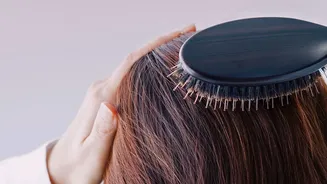
A round brush, used in tandem with a blow dryer, straightens and shapes hair through tension and airflow, not by pressing it flat. This method is superior for creating natural-looking volume in bangs for several key reasons. First, the brush physically lifts the hair at the root as you dry, building in body from the foundation. Second, as you pull the brush through your bangs, its curved barrel guides the hair into a perfect, soft C-shape, from root to tip. This creates a seamless, bouncy curve that a flat iron struggles to replicate. The result is smooth hair that still has life and movement, blending perfectly with face-framing layers.
The Right Technique for Bouncy Bangs
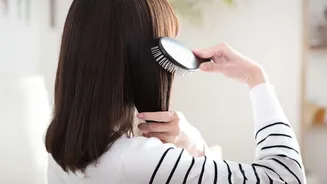
Mastering the round brush technique is simpler than it seems. Start with damp bangs and apply a heat protectant. Using a concentrator nozzle on your dryer for directed airflow, begin by brushing your bangs from side to side as you dry them. This simple step helps eliminate cowlicks and builds initial root lift. Once your bangs are about 80% dry, place a medium-sized round brush underneath the section at the roots. Roll the brush upwards to create tension and lift, then slowly pull it forward and away from your face while aiming the blow dryer's heat at the barrel. This 'lift first, then swoop' motion is the key to creating that signature bouncy curve. Let the hair cool for a moment before touching it to help set the shape.
A Note on Heat and Hair Health
Both flat irons and blow dryers are heat tools, and both require a heat protectant spray to minimize damage. However, the way they apply heat differs. A flat iron concentrates high heat directly onto a compressed section of hair, which can sometimes lead to more focused damage or stiffness if held too long. A blow dryer distributes heat more broadly via airflow. With proper technique—keeping the dryer moving and not placing it directly on the brush's bristles—you can achieve the desired style with a lower risk of creating that 'fried' or overly stiff look that can happen with a flat iron. Ultimately, using the lowest effective heat setting is crucial with either tool.