





The Science of Drowning Roots
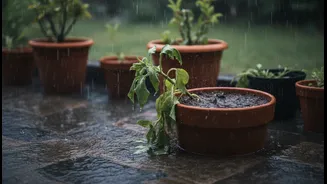
When soil in a pot becomes saturated with water for an extended period, the small air pockets that roots depend on for oxygen disappear. Much like humans, plant roots need to breathe to function. Without oxygen, they cannot absorb nutrients and water effectively,
and they begin to die. This oxygen-deprived, soggy environment is also the perfect breeding ground for fungal pathogens. These organisms cause root rot, a condition where roots turn brown, mushy, and decay, eventually leading to the death of the entire plant.
Warning Signs of a Waterlogged Plant
Catching the problem early is key to saving your plant. One of the most common but confusing signs is wilting. The leaves may droop as if the plant is thirsty, but the soil will be wet to the touch. This happens because the rotting roots can no longer absorb water, even when it's abundant. Other telltale symptoms include yellowing or browning leaves that feel soft and limp, not dry and crispy. You might also see stunted growth, leaf drop affecting both old and new leaves, and in advanced cases, a musty or rotten smell coming from the soil.
Prevention Is Your Best Defence
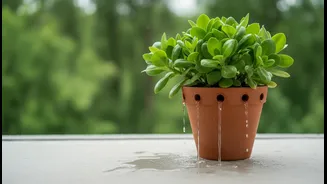
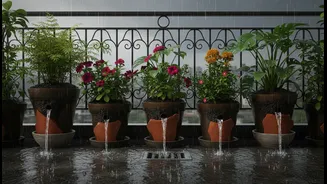
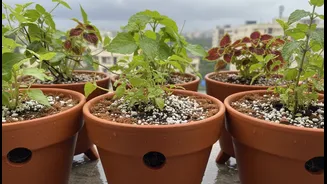
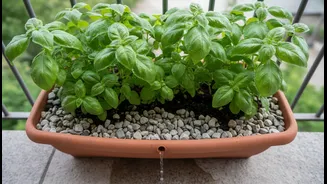
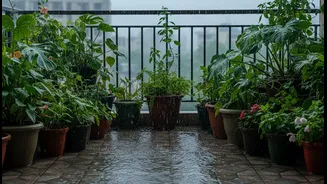
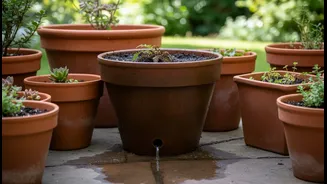
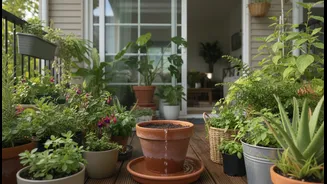
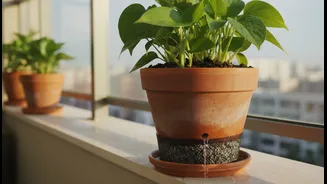
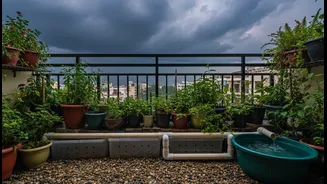
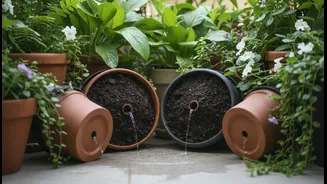
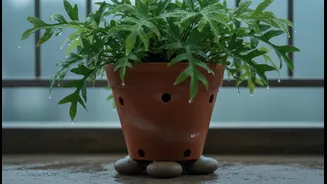
The best way to deal with waterlogged pots is to prevent the issue from happening in the first place. Start with the pot itself; ensure it has at least one, preferably multiple, drainage holes. Elevating your pots on bricks, pot feet, or a simple stand can make a huge difference, allowing excess water to drain freely and preventing the holes from getting blocked. If possible, move sensitive plants to a covered balcony or under an eave during periods of relentless downpour. The right soil mix is also crucial. Avoid using dense garden soil, which compacts easily. Instead, use a well-draining potting mix. You can create your own by combining soil with materials like sand, perlite, or coco peat, which improve aeration and allow water to pass through more easily.
Emergency Rescue for Drowning Plants
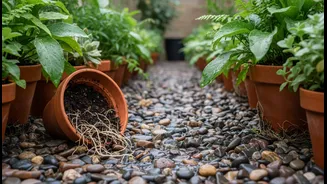
If you suspect a plant is already waterlogged, you must act fast. Gently tilt the pot to let any standing water drain out. If the condition is severe, your best bet is to repot the plant. Carefully remove it from its container and inspect the roots. Healthy roots are typically firm and white or light-coloured. Using clean scissors or pruning shears, trim away any roots that are brown, black, soft, or mushy. If the soil is completely saturated, you may want to let the healthy root ball air dry for a few hours before repotting it into a new pot with fresh, dry, well-draining potting mix. After repotting, water sparingly until the plant shows signs of recovery.