



More Than Just Stretching
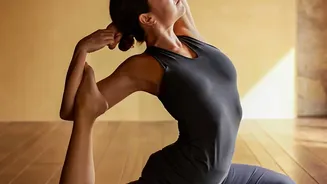
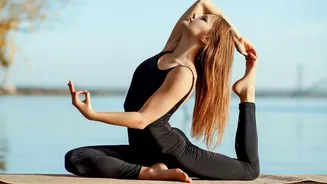
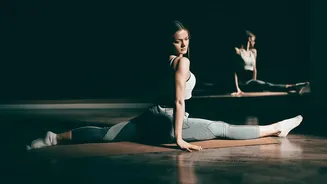
Flexibility is more than just being able to touch your toes; it’s about your body's overall range of motion. A daily yoga practice is one of the most effective ways to improve it. Unlike static stretching, yoga involves moving through a series of postures
that work to lengthen muscle fibres and the surrounding connective tissues, known as fascia. When muscles are tight from stress or sitting for long periods, this fascia can become rigid. Yoga helps to release this tension. Consistent practice encourages your muscles to relax and lengthen, which over time, leads to a noticeable increase in how far you can move without discomfort.
The Power of Breath and Relaxation
One of yoga's unique advantages is its focus on the breath (pranayama). Deep, mindful breathing calms the nervous system. When you're stressed, your muscles instinctively tense up. By pairing movement with controlled breathing, yoga sends a signal to your body that it’s safe to relax. This relaxation response allows muscles to release more deeply into a stretch, helping you gain flexibility more effectively than by forcing a movement. This mind-body connection is what makes yoga a holistic approach to improving mobility and reducing stiffness.
Cat-Cow Stretch (Marjaryasana-Bitilasana)
This is a perfect warm-up for the spine and a gentle introduction to yoga. Start on your hands and knees, with wrists under shoulders and knees under hips. As you inhale, drop your belly, lift your chest and chin, and look up toward the ceiling (Cow Pose). As you exhale, round your spine toward the ceiling, tucking your chin to your chest (Cat Pose). Flowing between these two poses for 5-10 breaths warms up the back, improves spinal flexibility, and relieves tension in the neck and shoulders.
Downward-Facing Dog (Adho Mukha Svanasana)
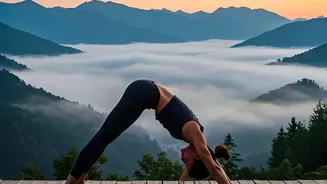
Perhaps the most iconic yoga pose, Downward-Facing Dog is a fantastic full-body stretch. From your hands and knees, tuck your toes and lift your hips up and back, forming an inverted 'V' shape with your body. For beginners, it's important to keep a slight bend in the knees to focus on lengthening the spine. Press firmly through your hands, relax your neck, and gently pedal your feet to stretch your hamstrings and calves. This pose strengthens the arms and shoulders while providing a deep stretch for the entire back of the body.
Seated Forward Bend (Paschimottanasana)
This pose is a deep stretch for the hamstrings and lower back, areas that are often tight from prolonged sitting. Sit on the floor with your legs extended in front of you. You can sit on the edge of a folded blanket to help tilt your pelvis forward. Inhale to lengthen your spine, and as you exhale, hinge forward from your hips, not your waist. Keep your back long and rest your hands on your shins or ankles. Avoid rounding your back; the goal is to feel a gentle stretch, not to force your head to your knees.
Triangle Pose (Trikonasana)
Triangle Pose is excellent for stretching the hamstrings, hips, and the sides of your torso. Start by standing with your feet about three to four feet apart. Turn your right foot out 90 degrees and your left foot in slightly. Extend your arms parallel to the floor, then hinge at your right hip, reaching forward. Lower your right hand to your shin or a block and extend your left arm toward the ceiling. Keep both legs straight without locking the knees and try to create a straight line with your arms. This pose builds strength and improves stability.