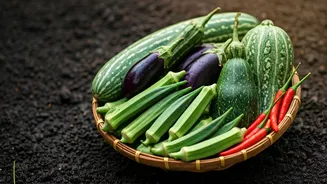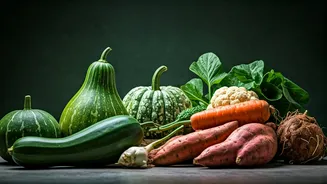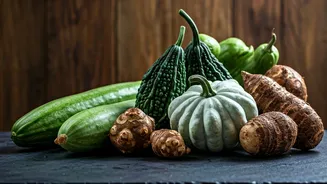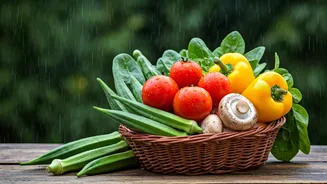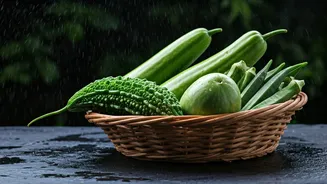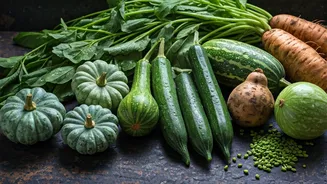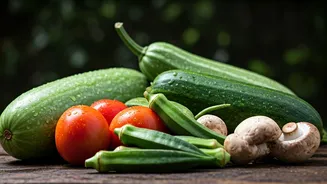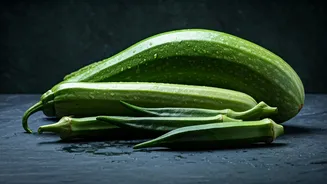



Bottle Gourd (Lauki)
Lauki is a monsoon superstar for a reason. Composed of over 90% water, it's incredibly hydrating and very light on the digestive system, which tends to be sluggish during this season. Rich in fibre, it aids digestion and prevents constipation. It’s also
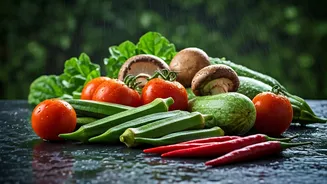
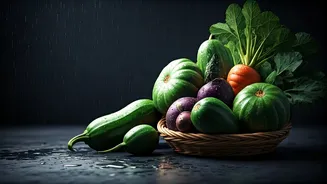
packed with essential minerals like sodium, potassium, and iron, helping replenish what you might lose through sweat in the humid weather. Its cooling properties help manage acidity. Because it grows on vines, it's less exposed to ground-level contamination. How to enjoy it: Beyond the classic lauki sabzi, you can make delicious koftas, soups, or even blend it into a raita. Always peel and cook it thoroughly to ensure it’s safe for consumption.
Bitter Gourd (Karela)
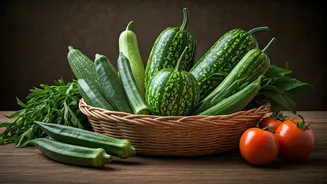
Don't let the bitter taste fool you; karela is one of the most powerful medicinal vegetables available during the rains. It's loaded with antioxidants and vitamins A and C, which are crucial for boosting your immune system and fighting off common monsoon infections like the cold and flu. It’s also renowned for its blood-purifying properties and its ability to help regulate blood sugar levels. The bitter compounds that give it its characteristic taste are exactly what make it so healthy. How to enjoy it: To reduce bitterness, you can salt the sliced karela and let it sit for 30 minutes before washing and cooking. A crispy, stir-fried preparation or a stuffed bharwa karela makes it much more palatable for everyone.
Pointed Gourd (Parwal)
Often overlooked, parwal is a nutritional powerhouse that thrives in the monsoon. It is rich in vitamins A and C, and a great source of fibre. According to Ayurvedic traditions, it’s excellent for balancing the body and keeping ailments like coughs, colds, and fevers at bay. It's also known to be great for the liver and helps in purifying the blood. Its low-calorie, high-fibre nature makes it easy to digest and beneficial for gut health, preventing the bloating and indigestion common in this season. How to enjoy it: Parwal can be used in a variety of dishes, from simple stir-fries with potatoes (Aloo Parwal) to rich, gravy-based curries. Ensure it’s washed well and cooked until tender.
Indian Squash (Tinda)
Also known as apple gourd, tinda is another vegetable that is light, easy to digest, and perfect for the monsoon diet. Like its gourd cousins, it has high water content and is packed with antioxidants. It's particularly good for keeping the digestive tract clean and healthy. Its anti-inflammatory properties can help soothe the stomach and prevent acidity. As a vine-grown vegetable, it stays relatively clean from soil-borne pathogens, making it a safer choice during the rainy season. How to enjoy it: Tinda is incredibly versatile. It tastes great in a simple tomato-based gravy or stuffed with a mix of spices and then pan-fried or baked. Its mild flavour allows it to absorb spices beautifully.
Root Vegetables (Beetroot & Sweet Potato)
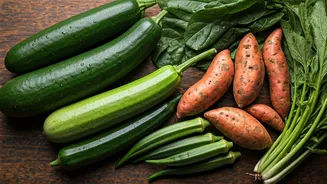
While leafy greens can be risky, root vegetables that grow underground are a fantastic and safe option for the monsoon. Beetroot is an excellent source of antioxidants, folate, and fibre. It’s known to boost stamina and improve blood flow. Sweet potatoes (shakarkandi) are packed with Vitamin A, which is essential for a strong immune system, and dietary fibre that promotes a healthy gut. Since they grow beneath the soil, they are protected from the direct lash of the rain and the pests that come with it. How to enjoy it: Roast them, boil and mash them, or add them to soups and stews for a hearty, nutrient-dense meal.
A Note on Leafy Greens
There's a reason many people advise caution with leafy vegetables (palak, methi, etc.) during the monsoon. The humidity and dampness create the perfect environment for germs, mud, and pests to cling to the leaves. If you choose to eat them, be extremely diligent. Avoid buying them from street vendors where hygiene might be questionable. Wash them multiple times, preferably in a solution of salt or vinegar water, and make sure they are thoroughly cooked. Steaming or boiling them before adding to dishes is a great way to kill any lingering microbes. When in doubt, stick to the gourds and root vegetables on this list.