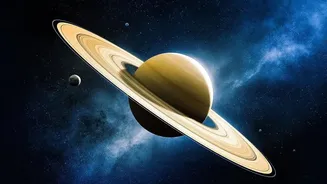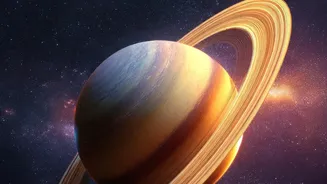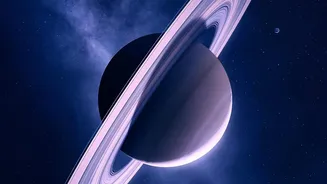


A Planet for All Seasons
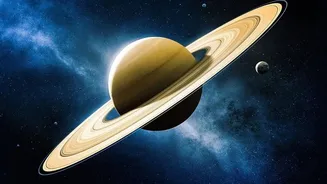
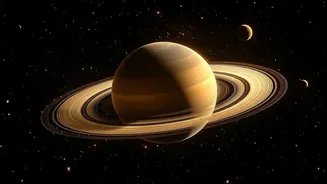
Just like Earth, Saturn experiences seasons because its axis is tilted. While Earth is tilted at about 23.5 degrees, Saturn has a similar tilt of around 27 degrees. But that's where the similarities end. A year on Saturn is equivalent to more than 29
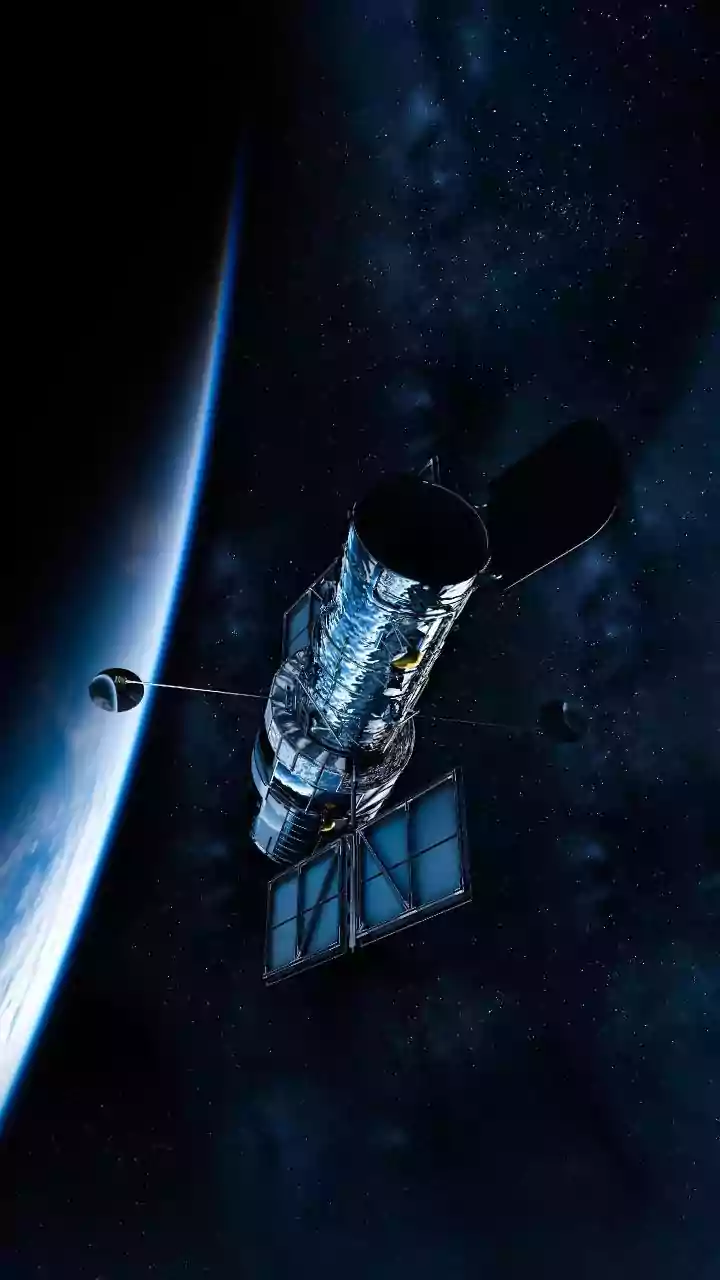
Earth years, which means each of its seasons lasts for over seven of our years. This long, slow cycle brings dramatic changes. For nearly 15 years at a time, one of Saturn's poles is plunged into the darkness of winter, while the other enjoys constant summer sunlight. This vast timescale gives scientists a unique opportunity to study long-term atmospheric changes on a gas giant. The Hubble Space Telescope, as part of its Outer Planets Atmospheres Legacy (OPAL) program, has been annually monitoring these shifts, creating a visual diary of the planet's evolving weather.
Seeing in a New Light
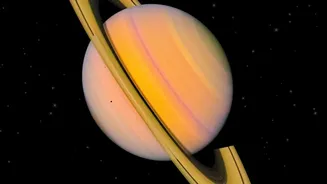
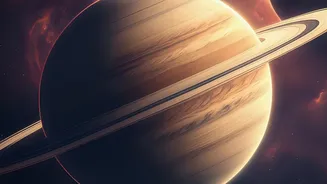
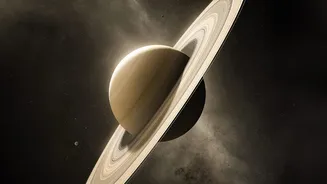
The latest images are particularly exciting because they were captured in infrared light. Looking at a planet in infrared is like putting on a pair of heat-vision goggles. Instead of just seeing reflected sunlight, scientists can map thermal variations and see deeper into the atmosphere. Methane gas in Saturn's atmosphere absorbs most sunlight, making the planet appear quite dark in some infrared wavelengths. However, its magnificent icy rings shine brilliantly, creating a stunning contrast. This technique allows astronomers to see past the high-altitude haze and identify cloud structures, temperature changes, and even chemical compositions at different layers. These false-color images reveal a complex, layered world, where different colours correspond to different altitudes and atmospheric conditions, providing clues that are invisible to the naked eye.
What the New Images Reveal
These infrared portraits from Hubble are part of a long-term study that tracks the slow progression of Saturn's seasons. As the planet's northern hemisphere has moved from summer towards autumn, astronomers have noted subtle but significant changes year after year. For instance, between 2018 and 2020, observations showed the equatorial zone brightened by 5 to 10 percent, and wind speeds changed. The new infrared views add another layer to this story, revealing how heat is distributed and how storms, some as large as Earth, evolve deep within the clouds. Even years after a massive storm, its lingering effects can be spotted in the atmosphere. The colours of Saturn’s famous atmospheric bands have also been observed to shift, indicating changes in hazes and cloud heights as one hemisphere emerges from the long winter shadow cast by the rings.
More Than Just a Pretty Picture
Studying Saturn’s weather isn't just about admiring a distant planet; it helps us understand the fundamental workings of planetary atmospheres. Saturn serves as a natural laboratory for the physics that governs gas giants. What we learn there can be applied to Jupiter, Uranus, and Neptune, as well as the thousands of gas giant exoplanets discovered orbiting other stars. The annual check-ins from Hubble's OPAL program provide a crucial long-term baseline, allowing scientists to distinguish between short-term weather and long-term climate change on another world. By combining Hubble's data with observations from other powerful instruments, like the James Webb Space Telescope, we get a more complete, multi-layered picture of how these massive planetary systems function and evolve over time.