





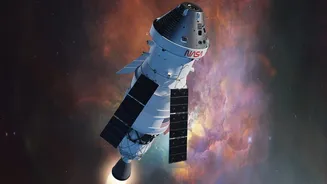
Artemis: The Next Steps on the Moon
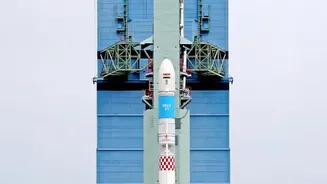
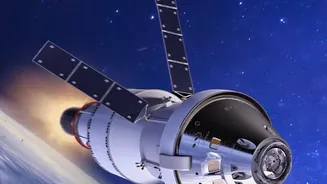
The Artemis program is NASA’s grand strategy to establish a long-term human presence on and around the Moon. The program is already building momentum. In April 2026, the Artemis II mission successfully sent a crew of four astronauts on a ten-day flight
that looped around the Moon, flying farther from Earth than any humans in history. That flight, crewed by Commander Reid Wiseman, Pilot Victor Glover, and Mission Specialists Christina Koch and Jeremy Hansen, proved the capabilities of the powerful Space Launch System (SLS) rocket and the Orion crew capsule. The next step, Artemis III, is slated for 2027. While initially planned as the lunar landing mission, NASA has adapted its goals. Artemis III will now be a complex demonstration in low Earth orbit. Its crew will test the critical systems needed for a future landing, including practicing rendezvous and docking with the new generation of commercial lunar landers being developed by SpaceX and Blue Origin. This mission is a crucial dress rehearsal, ensuring the hardware is ready before NASA targets the first crewed lunar landing since Apollo on the Artemis IV mission in 2028.
Europa Clipper: The Search for a Hidden Ocean
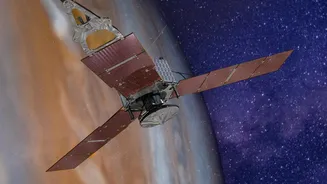
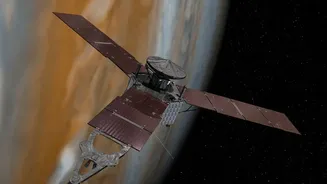
Far from the Moon, one of NASA's most tantalizing science missions is already well on its way. The Europa Clipper spacecraft, which launched in October 2024, is on a multi-year journey to Jupiter. Its destination is Europa, an icy moon believed to hide a vast, global saltwater ocean beneath its frozen crust—an ocean that may contain more than twice the water of all of Earth's oceans combined. Europa Clipper is not a life-detection mission itself. Instead, its primary goal is to determine if Europa has the ingredients for life: liquid water, essential chemical elements, and a source of energy. The spacecraft is currently speeding through the inner solar system and is scheduled for a critical gravity-assist flyby of Earth in December 2026. This maneuver will use our planet's gravity to slingshot the probe onto its final trajectory toward Jupiter, where it's expected to arrive in April 2030. Once there, it won't orbit Europa directly due to Jupiter's intense radiation. Instead, it will make dozens of close flybys, swooping in to gather data with a suite of advanced instruments before retreating to a safer distance.
VIPER: The Comeback Kid Prospecting for Water
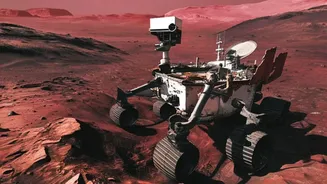
Closer to home, the VIPER rover represents a story of persistence and the changing landscape of space exploration. Short for Volatiles Investigating Polar Exploration Rover, VIPER is a golf-cart-sized robot designed to hunt for one of the Moon's most valuable resources: water ice. In 2024, the mission was abruptly canceled due to cost concerns and delays, a move that was met with significant disappointment from the scientific community. However, the mission was brought back from the brink. In late 2025, NASA announced it had partnered with the commercial company Blue Origin to deliver the already-built rover to the Moon's south pole. Now targeting a launch in 2027, VIPER will be the first rover to map water ice concentrations in the permanently shadowed craters of the lunar south pole—some of the coldest places in the solar system. Its findings are essential for the Artemis program's long-term goal of sustainability, as lunar water could one day be harvested for drinking water, breathable air, and rocket propellant for future missions to Mars and beyond.
Dragonfly: A Drone to Explore an Alien World
Perhaps the most futuristic project on NASA's slate is Dragonfly, a mission that sounds like science fiction. Scheduled to launch in July 2028, Dragonfly is a car-sized, nuclear-powered rotorcraft—essentially a robotic drone—destined for Saturn's largest moon, Titan. After a long journey, it is expected to arrive at Titan in 2034. Titan is a unique world with a thick, nitrogen-rich atmosphere and rivers, lakes, and seas of liquid methane and ethane. Scientists believe its complex, carbon-rich chemistry could be similar to that of early Earth, making it a prime target for studying the building blocks of life. Unlike a stationary lander or a slow-moving rover, Dragonfly will be able to fly from one location to another, covering dozens of miles in a single flight. This will allow it to sample diverse materials from different geologic settings. The spacecraft is currently in its fabrication and testing phase, with engineers assembling the vehicle that will one day fly through the hazy, orange skies of a distant moon.