



The Universal Ritual: Chai and Pakoras
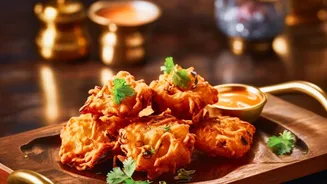
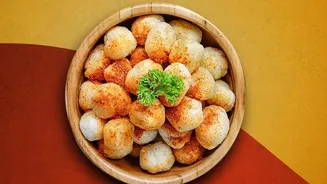
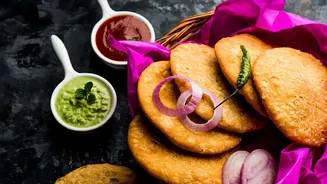
Across India, the pitter-patter of rain is almost always accompanied by the sizzle of pakoras hitting hot oil. This isn't just a snack; it's a national ritual. These deep-fried fritters, made from gram flour and a variety of fillings like onions, potatoes,
spinach, or paneer, offer a perfect crunchy contrast to the damp weather. Paired with a steaming cup of masala chai, spiced with ginger and cardamom, it becomes an experience of pure comfort. Whether enjoyed at a roadside stall huddled under an awning or made fresh at home, the combination of crisp, savoury pakoras and sweet, milky chai is the definitive taste of the Indian monsoon.
The Royal Sweet: Ghevar in Rajasthan
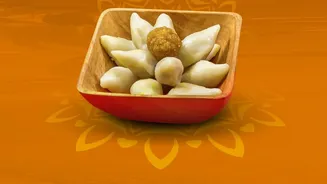
As monsoon clouds gather over the arid landscapes of Rajasthan, sweet shops begin to display golden, disc-shaped delicacies called ghevar. This intricate, honeycomb-like sweet is made by drizzling a flour batter into hot ghee. It’s a seasonal speciality, as the high humidity of the monsoon is believed to be essential for creating its signature porous and crisp texture. Deeply associated with the festivals of Teej and Raksha Bandhan, ghevar is soaked in sugar syrup and often topped with rabri (thickened sweet milk) and nuts, making it a rich, indulgent celebration of the rains.
The Silver Harvest: Ilish in West Bengal
For Bengalis, the monsoon is synonymous with Ilish, or Hilsa. This prized fish, known for its distinct flavour and soft texture, migrates from the sea to the rivers to spawn during this season, making it freshly and abundantly available. More than just a fish, Ilish is an emotion, celebrated with dedicated 'Ilish Utsavs' or Hilsa festivals. Dishes like Shorshe Ilish (cooked in a pungent mustard gravy) and Bhapa Ilish (steamed with spices) become the stars of household meals and restaurant menus, representing a deep-rooted cultural and culinary tradition tied to the season's bounty.
The Healing Gruel: Karkidaka Kanji in Kerala
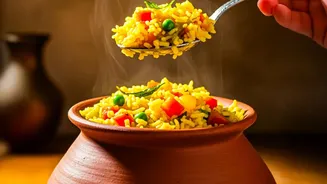
In Kerala, the monsoon month of Karkidakam is traditionally a time for rejuvenation and building immunity. At the heart of this wellness practice is Karkidaka Kanji, a medicinal rice porridge. According to Ayurveda, the body's digestive fire is weaker during the heavy rains, making it vulnerable to illness. This special kanji, made with Njavara rice, coconut milk, and a blend of Ayurvedic herbs and spices, is designed to be easily digestible, detoxifying, and immunity-boosting. Consumed daily for a period during the month, it is a time-honoured tradition of aligning the body with the rhythms of nature.
The Street-Side Classic: Bhutta
The smoky aroma of bhutta, or roasted corn on the cob, is an unmistakable sign that the monsoon has arrived in India. Found at countless roadside stalls, especially near scenic spots and beaches, this simple snack is a seasonal favourite. Corn cobs are roasted over hot coals until the kernels are lightly charred and tender. They are then rubbed vigorously with a mixture of lemon juice, salt, and chilli powder, creating a perfect blend of tangy, spicy, and smoky flavours that feels incredibly satisfying on a cool, rainy day.
The Mumbai Lifeline: Vada Pav
While Vada Pav is Mumbai's all-season, go-to snack, it takes on a special significance during the city's torrential downpours. Often called the 'Indian burger', it consists of a spicy, deep-fried potato fritter (vada) tucked inside a soft bread roll (pav), usually smeared with tangy and spicy chutneys. When the rains bring the bustling city to a crawl, ducking into a small stall for a hot, freshly made vada pav offers a moment of delicious, affordable comfort. It is more than just food; it is an emotion and an integral part of Mumbai's monsoon experience.
The Parsi Delicacy: Patrani Ni Machhi
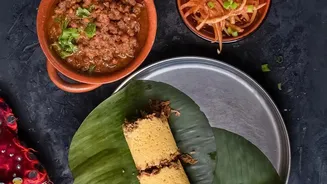
A celebrated dish in Parsi cuisine, Patrani Ni Machhi is a sophisticated yet comforting monsoon preparation. The name translates to 'fish in a leaf'. Fillets of fish, traditionally pomfret, are coated in a vibrant green chutney made from coconut, fresh coriander, mint, and green chillies. Each fillet is then wrapped in a banana leaf and steamed until perfectly cooked. This gentle cooking method ensures the fish remains moist and absorbs the subtle aroma of the leaf and the fresh flavours of the chutney. It's a light, healthy, and incredibly flavourful dish that is a staple at Parsi weddings and special occasions.