




The Science of Stubbornly Wet Clothes
To understand why clothes dry so slowly indoors, we need to think about evaporation. Drying is the process of turning liquid water in the fabric into water vapour. For this to happen efficiently, the air surrounding the clothes needs to be relatively
dry. When you hang a wet load of laundry inside a closed room, the water evaporates and fills the air. Soon, the air becomes saturated with moisture, meaning it can't hold any more water vapour. At this point, the drying process slows to a crawl because the water has nowhere to go. This trapped moisture is what leads to damp, limp fabrics and that all-too-familiar musty odour.
Why Airflow is Your Best Friend
This is where airflow comes in as the hero of your laundry day. Moving air acts like a shuttle service for moisture. It whisks away the layer of humid, saturated air sitting right next to your wet clothes and replaces it with fresher, drier air. This constant replacement allows the evaporation process to continue steadily. Think of it like drying clothes outside on a breezy day versus a still one; the wind makes all the difference. By creating movement, you are essentially preventing the air in your room from becoming a stagnant, damp blanket that smothers your clothes. This simple principle is the key to unlocking faster drying times indoors.
Simple, No-Cost Strategies
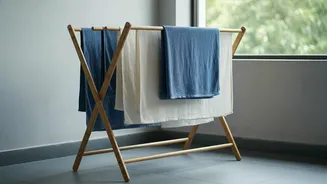
You don't need expensive gadgets to improve airflow. The most effective methods are often the simplest. Start by spacing your clothes properly on the drying rack. Overcrowding traps moisture and prevents air from reaching the fabric. Give each item its own space to breathe. Next, create a cross-breeze by opening windows on opposite sides of the room. This creates a natural wind tunnel that carries moisture out. If that's not possible, even opening a single window and the door to the room can encourage air circulation. Hanging clothes on individual hangers can also expose more surface area to the air, speeding up the process.
Level Up With a Fan
For a more powerful and reliable solution, a simple electric fan is an incredibly effective tool. You don't need a special model; any desk or pedestal fan will do the job. Position the fan a few feet away from your drying rack and set it to a moderate speed. The constant, directed airflow will dramatically shorten drying times. It's much more energy-efficient than using a tumble dryer and gentler on delicate fabrics that could be damaged by high heat. For an added boost, you can point the fan towards an open window to actively push the moist air out of the room.
The Ultimate Weapon: A Dehumidifier
If you live in a particularly humid climate or frequently struggle with dampness, a dehumidifier is a game-changing investment. Unlike a fan that just moves air around, a dehumidifier actively pulls moisture out of the air. It creates an optimally dry environment that encourages water to evaporate from your clothes at a rapid rate. Many modern dehumidifiers even have a dedicated 'laundry mode' designed for this exact purpose. While the initial cost is higher than a fan, it is generally cheaper to run than a tumble dryer and has the added benefit of protecting your home from the broader issues caused by high humidity.
The Hidden Dangers of Lingering Damp
Beyond just smelly clothes, consistently drying laundry indoors without proper ventilation can harm your home and your health. A single load of washing can release nearly two litres of water into the air. This excess moisture creates the perfect breeding ground for mould and mildew on walls, furniture, and in hidden corners. Inhaling mould spores can trigger allergic reactions, worsen asthma, and lead to other respiratory issues. By ensuring your clothes dry quickly, you are not just doing your laundry—you are also maintaining better indoor air quality and a healthier living environment.