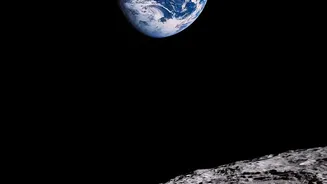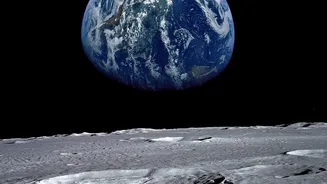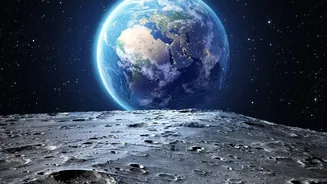

A New Window on Our World
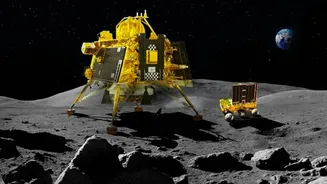
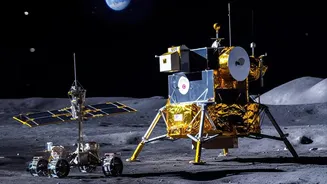
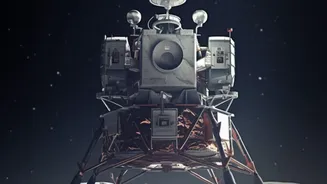
To truly understand Earth from a distance, scientists have proposed dedicated instruments designed for the unique environment of the Moon. One such key proposal is LOUPE, the Lunar Observatory for Unresolved Polarimetry of the Earth. LOUPE is a compact
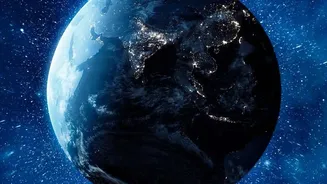
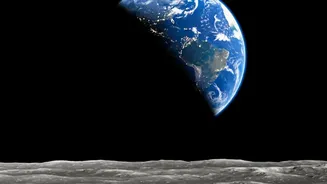
and robust spectro-polarimeter designed specifically to be placed on the Moon, either in orbit or on the surface. Its mission is simple but profound: to stare back at our home planet and measure its light in unprecedented detail. This isn't just about taking pictures; it's about systematically collecting data that can only be gathered from a distant, stable platform, turning the entire Earth into a single point of study, much like how we currently observe distant planets.
The Moon as a Scientific Outpost
Why go all the way to the Moon to study Earth? The lunar surface provides a uniquely stable and atmosphere-free platform for observation. Unlike Earth-orbiting satellites that are close to their subject and move rapidly, a lunar observatory can watch our planet continuously for long periods. This allows scientists to see the full picture of Earth's rotation and observe it through its different phases, from a full sunlit disk to a crescent. This is crucial for understanding the total amount of energy our planet reflects back into space. The Moon acts as a natural, stationary science outpost, offering a vantage point that is essential for calibrating climate models and understanding global changes over time. Former astronauts have noted that a permanent research station there is the next logical step in exploration.
Capturing Earth's Unique Fingerprint
The key to this new perspective lies in what LOUPE measures: the flux and polarization of sunlight reflected from Earth. Flux is the total amount of light, but polarization is a more subtle property that provides a wealth of extra information. When light bounces off different surfaces—like oceans, forests, deserts, or clouds—it becomes polarized in distinct ways. By measuring this, scientists can learn about the composition and structure of Earth's atmosphere and surface. For example, polarization is particularly sensitive to the presence of aerosols and the physical properties of clouds, both of which are critical components of our planet's climate system but are often difficult to measure on a global scale. This data provides a detailed 'fingerprint' of a life-bearing planet.
A Mirror to Find Other Earths
Perhaps the most exciting application of this research is in the search for life beyond our solar system. One of the main goals of a project like LOUPE is to use Earth as the ultimate test case for an inhabited exoplanet. By meticulously documenting the spectral and polarization signals of our own living world, scientists can create a benchmark. When future powerful telescopes, like the James Webb Space Telescope, turn their gaze toward rocky planets orbiting distant stars, astronomers will have a template for what a life-sustaining atmosphere looks like. This helps them not only design the right kinds of telescopes but also interpret the faint signals they collect. Observing Earth from the Moon is, in effect, creating a field guide for finding another Earth.
Unlocking Critical Climate Clues
Beyond the search for exoplanets, observing Earth from the Moon provides direct and invaluable data for climate science here at home. The total amount of solar energy that Earth reflects, known as its albedo, is a fundamental variable in our climate system. A lunar observatory can measure this integrated value for the entire planet with high precision over long periods. This helps scientists track changes in Earth's energy balance and improve the accuracy of global climate models. Furthermore, the detailed measurements of aerosols—tiny particles in the atmosphere from sources like dust, pollution, and volcanic eruptions—can help clarify their complex role in either cooling or warming the planet. It's a global health check-up, conducted from 239,000 miles away.