





What Are Micro-Fulfilment Hubs?
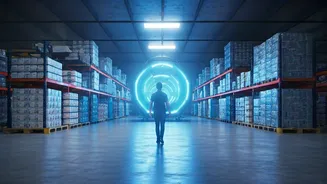
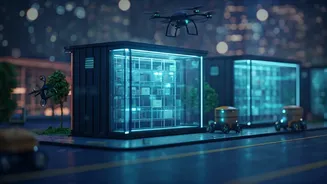
A micro-fulfilment centre (MFC), often called a 'dark store', is a small, hyper-local warehouse strategically placed in dense urban neighbourhoods. [9, 11] Unlike massive, traditional warehouses located on the outskirts of a city, an MFC is compact—often
under 10,000 square feet—and designed for one purpose only: rapid order processing. [14, 19] They are closed to the public, hence the term 'dark store', and are optimised for speed, with staff dedicated solely to picking and packing online orders for immediate dispatch. [9, 10] This proximity to the customer is the fundamental difference that makes 10-to-30 minute delivery possible. [2, 10]
The Need For Unprecedented Speed
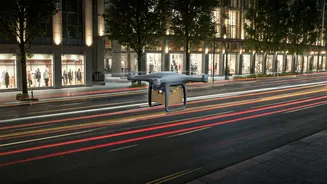
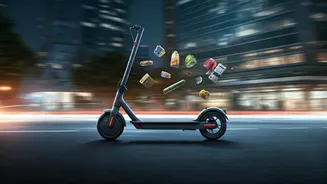
The quick commerce model, which promises delivery in minutes, fundamentally breaks traditional logistics. [5] Standard e-commerce relies on large, centralized fulfilment centres, but delivering from a distant warehouse to a city apartment in under 30 minutes is impossible. The 'last-mile' of delivery—the final journey from a hub to a customer's doorstep—is also the most expensive part of the supply chain, often accounting for over 40% of total costs. [8, 14] Quick commerce platforms like Zepto, Blinkit, and Swiggy Instamart realised that to meet consumer demand for instant gratification, they had to completely re-engineer their supply chain by bringing the inventory dramatically closer to the buyer. [12, 17]
How They Power the 'Fast Cart'
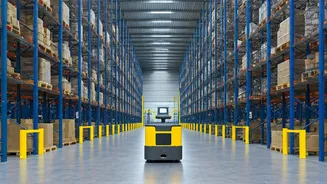
The entire operation is a symphony of efficiency. Each MFC stocks a curated, limited range of high-demand items—typically 2,000 to 5,000 products—predicted by data analytics and machine learning algorithms. [5, 7] When you place an order, it is routed to the nearest dark store, often just 1-2 kilometres from your location. [7] Inside, a 'picker' receives the alert and, guided by an optimised store layout, collects the items in minutes. [13] The order is quickly packed and handed off to a delivery rider waiting outside, drastically cutting down the transit time and cost associated with the last mile. [9, 13] This hyperlocal model is the financial and operational backbone of quick commerce. [9]
The Players Mastering the Model
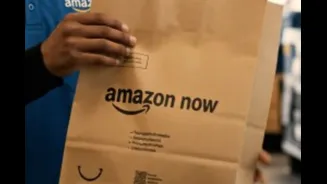
India's quick commerce market is a battleground where the density of MFCs is a key competitive advantage. Blinkit (owned by Zomato) leads the pack with over 2,200 dark stores, while Swiggy Instamart and Zepto operate over 1,100 each. [16, 21] Even e-commerce giants are racing to catch up, with Flipkart Minutes recently crossing the 1,000 MFC mark and Amazon Now planning a similar expansion. [16, 21, 24] Companies like Zepto have built their entire model around a 'density-first' strategy in major metros, while Blinkit has leveraged its network to expand into Tier-2 and Tier-3 cities. [22] This rapid rollout is reshaping retail, with India's Q-commerce market valued at over USD 3 billion in FY 2024. [2]
The Economics and Challenges of Proximity
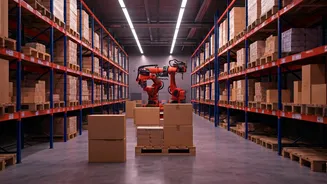
While MFCs solve the speed problem, they introduce their own set of challenges. Setting up a dense network of automated or semi-automated facilities requires significant initial investment. [8] Real estate costs in prime urban locations are high, and these small stores must be restocked frequently due to limited inventory space, adding to operational complexity. [8, 15] Profitability hinges on achieving high order density—enough orders within a small radius to offset the fixed costs of rent and staff. [7] Despite these hurdles, the model works because it drastically reduces last-mile costs and increases customer retention through unparalleled convenience, a trade-off companies are willing to make to win the market. [20]