





The Magic of 'Floating' Design
What makes a floating shelf so appealing is its minimalist magic. Unlike traditional bookshelves or cabinets, these shelves have no visible brackets or supports. The mounting hardware is completely hidden within the shelf, creating a clean, streamlined
look that makes the shelf appear to 'float' against the wall. This design trick has a powerful effect on a room. By drawing the eye upward and keeping the floor clear, floating shelves create an illusion of more space, making them perfect for smaller Indian homes where every square foot matters. Rather than filling a room with bulky furniture, they utilise vertical space, which is often overlooked. The result is storage that feels light and airy, not heavy and imposing.
Choosing the Right Wood for a Rustic Feel
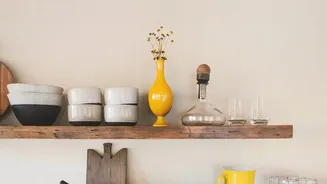
The key to achieving a 'rustic' look lies in the wood. This style celebrates natural textures, visible grain, and the inherent character of the material. For an affordable and versatile option, pine is a popular choice with its prominent knots and pale colour that takes stain well. However, as a softwood, it's best for lighter decorative items. For something more durable that can handle the weight of books or heavy kitchenware, hardwoods like oak and walnut are excellent. Oak offers exceptional strength and a bold grain pattern perfect for a classic farmhouse feel, while walnut provides a richer, darker tone for a more refined rustic aesthetic. For the most authentic look, reclaimed wood, salvaged from old structures, brings a unique history with its weathered textures and imperfections.
An Economical and Smart Upgrade
One of the most compelling benefits of floating shelves is their cost-effectiveness. Compared to buying a large bookcase or a freestanding display cabinet, a set of wooden shelves is often a more budget-friendly investment. The savings become even more significant if you have the tools for a DIY approach, where the primary cost is just the lumber. While some high-end, pre-made floating shelves can be an investment, basic options are widely available at affordable prices. Furthermore, their economic value isn't just in the initial purchase. By providing essential storage in underutilised areas like above a desk, in a hallway, or over a toilet, they can eliminate the need to buy larger, more expensive pieces of furniture, saving both money and floor space.
Tips for Secure Installation
A floating shelf is only as good as its mounting. While the installation is a manageable project for many, doing it correctly is critical to prevent sagging or failure. The most important step is to locate the wall studs—the vertical wooden beams inside your wall. Attaching the shelf's hidden bracket directly into these studs provides the strongest possible support for holding significant weight. If you can't align with studs, you must use appropriate wall anchors designed for your wall type (drywall, plaster, or brick). Always use a level during installation to ensure your shelf is perfectly horizontal. Most floating shelves come with their own bracket systems, which typically involve securing a metal bracket to the wall first and then sliding the wooden shelf over it like a sleeve.
Styling Your Shelves for Maximum Impact
Once your shelves are up, the fun begins. The key to great shelf styling is creating a balanced, personal display that doesn't look cluttered. Start with functional items you actually use, like books in the living room or everyday dishes in the kitchen. Then, layer in decorative objects. A good rule of thumb is to vary the height and texture of your items—mix tall vases with short stacks of books, smooth ceramics with rough-textured baskets. Grouping items in odd numbers, like threes or fives, is often more visually appealing than even-numbered groupings. Most importantly, don't be afraid to leave some empty space. This 'breathing room' prevents the shelf from looking overloaded and allows each displayed item to stand out.