






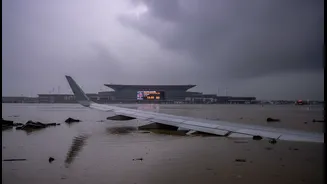


A Familiar Scene of Chaos
On Friday, July 10, Kolkata’s Netaji Subhas Chandra Bose International Airport was once again at the mercy of the monsoon. A heavy downpour, part of an active monsoon trough over the region, led to significant disruptions. Airlines like SpiceJet issued
advisories, warning passengers of potential delays for all arrivals and departures due to the adverse weather. The India Meteorological Department (IMD) confirmed the situation, forecasting intense rainfall throughout the day and into the weekend. The area where the airport is located, Dum Dum, recorded the highest rainfall in south Bengal at 96 mm in the 24 hours leading up to Friday morning. This wasn't just a brief shower; it was a sustained event that slowed operations and left countless travellers waiting, a scene that has become an annual ritual for the city's air hub.
The Airport's Achilles' Heel: Waterlogging
The core issue crippling the airport during heavy rains is not the rainfall itself but a persistent, well-documented problem: waterlogging. The airport's operational areas, including taxiways and even parts of the runway, have historically been prone to inundation. While flight operations may sometimes continue, the presence of standing water poses significant safety and logistical challenges. Water on the tarmac can affect aircraft braking, damage sensitive ground equipment, and slow down the movement of planes and service vehicles. This problem isn't new; videos and reports from previous years, such as in August 2024 and September 2025, show similar scenes of planes parked on flooded taxiways, pointing to a systemic vulnerability rather than a one-off event. The roads leading to the airport are also frequently submerged, causing traffic jams and making it difficult for passengers and staff to even reach the terminal.
Past Promises and Present Realities
Authorities are aware of the airport's drainage crisis. In late 2024, a high-level meeting involving various state government departments and airport officials was held to devise a permanent solution. The plan included installing high-capacity water pumping stations, extensive desilting of canals, cleaning drainage pipes, and even raising the level of service roads. Officials identified that a low invert level at a key canal outlet was a primary cause of waterlogging in the airport's vicinity. While these discussions signal intent, the recurring nature of the flooding suggests that the implementation has either been incomplete or insufficient to handle the intensity of monsoon downpours. The continued disruptions underscore a gap between proposed solutions and on-the-ground reality, leaving the airport exposed each monsoon season.
Broader Infrastructure and Capacity Challenges
The rain-induced chaos magnifies the broader pressures on Kolkata's airport. It is a facility grappling with rising passenger numbers and the need for constant upgrades. The airport has recently undertaken expansion projects to increase its passenger handling capacity from 26 million to 28 million annually. Other upgrades include a new secondary runway and the installation of a CAT-III landing system to aid operations in poor visibility. However, airline operators have continued to call for further efficiency improvements, including better self-check-in systems, cleaner facilities, and smoother traffic flow on approach roads. The waterlogging issue is, therefore, one critical piece of a larger puzzle involving the need to modernise and expand infrastructure to meet the demands of a major metropolitan hub and to prevent recurring seasonal paralysis.