



A Tale of Two Moons
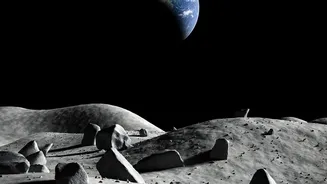
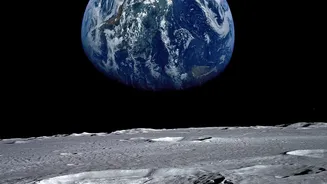
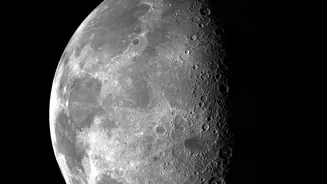
Since the dawn of the Space Age, we've known the Moon has two distinct faces. The side that always faces Earth, the near side, is characterized by vast, smooth, dark plains called 'maria' or seas, which are ancient solidified lava flows. In stark contrast,
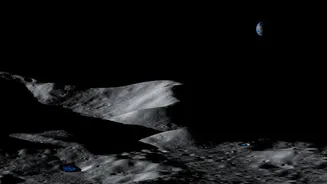
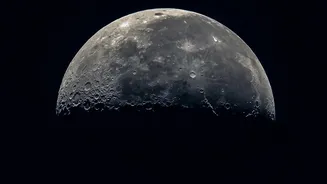
the far side, first seen by a Soviet probe in 1959, is almost entirely covered in bright, rugged highlands and countless impact craters. This stark difference, known as the lunar dichotomy, isn't just skin deep; the far side's crust is also significantly thicker. For decades, the leading theory suggested this was due to how the Moon cooled, with Earth's lingering heat keeping the near side molten for longer. But that explanation never quite accounted for the dramatic scale of the differences.
A Breakthrough from the Far Side
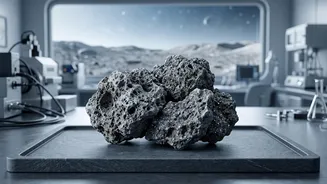
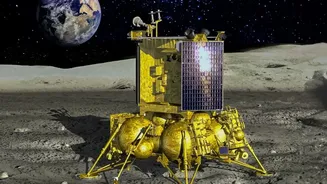
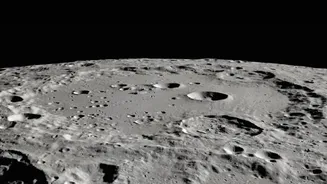
The game changed in June 2024, when China's Chang'e-6 mission accomplished a historic feat: it landed on the Moon's far side and returned with the first physical samples ever collected from this enigmatic region. The probe touched down in the South Pole-Aitken (SPA) basin, one of the largest and oldest known impact craters in the entire solar system, spanning nearly a quarter of the lunar surface. Scientists have long suspected this colossal crater held clues to the Moon's lopsided evolution, but without actual rock and soil to analyze, their ideas remained unproven. The Chang'e-6 samples provided the missing puzzle pieces, allowing for a direct comparison between materials from the Moon's two hemispheres for the first time.
Clues Written in Isotopes
Analysis of the returned samples revealed a startling chemical fingerprint. When compared to rocks from the near side, the far side material contained a higher proportion of heavier isotopes of elements like potassium and iron. Isotopes are versions of an element with slightly different masses. The new findings suggest an event of unimaginable heat and pressure, one so intense that it caused lighter isotopes to literally boil off and escape into space. Standard volcanic processes can't explain this specific chemical signature, particularly for potassium. The only culprit powerful enough to cause such a change is a cataclysmic impact.
A New Theory: The Giant Impact
This evidence points to a new, violent explanation for the Moon's asymmetry, centered on the formation of the South Pole-Aitken basin itself. The theory suggests that roughly 4.25 billion years ago, a massive asteroid impact didn't just carve out a crater; it fundamentally remelted the far side's crust and upper mantle. The extreme heat from this collision drove off more volatile elements and altered the deep chemistry of the hemisphere. This event effectively suppressed the kind of large-scale, sustained volcanic activity that later resurfaced the near side, leaving the far side's ancient, cratered terrain largely intact. In essence, the impact set the two hemispheres on entirely different evolutionary paths from that moment forward.
Another Piece of the Puzzle: Magma Convection
Another complementary theory, also bolstered by the Chang'e-6 data, involves the Moon's ancient magma ocean. Shortly after its formation, the Moon became tidally locked with Earth, meaning the same side always faces us. This created an uneven temperature gradient. Researchers propose this triggered a massive, sideways circulation of molten rock within the Moon. This convection could have physically pushed lighter, crust-forming materials toward the far side, explaining its thicker crust. At the same time, it concentrated a cocktail of radioactive, heat-producing elements (known as KREEP) on the near side. This concentration of natural radioactive fuel provided the energy for the volcanism that created the near side's dark, smooth seas.