




The Galaxy in Your Pocket
The barrier to entry for astronomy has traditionally been knowledge and expensive equipment. But a technological revolution has democratised the hobby. Today's smartphones boast increasingly sophisticated cameras and processors, capable of feats that
were once the domain of dedicated astrophotography gear. Paired with a universe of clever apps, these devices have transformed into powerful tools for navigating and capturing the night sky, making astronomy more accessible than it has ever been. This shift invites casual observers and curious beginners to move from simple admiration to active participation, turning a clear night into an opportunity for cosmic exploration.
Your Starter Kit: Essential Apps
The first step into smartphone astronomy is downloading a guide. Modern planetarium apps use your phone's GPS and internal compass to create a real-time map of the sky above you. Point your phone at a bright dot, and the app can identify it instantly, whether it’s a planet, a distant star, or the International Space Station flying overhead. Apps like Star Walk 2 and SkyView are praised for being beginner-friendly, offering augmented reality overlays that label constellations and celestial bodies. For those seeking more detail, Stellarium Mobile provides a deeply realistic and comprehensive star chart. Many of these apps also provide information on upcoming astronomical events, ensuring you never miss a meteor shower or a planetary alignment.
From Viewing to Imaging
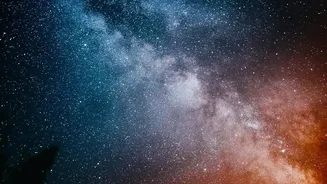
Beyond simply identifying objects, smartphones are now remarkably capable cameras for capturing them. While you can take basic photos of the Moon by simply holding your phone up to a telescope eyepiece, the real magic happens when you unlock your phone's manual settings. Many modern smartphones have a 'Night Mode' or 'Pro Mode' that allows you to control key variables like ISO (light sensitivity), shutter speed (exposure time), and focus. A longer exposure time allows the camera's sensor to gather more faint light from stars and nebulae. While it may not rival a high-end DSLR, the ability to take a 10- or 30-second exposure can reveal the Milky Way or the faint smudge of a distant galaxy, which is a thrilling achievement for any beginner.
Simple Gear for Serious Results
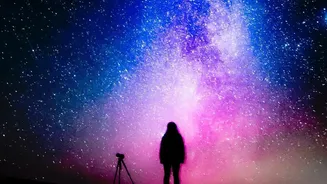
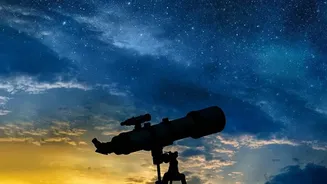
While a smartphone alone is powerful, a few inexpensive accessories can dramatically improve your results. The single most important piece of gear is a tripod. For long exposures, the phone must be perfectly still to avoid blurry star trails. A simple smartphone tripod is all you need to get started. The next level up is a smartphone adapter, a clamp-like device that securely mounts your phone to the eyepiece of a telescope or even a pair of binoculars. This creates a stable connection for taking high-magnification shots of the Moon's craters or the moons of Jupiter. Brands like Celestron and Svbony offer popular and affordable adapters that fit most phones and eyepieces, making it easy to turn your existing optics into an astrophotography rig.
Tips for Your First Night Out
Ready to give it a try? First, find a location away from city lights; light pollution is the enemy of astrophotography. Use one of your stargazing apps to plan what you want to see. Set up your phone on a tripod and experiment with your camera’s manual mode. Start with an ISO around 1600 and a shutter speed of 10 to 20 seconds. Use the manual focus to make the stars as sharp as possible. To avoid shaking the phone when you take the picture, use a Bluetooth remote or the volume buttons on your headphones as a shutter release. Most importantly, be patient. It takes practice to learn the right settings, but the reward of capturing your first piece of the cosmos is well worth the effort.