







An Accidental Discovery
The story begins not with a search for ancient diseases, but with a collection of bones. Researchers were analyzing the remains of four hunter-gatherers excavated from a site in Latvia, hoping to learn more about their genetics and diet. The remains of one individual,
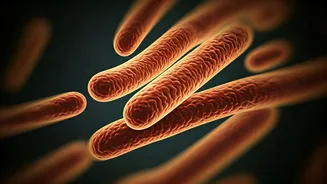
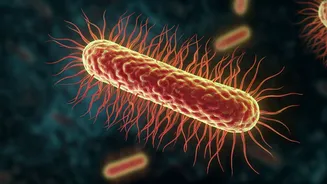
a man in his 20s, held a surprise. While sequencing his DNA, scientists found something they weren't looking for: the genetic signature of Yersinia pestis, the bacterium that causes plague. Radiocarbon dating placed the man's death around 5,000 years ago, and further analysis revealed his infection was from the oldest known strain of plague ever identified. This pushed back the known history of the plague by thousands of years. However, the context of his burial was key; he was buried carefully, not in a mass grave, which was the first clue that this ancient plague might not have behaved like its infamous descendants.
An Inefficient Killer
This ancient strain of Y. pestis was a different beast from the one that caused the Black Death. Genetic analysis showed it was missing key genes that made later versions so terrifyingly effective. Most importantly, it lacked the gene that allowed the bacteria to survive and multiply within fleas. This is a crucial distinction. The flea-borne transmission cycle—from rodent to flea to human—is what enabled the explosive, continent-spanning pandemics of the Middle Ages. Without this ability, the 5,500-year-old plague was far less mobile. It was likely transmitted through direct contact, such as the bite of an infected rodent. This means it was probably a slower, more isolated disease, causing sporadic infections or small family-based outbreaks rather than city-leveling epidemics.
Rewriting Plague's Origin Story
For a long time, many historians and scientists believed that plague evolved its deadly potential in the crowded, unsanitary conditions of early cities. This discovery challenges that narrative. Evidence of deadly outbreaks has now been found in small, mobile hunter-gatherer communities in Siberia that predate large urban centers. These findings suggest that Y. pestis was already capable of causing lethal, multi-victim outbreaks long before the rise of agriculture and cities. Instead of being a product of urbanism, it appears the plague has a much longer and more complex relationship with humanity, likely spilling over from wild animal populations, such as marmots, on multiple occasions. This forces a rethink of how and where major infectious diseases emerge.
The Evolution of a Super-Pathogen
So, how did this relatively inefficient bug become the Black Death? The answer lies in evolution. This early version of the plague was likely just one step in a long process of adaptation. It was a descendant of a much milder gut bacterium, Yersinia pseudotuberculosis, and had already acquired most of the genetic toolkit for plague. But the killer adaptations came later. Over thousands of years, the bacterium acquired new genes through mutation and exchange with other microbes. One key acquisition around 3,800 years ago was the gene that allowed it to thrive in fleas, turning them into hyper-efficient vectors. This evolutionary step transformed a localized threat into a global one. The 5,500-year-old strain was a deadly-enough ancestor, but it was still a work in progress.
Why This Finding Is No Cause for Alarm
While the discovery of an ancient plague is scientifically thrilling, it poses no threat to modern public health. This specific strain went extinct thousands of years ago, replaced by its more 'successful' descendants. The real value of this research is that it provides a unique window into the past, allowing scientists to track a pathogen's evolution in near real-time. By understanding how a relatively benign bacterium can evolve into a mass killer, researchers can gain crucial insights into the dynamics of emerging infectious diseases today. It’s a reminder that pathogens are constantly changing and that our relationship with the natural world, including the animals we live alongside, has always been a primary driver of human disease.