






Understanding TRAI’s Mission
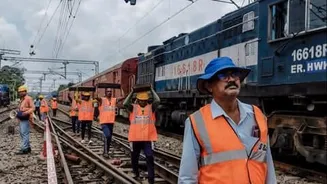
TRAI regularly conducts Independent Drive Tests (IDTs) across India to assess the real-world performance of telecom service providers (TSPs) like Airtel, Jio, BSNL, and Vodafone Idea (Vi). These tests aren't just for cities; they specifically target major
travel corridors, including national highways and railway lines, to see how networks hold up during transit. The goal is twofold: to provide consumers with transparent data on network performance and to push operators to improve service quality where it lags. By simulating user experience—making calls and using data on the move—TRAI gathers crucial information on the quality of service you actually receive, not just what's advertised.
The Key Quality Benchmarks
When TRAI assesses performance, it looks at several Key Performance Indicators (KPIs). For voice calls, the most critical are the Call Drop Rate (CDR) and the Call Setup Success Rate (CSSR). According to TRAI's quality of service rules, the Call Drop Rate should not be more than 2%, meaning no more than two calls out of 100 should disconnect automatically. The Call Setup Success Rate, or the ability to successfully connect a call, should be 95% or higher. For data, TRAI measures download and upload speeds, while for network coverage, it identifies areas with poor signal strength, typically below -110 dBm for 4G and 5G networks.
Recent Findings on Key Routes
TRAI's recent tests in June 2026 revealed a mixed bag of results across different routes. For instance, on the Ahmedabad to Gandhidham rail route, both Airtel and Jio recorded zero dropped calls, whereas BSNL had 7 dropped calls. On the data front, Jio led with an average download speed of 134.73 Mbps, while Airtel registered 64.47 Mbps. A test on the Munabao-Tanot highway (NH-70) in Rajasthan showed Airtel with the highest number of dropped calls (10), followed by Jio (3), BSNL (2), and Vi (1). However, Jio recorded the fastest average download speed at 55.05 Mbps on this route. Similar tests in Madhya Pradesh and Himachal Pradesh also showed significant performance differences between operators, with BSNL often facing challenges in coverage and call reliability, while Jio frequently led in download speeds.
Your Toolkit for Checking Quality
You don't have to rely solely on TRAI's reports. The regulator has empowered consumers with the TRAI MyCall app, a tool designed for real-time feedback. Recently revamped in August 2026, the app allows you to rate your voice call experience immediately after it ends using a simple one-to-five-star system. If you experience a dropped call, poor audio, or echo, you can report it directly through the app. This crowdsourced data is shared with service providers to help them identify and fix network issues in specific locations. The app, available on the Google Play Store, also includes a coverage test feature to assess signal strength wherever you are.
How to Report Poor Service
Using the TRAI MyCall app is the most direct way to report a bad calling experience. After a call, a pop-up window will ask you to rate it and select the environment you were in (e.g., indoor, outdoor, or travelling). If the call dropped, you can tap the 'Call Dropped' button. For other issues, the 'Additional info' section lets you specify problems like background noise or audio delay. The process is straightforward: download the app from your app store, grant the necessary permissions, and start rating your calls. This collective feedback creates a powerful, data-driven picture of network performance that helps hold operators accountable and drives tangible improvements for all users.