
What Exactly Is the International Space Station?
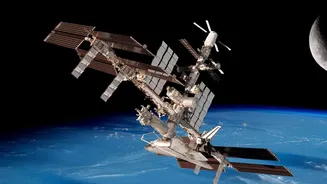
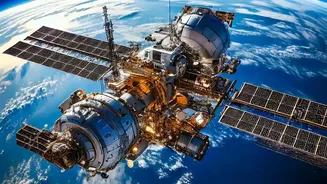
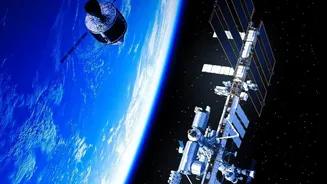
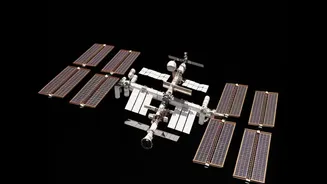
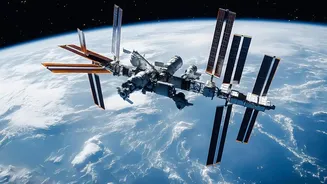
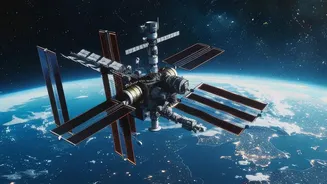
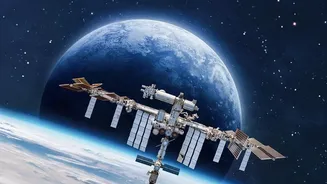
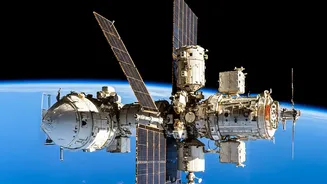
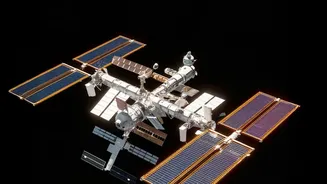
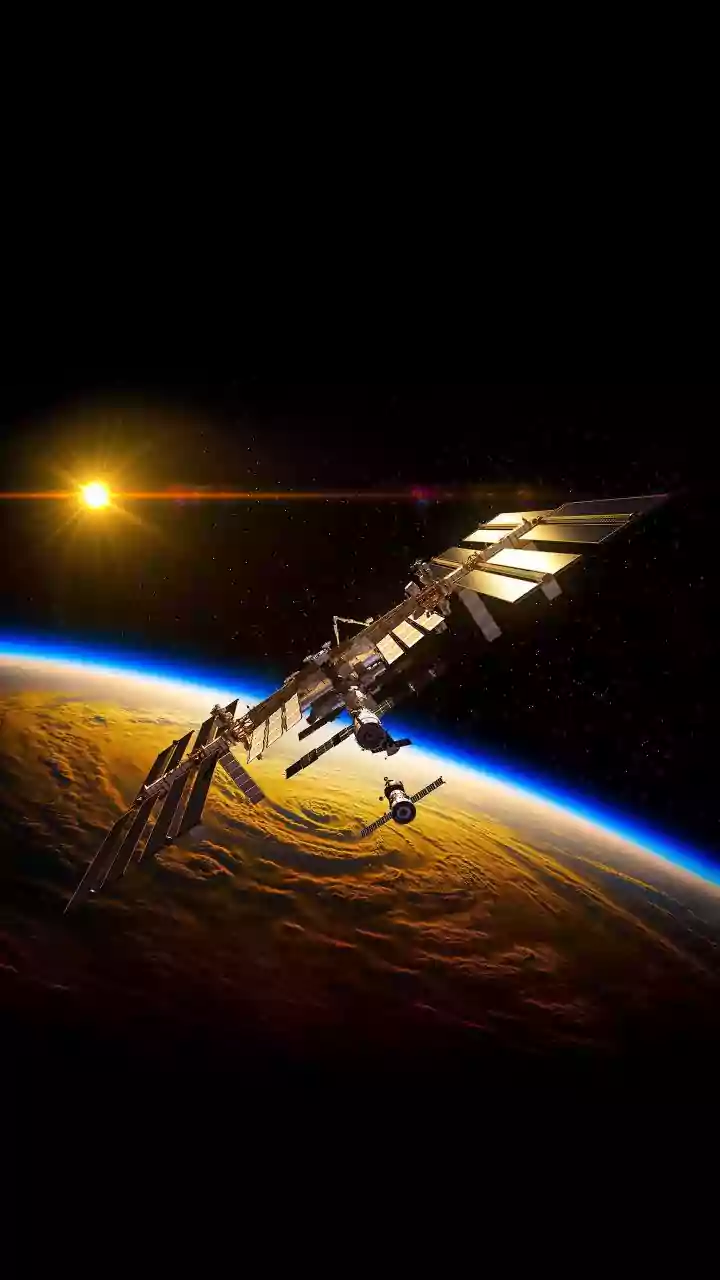
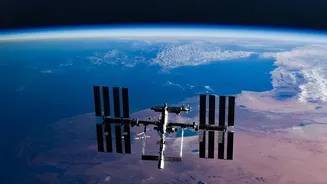
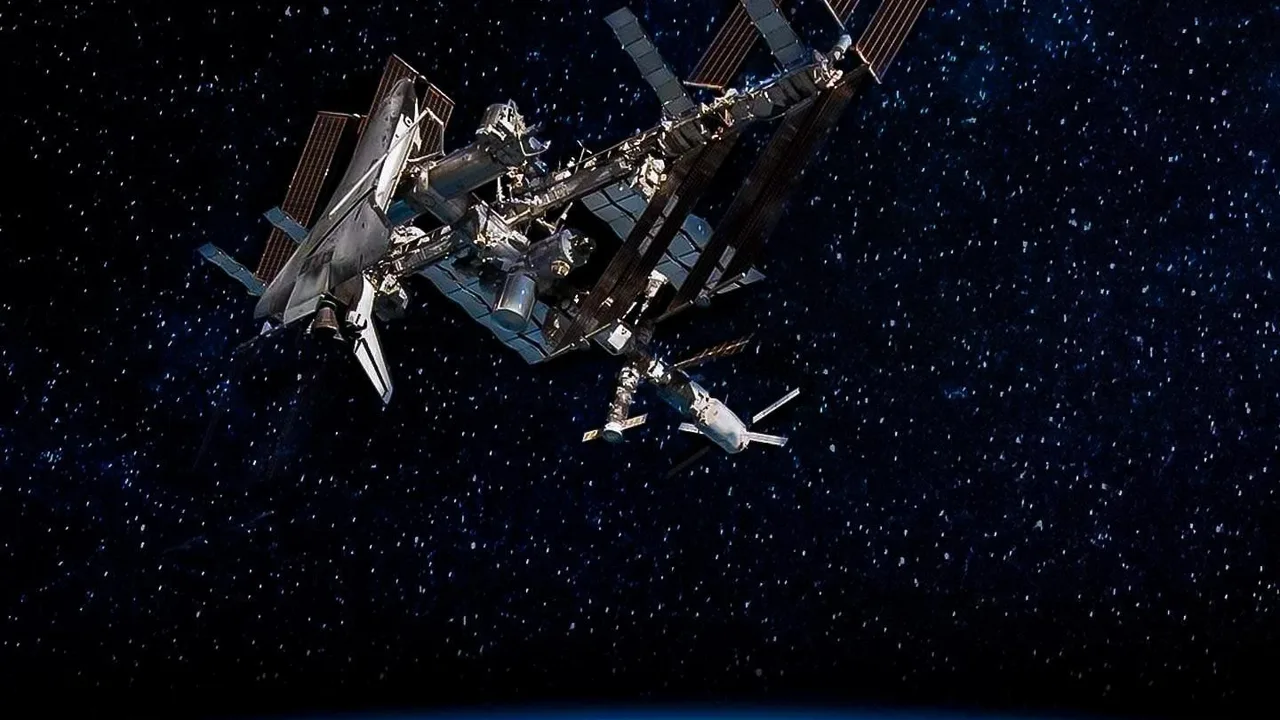
The International Space Station is a large spacecraft that orbits Earth at an altitude of about 400 kilometres. It serves as a home where crews of astronauts and cosmonauts live, and it functions as a unique science laboratory. A joint project between
five space agencies from the United States, Russia, Europe, Japan, and Canada, the ISS is about the size of a football field. It travels at a staggering speed of 28,000 kilometres per hour, completing a full orbit of our planet roughly every 92 minutes. This means the crew on board witness about 16 sunrises and sunsets every single day. Because of its enormous solar arrays, it reflects a great deal of sunlight, making it the third brightest object in the night sky after the Sun and the Moon.
How to Identify the ISS
Spotting the ISS is surprisingly easy, and you don't need a telescope. It appears as a very bright, star-like point of light that moves steadily across the sky. Unlike an aeroplane, the ISS does not have blinking or flashing lights. Its light is constant and unwavering, though it can occasionally flare up in brightness as the sun's angle changes on its reflective surfaces. It also moves much faster than a typical plane. A visible pass can last anywhere from a couple of minutes to over seven minutes, depending on its path. The best time to look is during twilight hours—the one or two hours just before sunrise or after sunset. During these times, your location on the ground is dark, but the ISS, at its high altitude, is still bathed in sunlight, allowing it to shine brilliantly against the darkening sky.
Tools for Tracking
While you can simply go out and look, a little preparation goes a long way. The best resource is NASA's official Spot The Station website. By entering your city, you can get a precise schedule of upcoming viewing opportunities, including the exact time, duration, maximum height it will reach, and the direction it will appear and disappear. For those who prefer using their smartphones, NASA also offers an official Spot The Station app for both iOS and Android, which can send you notifications for upcoming passes. Other popular third-party apps like ISS Detector and websites like Heavens-Above also provide reliable tracking information and live maps. Many of these apps even have an augmented reality (AR) feature that uses your phone's camera to show you exactly where to look in the sky.
Viewing Times for Major Indian Cities in August
Visible passes happen frequently, but the best ones are high and bright. Below are some of the excellent viewing opportunities across India for the latter half of August 2026. Note that all times are local. For a full, up-to-the-minute list for your specific location, be sure to use one of the tracking tools mentioned. For Delhi, a brilliant pass will occur on Monday, August 17th, starting at 4:26 AM. It will be visible for about 7 minutes, rising from the southwest and reaching a high point of 62 degrees. Another good viewing is on Sunday, August 16th, at 5:13 AM. In Mumbai, stargazers should look for the station in the coming days, with several morning passes predicted. Using a tracking app will provide the exact local timings as they become available. For Bengaluru and Chennai, the orbital path of the ISS ensures frequent sightings. Due to India's favourable latitude, the station can often be seen passing nearly directly overhead. Kolkata will also experience several visible passes. A tracking tool can provide specific times, but generally, early morning passes will be prominent throughout the month.
Tips for the Best Viewing Experience
To make the most of your ISS sighting, a few simple tips can help. First, find a location with a clear view of the horizon, away from tall buildings and trees. While the ISS is bright enough to be seen from cities, reducing light pollution will always enhance the experience. Give your eyes about 15-20 minutes to adjust to the darkness before the scheduled pass. Be ready a few minutes before the designated time, as the passes start and end promptly. Finally, remember that you are watching a home and laboratory in space. It's a powerful reminder of human ingenuity, and sharing the moment with friends or family can make it even more memorable.