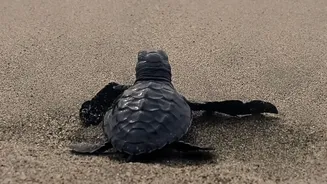









The Annual Olive Ridley Pilgrimage
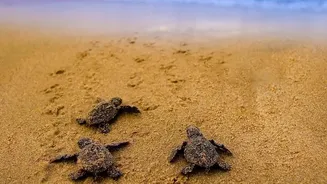
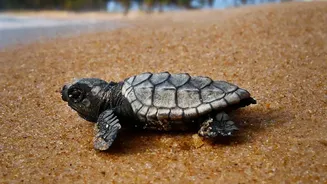
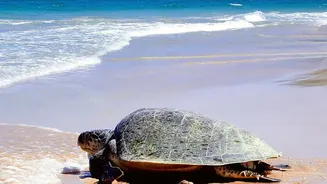
Every year, between November and February, female Olive Ridley sea turtles make an incredible journey back to the shores of Goa to lay their eggs. These turtles are a protected species, and their survival is closely linked to the health of these beaches.
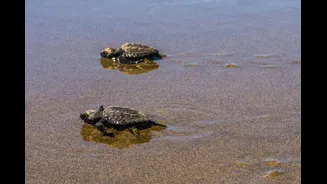
Two beaches in South Goa, Galgibaga and Agonda, are already notified as official turtle nesting sites where the Forest Department, often with the help of local volunteers, works to protect the eggs from predators and human disturbance. The eggs are typically relocated to secure, fenced-off hatchery areas to improve their chances of survival until the hatchlings emerge about two months later and make their way to the sea.
What New Protections Are Proposed?
The Goa Forest Department has recently proposed a significant expansion of these protections. In a letter to the Department of Environment and Climate Change, it has recommended that 24 beaches across the state be officially declared as turtle nesting sites under the Coastal Regulation Zone (CRZ) Notification of 2019. This list includes 14 beaches in South Goa and 10 in North Goa. Among the southern sites are popular tourist hubs like Palolem, Patnem, and Cola, in addition to the already designated Agonda and Galgibaga. Such a designation would classify these areas as ecologically sensitive (CRZ-I), potentially leading to much stricter regulations.
Stricter Rules on the Horizon
If the proposal is accepted, it could bring significant changes to how these beaches operate, especially during the nesting season which coincides with peak tourist season. The new rules would likely involve tighter controls on artificial lighting from shacks and resorts, which can disorient nesting females and hatchlings. There could also be new restrictions on loud music, beach parties, vehicle movement on the sand, and the placement of beach furniture at night. The goal is to minimize human disturbance that threatens the nesting process and the survival of the hatchlings.
A Clash of Livelihoods and Conservation
The proposal has triggered alarm among tourism stakeholders in Canacona and across Goa. Business owners, particularly those who run beach shacks and huts, fear that the new restrictions will cripple their livelihoods. They argue that while they support conservation, declaring almost the entire Canacona coastline as a nesting site is impractical and will kill the local tourism economy. Representatives from the All Goa Private Property Shacks and Huts Owners Association have voiced strong opposition, stating that the government must consult with local communities before implementing rules that put livelihoods at risk. They are seeking clarity on what activities would be permitted, arguing for a balance that allows tourism to coexist with conservation.
The Path Forward: A Search for Balance
Conservation groups and local volunteers have been instrumental in Goa’s turtle protection efforts for years, often working to patrol beaches, educate tourists, and assist the Forest Department. They see the proposal as a necessary step to protect a vulnerable species facing threats from unchecked tourism and coastal development. However, the strong reaction from local businesses highlights the central challenge: finding a sustainable model where environmental protection doesn't come at the cost of the local economy. The government's decision on the proposal is awaited, but the debate underscores a critical question for Goa's future: how to protect its natural heritage while supporting the communities that depend on it.