




What Is a Total Solar Eclipse?
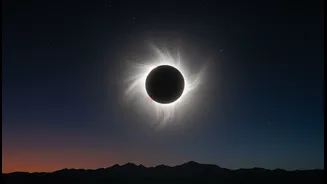
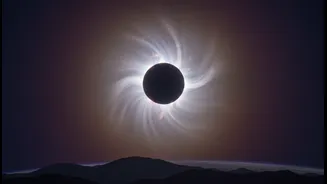
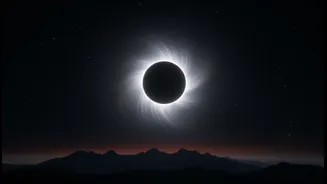
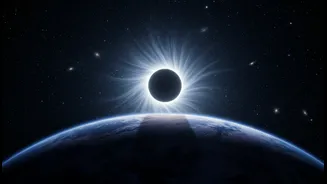
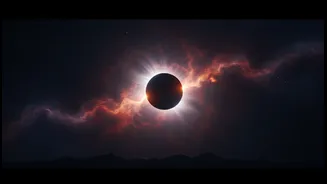
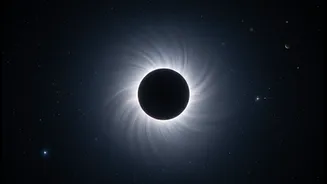
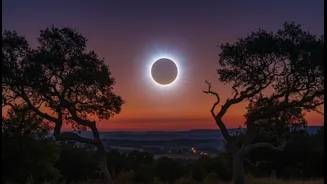
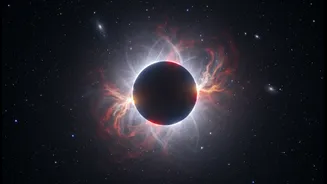
A total solar eclipse happens when the Moon aligns perfectly between the Earth and the Sun, completely blocking the Sun's bright face. For those situated in the narrow path of the Moon's shadow, known as the path of totality, daytime will turn to a deep
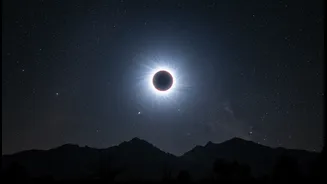
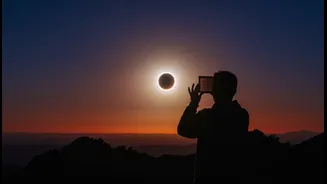
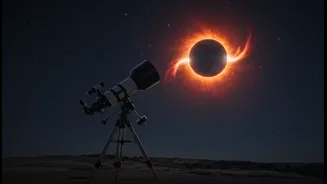
twilight. The temperature may drop, and the sky becomes dark enough to see the Sun's ethereal outer atmosphere, the corona, which is normally invisible. This dramatic period, called totality, also reveals other phenomena like the 'diamond ring' effect—a final flash of sunlight before the Sun is completely covered—and Baily's Beads, which are points of light shining through the Moon's valleys.
Where Will This Eclipse Be Visible?
The path of totality for the August 12, 2026, eclipse begins over a remote part of Siberia and sweeps across the Arctic Ocean. It will then travel over Greenland, the western coast of Iceland, and across the Atlantic Ocean before reaching northern Spain and a tiny corner of northeastern Portugal in the evening. Cities like Valencia, Zaragoza, and Palma in Spain are directly in the path, though Madrid and Barcelona are just outside of it. This will be the first total solar eclipse visible from mainland Europe since 1999, making it a significant event for sky-watchers there.
What Can Viewers in India Expect?
Unfortunately for viewers in India, the path of this total solar eclipse is far away, primarily covering the Arctic, North Atlantic, and parts of Europe. Official visibility maps from agencies like NASA show that the eclipse will not be visible from the Indian subcontinent. Some eclipse calculators suggest a very minor partial eclipse might be theoretically visible at the extreme northern tip of Ladakh, but for all practical purposes, the event will not be observable from India. The best way for enthusiasts in India to witness the event will be through the various livestreams that scientific organisations and astronomy groups will undoubtedly provide online.
How to Watch Any Solar Eclipse Safely
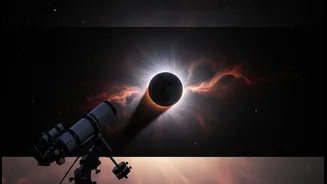
It is never safe to look directly at the Sun without proper protection, except during the brief moments of totality. Staring at a partially eclipsed Sun can cause permanent eye damage or blindness. Regular sunglasses are not sufficient. To view the partial phases, you must use certified eclipse glasses or handheld solar viewers that meet the ISO 12312-2 international safety standard. An alternative is to project an image of the Sun. A simple way to do this is to create a pinhole projector with two pieces of card: one with a small hole to let sunlight pass through, and the other to act as a screen to view the projected image. Never look at the Sun through the pinhole itself.
A 'Sunset Eclipse' and a Meteor Shower
What makes this eclipse particularly special for viewers in Spain is its timing. The total eclipse will occur just before sunset, creating a rare and photogenic 'sunset eclipse'. The sight of the Sun's corona glowing on the horizon could provide some truly dramatic views. As an added cosmic bonus, the night of August 12-13 also marks the peak of the annual Perseid meteor shower. Since a solar eclipse happens during a new moon, the skies will be exceptionally dark, creating perfect conditions for watching for 'shooting stars' after the eclipse has concluded.