

Your Guide to the 'Evening Star'
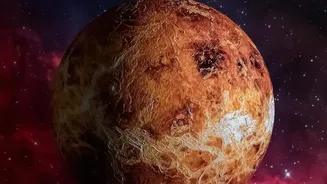
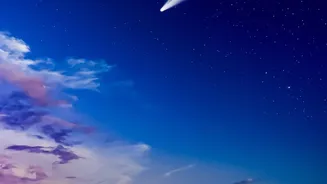
Throughout August 2026, Venus is putting on a spectacular show as the "Evening Star." It's the brightest natural object in the night sky after the Moon, making it incredibly easy to spot, even for those who have never tried stargazing before. Unlike stars,
which twinkle, Venus shines with a steady, brilliant white light. This is because we are seeing sunlight reflecting off its thick cloud cover. Its brightness and steadfast glow make it a captivating sight in the deepening twilight.
When and Where to Look
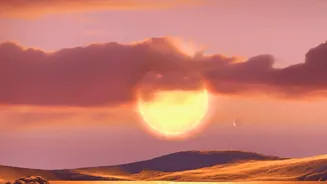
Finding Venus is simple: look toward the western to southwestern sky about 45 to 90 minutes after the sun has set. You can't miss it; it will be the first and brightest point of light to appear as dusk settles. During August, Venus is well-placed and will be visible for a good amount of time before it, too, dips below the horizon. Its position this month is particularly favorable, appearing at its farthest distance from the sunset in an event called the greatest elongation around August 14-15, making it stand out clearly in the evening sky.
Do I Need a Telescope?
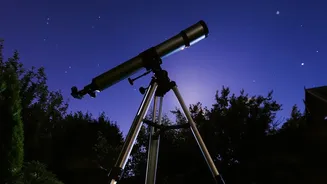
Absolutely not! The best part about observing Venus this month is that you don't need any special equipment. Its brilliance is fully appreciable with just your eyes. However, if you have a pair of binoculars, they can enhance the experience. Binoculars are often recommended for beginners over a telescope because they are easy to use and show a wider field of view. Through a good pair of binoculars or a small telescope, you might even be able to see that Venus has phases, much like our Moon. This month, it will appear as a thick crescent or a half-disk.
What Makes Venus So Special?
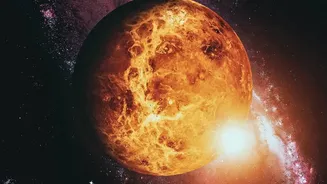
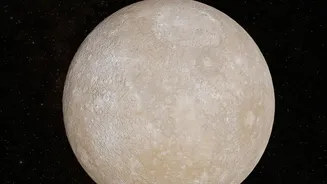
Venus is often called Earth's "sister planet" or "evil twin" because it's similar in size and structure to our world. But that's where the similarities end. It's the hottest planet in our solar system, with surface temperatures high enough to melt lead. Its atmosphere is incredibly dense, composed mainly of carbon dioxide with clouds of sulfuric acid, which creates a runaway greenhouse effect. While its surface is one of the most hostile places in the solar system, its reflective clouds are what make it shine so brightly from our perspective on Earth. Venus also spins very slowly and in the opposite direction of most other planets, including Earth.
Tips for the Best Viewing Experience
To make your Venus-gazing session more enjoyable, find a spot with a clear view of the western horizon, away from tall buildings or trees. While Venus can cut through a surprising amount of light pollution, getting away from the worst of the city lights will always improve the view. Give your eyes about 15 to 20 minutes to adjust to the darkness; this will help you see not just Venus but also the fainter stars that emerge around it. You might even spot the bright star Spica nearby this month. Look for it as a companion to dazzling Venus as twilight fades.