



An Invisible, Ever-Present Danger
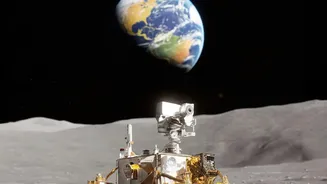
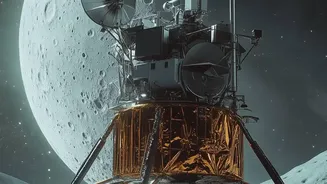
The Moon may look peaceful, but it's a harsh environment. Unlike Earth, which is protected by a magnetic field and a thick atmosphere, the Moon is completely exposed. Astronauts there face a constant barrage of two types of dangerous radiation: galactic
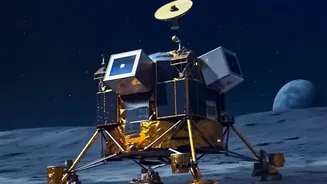
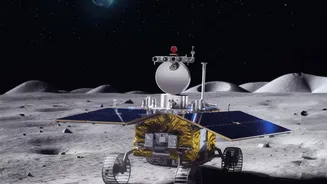
cosmic rays (GCR) from deep space and intense bursts of solar energetic particles (SEP) from our own Sun. Data from China's Chang'e-4 lander revealed that radiation levels on the Moon are 200 to 1,000 times higher than on Earth's surface. This is also two to three times greater than the exposure on the International Space Station, which still benefits from some of Earth's magnetic shielding. Long-term exposure can damage DNA, increasing the risk of cancer, cataracts, and degenerative diseases, making robust shielding a non-negotiable for any long-duration lunar mission.
Nature's Own Building Blocks
Shipping heavy construction materials nearly 400,000 kilometres from Earth is logistically complex and incredibly expensive. The solution, scientists agree, is to use what’s already there. The Moon is covered in a layer of fine, grey dust and crushed rock called regolith. This material, a product of billions of years of meteorite impacts, is the perfect candidate for construction. Studies have shown that a thick layer of regolith is an effective shield against space radiation. Essentially, the mass of the soil blocks or absorbs the harmful particles before they can reach the astronauts inside a habitat. While the exact thickness needed is still being refined, studies suggest that piling up one to two metres of regolith could provide adequate protection from the most severe radiation events.
Enter the Robotic Construction Crew
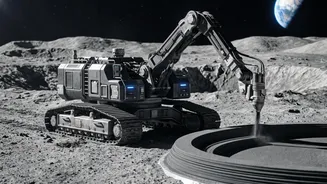
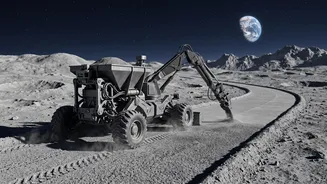
Humans are ill-suited for the slow, repetitive, and dangerous work of building on the Moon. That's a job for robots. Several companies and space agencies, including NASA and the European Space Agency, are developing autonomous construction systems. These aren't just single robots but entire teams designed to work together. The process starts with surveyor rovers equipped with LiDAR to map the terrain and choose the best building site. Then, excavator bots dig, sift, and transport the regolith. This robotic workforce can operate tirelessly in the hazardous lunar environment, patiently preparing the ground and materials for construction long before any human crew arrives. This approach dramatically reduces risks to astronauts and the overall cost of establishing a lunar outpost.
3D Printing a Lunar Home
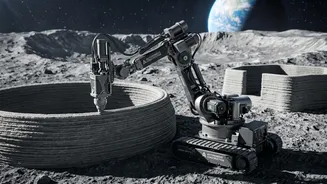
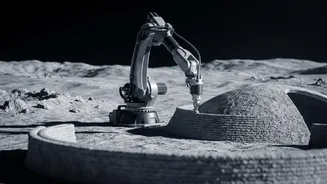
Once the regolith is gathered, how do you turn loose dust into a solid structure? The leading method is a form of 3D printing. One technique, called sintering, involves using high-powered lasers or concentrated sunlight to melt the regolith, fusing it into a hard, ceramic-like material layer by layer. Another approach involves creating a 'lunar concrete' by mixing the regolith with a binding agent, which can then be extruded from a nozzle to build up walls, landing pads, and radiation shields. Texas-based company ICON, known for 3D-printing homes on Earth, is developing its technology for lunar applications under a NASA contract. Other concepts involve creating interlocking bricks from molten regolith, which robotic arms can then assemble into larger structures. These methods allow for the creation of robust, airtight habitats tailored to the specific needs of a lunar base.