







What's New from Anthropic?
On November 10, 2026, AI company Anthropic announced a major expansion of its Claude platform, introducing three key productivity tools: Claude Sheets, Claude Whiteboards, and Claude Data. While Claude Data (an evolution of a previous tool called Dashboards)
is now generally available, Sheets and Whiteboards have been released in beta for all paid subscribers. These new features are designed to function within the Claude ecosystem, allowing users to brainstorm, analyze, and organize without having to switch between different applications. The company also teased an upcoming feature called Claude Meetings, which will act as an AI assistant for video calls, though a release date has not yet been set.
A Closer Look at Sheets and Whiteboards
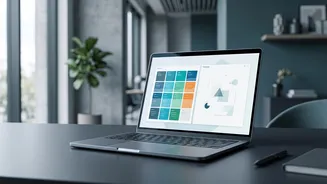
Claude Sheets aims to be a direct competitor to mainstays like Microsoft Excel and Google Sheets. It allows users and AI agents to collaboratively build spreadsheets, create formulas, format cells, and work across multiple tabs. A key feature is Claude’s ability to highlight the changes it makes, providing transparency for human collaborators. Claude Whiteboards offers a real-time, shared digital canvas for brainstorming. Teams can use it to map out ideas during a meeting, and then ask Claude to group notes by theme, create action items, or even convert the entire board into a formal document or presentation. These tools are built to maintain context, meaning an idea from a Whiteboard can seamlessly be moved into a Sheet and then analyzed in Claude Data without repeating instructions.
Who Gets Access and How?
These new capabilities are exclusively for users on paid plans, which include Pro, Max, and Ultra for individuals, as well as Team and Enterprise tiers for businesses. For users on individual plans, the new features will appear in their Artifacts tab. For businesses, the rollout differs slightly. On Team plans, Sheets and Whiteboards are enabled by default. However, on Enterprise plans, an administrator must first enable these beta features before they become available to users. This approach allows larger organizations to conduct internal pilots and ensure the tools align with their security and workflow requirements before a company-wide deployment.
The Strategic Play Against Tech Giants
This expansion is a clear signal of Anthropic's ambition. Instead of remaining a standalone chatbot or API provider, the company is building a comprehensive productivity suite to rival Microsoft 365 and Google Workspace. While Microsoft's Copilot and Google's Gemini are deeply integrated into their existing, dominant office applications, Anthropic's strategy is to build these tools directly inside Claude. This creates a unified workspace where the AI has persistent context. Anthropic is also building an ecosystem of 'interactive connectors', allowing apps like Salesforce, Adobe, and Atlassian to be embedded directly within Claude, further reducing the need for users to switch tabs.
What This Means for the Future of Work
Anthropic’s move reflects a broader trend of AI becoming not just an assistant, but the central platform for work itself. By offering native spreadsheet and whiteboarding tools, Claude is evolving from a tool you consult into a workspace you inhabit. The key differentiator Anthropic is betting on is the power of a single, unified context window that follows a project from initial brainstorm to final data visualization. This could offer a more fluid and intuitive user experience compared to invoking separate AI assistants within different apps. However, challenging the deeply entrenched ecosystems of Microsoft and Google will be an uphill battle, requiring Anthropic to prove its suite is not just a viable alternative, but a demonstrably better way to work.