






The Brain-Gut Connection: A 20-Minute Delay
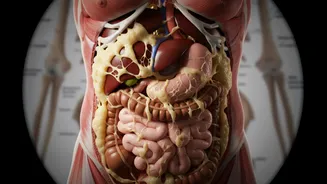
Your body has a sophisticated system for signalling hunger and fullness, but it isn't instant. It takes approximately 20 minutes for your stomach to signal to your brain that you are full. This communication happens through a series of hormonal signals.
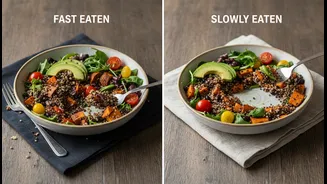
When you eat, stretch receptors in your stomach are activated. As food moves into your intestines, hormones like peptide YY (PYY) and glucagon-like peptide-1 (GLP-1) are released, which tell your brain you've had enough. Eating quickly means you can easily consume more food than necessary before these satiety signals have a chance to kick in, leading to overeating. Slowing down gives this intricate system the time it needs to work properly, allowing you to recognise fullness cues more accurately.
How Speed Affects Calorie Intake and Body Weight
The link between eating speed and body weight is well-documented. A comprehensive review of 23 studies found that fast eaters are roughly twice as likely to be obese compared to their slower-eating counterparts. Another large-scale study following nearly 60,000 people noted that slower eaters were not only less likely to be obese but also tended to have a smaller waist circumference. The reason is straightforward: fast eaters tend to consume more calories before feeling full. For example, one study found that women who ate slowly consumed fewer calories and reported greater feelings of fullness than those who ate quickly. This habit of consuming excess calories, meal after meal, can lead to significant weight gain and an increase in body fat over time.
Beyond Weight: The Impact on Metabolic Health
The consequences of eating too fast extend beyond just weight gain; they can also affect your metabolic health. Research has associated rapid eating with a higher risk of developing metabolic syndrome—a cluster of conditions including high blood pressure, excess belly fat, high blood sugar, and abnormal cholesterol levels. Fast eating can cause larger fluctuations in blood glucose levels, which may lead to insulin resistance, a precursor to type 2 diabetes. One study indicated that fast eaters have a 2.5 times higher risk of developing type 2 diabetes. Furthermore, a recent study conducted in Gujarat, India, found that fast eaters had significantly higher BMI and visceral fat—the dangerous fat surrounding internal organs—compared to slower eaters. This highlights that the pace of your meals is a crucial factor for long-term health.
Practical Tips to Slow Down Your Meals
Adopting a slower pace at mealtimes requires practice but can be achieved with a few simple techniques. A great starting point is to aim for each meal to last at least 20-30 minutes. Try putting your fork or spoon down between each bite to create a natural pause. Chewing your food more thoroughly—aiming for 20-30 chews per bite—not only slows you down but also aids digestion. Another effective strategy is to eliminate distractions. Turn off the television, put your phone away, and focus on the flavours, textures, and aromas of your food. Using smaller utensils or even trying chopsticks can also naturally reduce your eating speed. Finally, taking sips of water throughout your meal can help you pace yourself and improve hydration.
Embracing Mindful Eating as a Lifestyle
Slowing down is a core component of a broader practice known as mindful eating. This approach encourages you to be fully present during your meals, paying close attention to your body’s hunger and fullness cues. Mindful eating is not just about speed; it's about fostering a healthier relationship with food. It involves noticing how you feel, identifying emotional triggers for eating (like stress or boredom), and appreciating the food you consume. By being more intentional, you can better control your portions and derive greater satisfaction from your meals. Starting a food journal to track what you eat and how you feel can reveal patterns and help you make more conscious choices. This practice transforms eating from a rushed task into a nourishing and enjoyable experience.