





From Forecasting to 'Fore-planning'
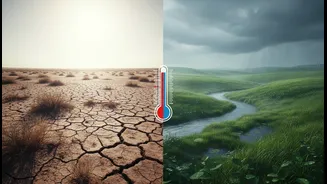
Our relationship with the weather is undergoing a fundamental change. Traditionally, weather forecasting has been about predicting immediate conditions: rain tomorrow, temperatures next week. But as climate change makes extreme events like heatwaves,
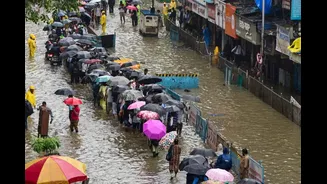
floods, and cyclones more frequent and intense, this reactive approach is no longer enough. We have now entered a 'weather planning mode'. This involves a strategic shift, moving beyond short-term predictions to integrate long-term climate projections into our decision-making. It's not just about knowing if you need an umbrella tomorrow, but about whether your city's infrastructure can withstand a decade of increasingly severe monsoons. This proactive stance means governments, industries, and even individuals are now using climate data to anticipate and prepare for future risks, building resilience into the fabric of society.
The New Science of Prediction
Modern weather prediction is no longer based on simply comparing today's conditions to the historical record, a method that would be unreliable in a rapidly changing climate. Instead, forecasters use powerful supercomputers to solve complex physical equations governing the atmosphere and oceans. The crucial evolution is the integration of long-range climate models into these forecasts. While a weather model predicts conditions for the next few days, a climate model estimates statistical likelihoods of temperature and rainfall patterns over seasons or even decades. By combining these, scientists can now provide 'decadal predictions' that anticipate how the climate might evolve over the next ten years. In India, the India Meteorological Department (IMD) has adopted new strategies to improve the accuracy of monthly and seasonal forecasts, issuing outlooks for heatwaves and cold waves to help authorities prepare well in advance.
How India Is Adapting
This shift to planning mode is visible across India. The government's National Action Plan on Climate Change (NAPCC) includes missions focused on sustainable agriculture, water management, and disaster resilience. For instance, cities are being compelled to rethink urban design, investing in fortified infrastructure, green spaces to reduce urban heat, and better stormwater management to cope with flooding. In agriculture, which is heavily reliant on rainfall, access to reliable long-range forecasts helps farmers make crucial decisions about planting times and crop selection. Initiatives like Mission Mausam aim to create a 'weather-ready' nation by strengthening early warning systems and delivering tailored climate services to vulnerable communities, from coastal regions facing cyclones to farmers in drought-prone areas.
Technology Driving the Change
This new planning capability is powered by technological advancements. High-performance computing allows for incredibly detailed weather models. The IMD's recently unveiled Bharat Forecasting System (BharatFS), for example, operates at a high resolution, enabling village-level forecasts. Artificial Intelligence (AI) and Machine Learning (ML) are also becoming game-changers. AI can analyze vast datasets to improve the accuracy of predictions, identify patterns that humans might miss, and speed up the forecasting process. These technologies are crucial for improving predictions of events that change rapidly, like the intensification of a cyclone. While AI models are still being refined for predicting record-breaking extremes, their ability to process information quickly is transforming disaster response.
What This Means for You
This evolution from reactive forecasting to proactive planning has direct implications for public safety and daily life. More accurate and longer-range warnings for heatwaves mean cities can set up cooling centres and advise vulnerable populations to take precautions, saving lives. For communities in flood-prone areas, anticipatory action—strengthening embankments or evacuating based on a seasonal flood warning rather than waiting for the river to rise—becomes possible. As an individual, this means having access to information that allows for better preparedness, whether it's securing your home ahead of an intense monsoon season or understanding the long-term climate risks in your area. The goal is to shift from being victims of extreme weather to becoming participants in a nationwide effort of climate resilience.