





A Celestial Event, A Distant View
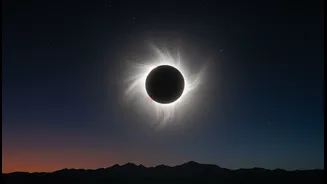
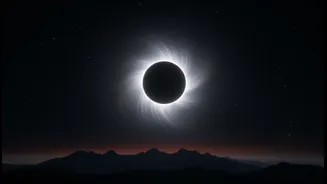
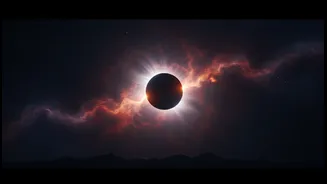
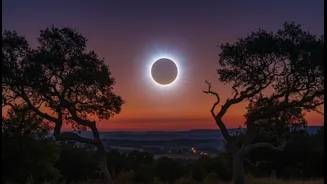
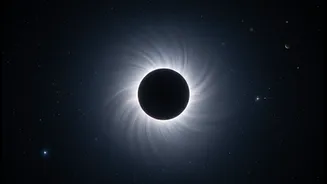
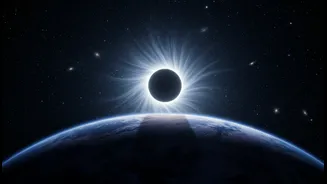
The great celestial event of August 12, 2026, is a total solar eclipse, a phenomenon that occurs when the Moon passes directly between the Sun and Earth, completely blocking the Sun's face. This spectacular event, dubbed the 'Great European Eclipse',
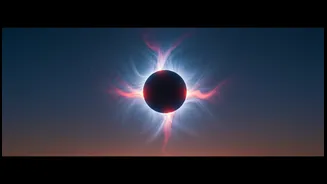
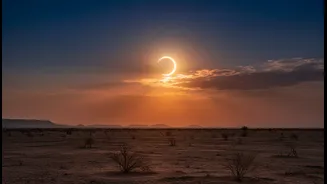
will trace its path of totality over Greenland, Iceland, and notably, northern Spain. For viewers in these locations, day will briefly turn to an eerie twilight, and the sun's ethereal outer atmosphere, the corona, will become visible. However, for skywatchers in India, the story is different. The eclipse will occur during the night in India, making direct viewing impossible. At best, some calculations suggest a very minor partial eclipse might be theoretically visible just before sunset from the extreme northern tips of Ladakh, but this remains unconfirmed.
India’s Scientific Eye on the Sky
Despite the lack of direct visibility, the Indian scientific community is buzzing with anticipation. A major reason is India's own solar observatory, Aditya-L1. Positioned 1.5 million km from Earth, Aditya-L1 has the advantage of continuously viewing the Sun without any interruption from eclipses or occultations. A total solar eclipse provides a rare, natural opportunity for ground-based telescopes to study the Sun's corona. The data gathered from Earth, particularly from the path of totality in Spain, can be cross-referenced with the uninterrupted observations from Aditya-L1's instruments like the Visible Emission Line Coronagraph (VELC). This creates a powerful combined dataset, allowing scientists to calibrate their instruments and gain deeper insights into solar phenomena like coronal heating and space weather, fulfilling one of the key objectives of the Aditya-L1 mission.
The Dawn of Indian Astro-Tourism
While scientists look to the sky with instruments, a growing number of Indians are looking with passports in hand. The 2026 eclipse is fueling a significant trend in astro-tourism—traveling for the primary purpose of viewing celestial events. With the path of totality conveniently crossing Spain, a popular tourist destination, a new wave of Indian travelers is planning trips to witness the spectacle. Tour companies are reporting high demand for eclipse-chasing packages that combine the celestial event with cultural tours of Spanish cities like Bilbao and Zaragoza. This isn't just about a holiday; it's about being part of a global, shared experience. The fact that the eclipse coincides with the peak of the annual Perseid meteor shower provides another compelling reason for travel, offering a celestial double-feature.
From Omen to Opportunity
Historically, eclipses, or 'grahan', have been viewed as inauspicious omens in Hindu mythology. Ancient stories tell of the demon Rahu swallowing the Sun, leading to customs like fasting, staying indoors, and special rituals to ward off negative effects. Pregnant women were particularly advised to take precautions. While these beliefs still persist in some communities, the conversation around the 2026 eclipse highlights a significant cultural shift. The growing excitement is framed around scientific inquiry and a sense of global wonder, rather than fear. Since the eclipse is not visible from India, religious bodies and astrological calendars have clarified that no Sutak Kaal or associated rituals apply. This allows the narrative to be dominated by scientific outreach and educational opportunities, turning a once-feared event into a moment of collective curiosity and learning.