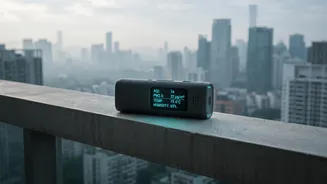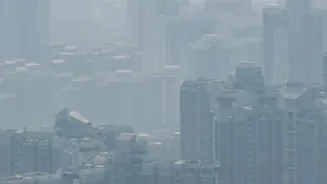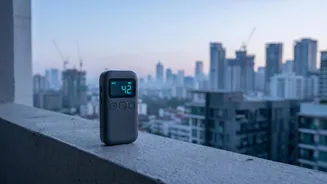

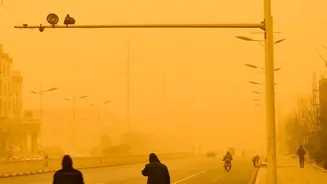


As winter descends, a familiar grey haze settles over many Indian cities. This smog isn't just an eyesore; it's a health hazard. But you can significantly reduce your exposure by strategically timing your outdoor tasks. Here’s how to do it.
The Daily Pollution Cycle
Air quality
isn't static; it changes throughout the day. In winter, a phenomenon called 'temperature inversion' plays a crucial role. Colder, denser air gets trapped near the ground, unable to rise and disperse pollutants. This inversion is typically strongest during the cold, calm conditions of the late night and early morning. As a result, pollutants from vehicles, industry, and heating accumulate overnight, making early mornings one of the worst times for air quality. As the sun comes up and warms the ground, this inversion begins to break. The air starts to circulate, and pollution levels often decrease, hitting their lowest point in the early to mid-afternoon. As temperatures drop again towards the evening, the inversion re-forms, and pollution levels begin to climb once more.
Your Smog-Smart Daily Schedule
Understanding this daily rhythm allows you to create a smarter schedule. Consider this a general guide:
Early Morning (6 AM - 10 AM): This is often the period of highest pollution concentration. The air has been stagnant all night, trapping particulate matter. If possible, avoid all non-essential outdoor travel and strenuous exercise during these hours. This is the time to stay indoors.
Midday (11 AM - 4 PM): This is your 'golden window'. Solar heating helps disperse pollutants, and AQI levels are typically at their lowest for the day. This is the ideal time to schedule errands, grocery shopping, or any essential outdoor tasks. If you want to go for a walk or allow children to play outside, this is the safest window.
Late Afternoon & Evening (After 4 PM): As the sun weakens and temperatures cool, the inversion layer begins to form again. Pollution levels start to rise and will continue to do so through the night. It's best to limit your time outdoors during this period and again, avoid heavy exertion like jogging.
Decoding the Air Quality Index (AQI)
The Air Quality Index, or AQI, is a simple number used to communicate how polluted the air is. The scale runs from 0 to 500, broken into colour-coded categories. Here’s what they mean for your health:
- Good (0-50, Green): Air quality is great. No risk.
- Satisfactory (51-100, Light Green): Generally acceptable, but may cause minor breathing discomfort to very sensitive people.
- Moderate (101-200, Yellow/Orange): Can cause breathing issues for people with existing lung conditions like asthma, and for children and older adults.
- Poor (201-300, Red): Can cause breathing discomfort to most people upon prolonged exposure.
- Very Poor (301-400, Red): Increases the risk of respiratory illness after prolonged exposure. Sensitive groups should avoid all outdoor activity.
- Severe (401-500, Maroon): Affects even healthy people and seriously impacts those with existing diseases. Avoid all outdoor activity.
Finding Reliable Hourly Data
To time your day effectively, you need real_time, location_specific data. Several apps provide hourly AQI updates. The government's official app is 'Sameer', run by the Central Pollution Control Board (CPCB), which pulls data directly from monitoring stations. Other popular and reliable third_party apps include IQAir AirVisual, which provides detailed forecasts and global data, and AQI.in, which is noted for its hyperlocal coverage in India. Some apps like SAFAR_Air are specifically designed for cities like Delhi, Mumbai, and Pune, offering scientific forecasts. Many of these apps also offer widgets you can place on your phone's home screen for a quick glance before stepping out.
Beyond Timing: Additional Protection
While timing is a powerful tool, it's not foolproof. On days with 'Poor' to 'Severe' air quality, even the midday window may not be safe for everyone. In such conditions, it’s crucial to add extra layers of defense. Always wear a well_fitting N95 or KN95 mask if you must go outside, as simple cloth masks do not filter out the most dangerous fine particles (PM2.5). At home, consider using an air purifier with a HEPA filter to keep your indoor environment clean. Avoid strenuous activities like running or cycling outdoors on high_pollution days, as this increases the volume of toxic air you inhale. Staying hydrated and eating a diet rich in antioxidants can also help support your body's defense systems.