


More Than Just Finding Water
The knowledge that water exists on the Moon isn't entirely new; India's Chandrayaan-1 mission first provided strong evidence back in 2008. However, recent findings have revolutionized our understanding. It’s no longer about whether water is there, but
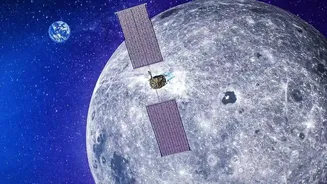
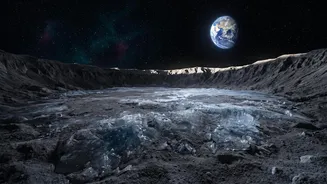
about how much exists and where it is concentrated. Data from missions like NASA's SOFIA observatory and Lunar Reconnaissance Orbiter (LRO) have moved beyond simple detection to create detailed maps. These maps show that while some water is spread thinly across the sunlit surface, the most significant deposits are concentrated as ice in Permanently Shadowed Regions (PSRs) near the lunar poles. These are craters so deep that their floors haven't seen sunlight in billions of years, creating extreme cold traps perfect for preserving ice.
The Ultimate Lunar Real Estate
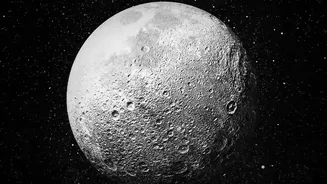
This new data is essentially a treasure map for mission planners. The distribution of water ice is the single most important factor in deciding where to build a sustainable lunar outpost. Agencies like NASA, with its Artemis program, are targeting the Moon's south pole precisely because of the high concentration of these ice-rich craters. A base needs to be close enough to these PSRs to make mining operations feasible. Recent studies even suggest using seismic waves from drills or small moonquakes to detect ice buried deeper than orbiting instruments can see, further refining the search for the perfect location. By knowing where the most accessible and abundant water is, scientists can choose a landing site that offers both the resources needed for survival and the scientific opportunities for exploration.
Living off the Land
The presence of accessible water transforms the economics and logistics of a Moon base. Launching materials from Earth is incredibly expensive, with a single gallon of water costing tens of thousands of dollars to ship. The ability to use local resources, a concept known as In-Situ Resource Utilization (ISRU), is a game-changer. Lunar water has three critical uses. First and most obviously, it can be purified for drinking and growing food. Second, it can be split into its components, hydrogen and oxygen, to create breathable air for habitats. Third, and perhaps most crucially for deep space ambitions, liquid hydrogen and liquid oxygen are the primary components of powerful rocket fuel. A Moon base with access to water could become a refueling station for missions heading to Mars and beyond, drastically reducing the cost and complexity of interplanetary travel.
The Great Extraction Challenge
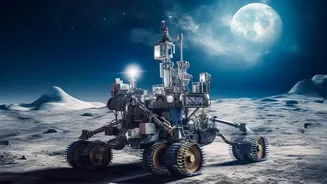
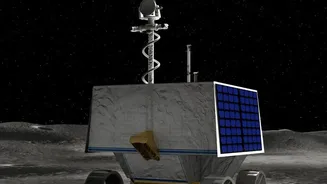
Despite the promise, getting to the water is a significant engineering challenge. The ice is not a pristine, frozen lake. It's mixed with abrasive lunar soil, or regolith, and exists in some of the coldest places in the solar system, with temperatures dropping below -410 degrees Fahrenheit. Designing robotic excavators, drills, and processing plants that can operate in these extreme, low-gravity, vacuum conditions is a major focus for agencies like NASA and a growing number of private space companies. Researchers are developing innovative techniques, such as photothermal reactors that use sunlight to heat the soil and extract water, but these technologies are still in early stages. Overcoming these hurdles is the next critical step in making lunar ISRU a reality.