



A Major Aviation Expansion
In a major announcement in early September 2026, the Civil Aviation Ministry declared an ambitious plan to further bolster regional connectivity. Under a 'Modified UDAN' scheme, the government plans to develop 100 new airports over the next decade, backed
by an investment of approximately ₹30,000 crore. This initiative is set to run from the 2026-27 financial year through 2035-36. The focus is squarely on bringing air travel to India's tier-2 and tier-3 cities, as well as remote, hilly, and island regions where demand is rapidly growing. This builds on a remarkable period of growth that has already seen India's airport network expand from 74 in 2014 to 166 in 2026.
What Exactly Is UDAN?
UDAN, short for Ude Desh ka Aam Naagrik ('Let the Common Citizen Fly'), is a Regional Connectivity Scheme launched in 2016. Its primary goal is to make air travel affordable and accessible to a wider population while reviving unserved and underserved airports. The scheme works through a market-driven model where the government provides financial incentives, known as Viability Gap Funding (VGF), to encourage airlines to operate on routes that might otherwise be commercially unviable. For passengers, the most significant feature is the fare cap: on UDAN flights, a percentage of seats are sold at subsidised rates, often making flying competitive with train fares on the same routes. The scheme has been a key driver in democratising air travel in India, having already enabled over 1.5 crore passengers to take flight on regional routes.
From Runways to Waterways
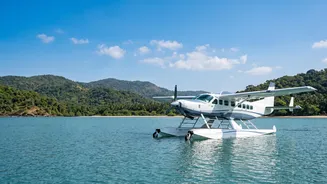
The latest and most exciting evolution under UDAN is the focus on seaplane services. This is a game-changer for connectivity, as seaplanes can take off and land on water bodies like lakes, rivers, and coastal lagoons, eliminating the need for costly and land-intensive runways. This is particularly transformative for island territories and areas with extensive backwaters or large dams. Recognizing this potential, recent plans include the development of numerous water aerodromes and the bidding for up to 150 new seaplane routes across the country. This innovative approach allows direct access to destinations that were previously only reachable after long, multi-modal journeys.
Your New Travel Bucket List
This new focus on waterside connectivity is unlocking a travel bucket list that was once the preserve of the most determined explorers. The Andaman & Nicobar and Lakshadweep islands are major beneficiaries, with routes planned to connect islands like Havelock, Neil, Minicoy, and Kavaratti via water aerodromes. In mainland India, Kerala's famed backwaters are set for a connectivity boost, with dozens of seaplane routes approved to connect destinations like Kochi, Ashtamudi Lake, and Kumarakom. Other notable projects include seaplane services in Andhra Pradesh connecting cities like Vijayawada to the Srisailam reservoir, and the previously operational route connecting the Sabarmati Riverfront in Ahmedabad to the Statue of Unity in Gujarat. These routes promise to slash travel times and offer breathtaking aerial views of India's most scenic landscapes.
More Than Just a Vacation
While the boost to tourism is the most visible benefit, the impact of the UDAN scheme runs much deeper. For remote communities, these new flight connections represent a vital link for healthcare, education, and business. Improved connectivity stimulates local economies, creates jobs in hospitality and aviation, and encourages investment in regions that were previously considered too isolated. By integrating these 'offbeat' locations into the national aviation map, the scheme fosters balanced regional development and ensures that the benefits of economic growth are more widely distributed. It transforms these areas from being just tourist destinations into thriving, well-connected communities.
What to Expect and When
As with any large-scale infrastructure project, patience is key. The vision for 100 new airports is a 10-year plan. Many of the announced seaplane routes are in various stages of bidding, approval, and infrastructure development. Some routes have been awarded to airlines like SpiceJet, IndiGo, and Alliance Air, which are expanding their fleets of smaller turboprop and regional aircraft to service these sectors. While some routes may become operational in the near future, others, like the network in Andhra Pradesh, are projected for a 2027 launch. Travellers should keep an eye on announcements from the Ministry of Civil Aviation and the operating airlines to know when these exciting new travel options will become available for booking.