




From Practicality to Paisley
The bandana's story begins not in the American West, but in South Asia. The name itself is believed to come from the Hindi word 'bāndhnū,' a term for a method of tying and dyeing cloth. For centuries, these printed cotton squares were practical tools—used
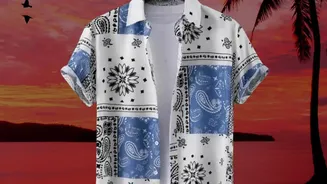
by sailors, farmers, and workers to shield them from sun and dust. When imported to Europe, their famous paisley pattern, which has roots in Persia, became a fashion sensation. In America, they were popularized by everyone from snuff users hiding tobacco stains to cowboys who made them an indispensable part of their gear. Even George Washington appeared on a commemorative bandana, an early example of its use in political messaging.
A Symbol of Solidarity and Protest
The bandana's history took a sharp turn toward activism in the 20th century. In 1921, during the Battle of Blair Mountain, thousands of striking coal miners in West Virginia wore red bandanas to identify themselves, a move that some say gave rise to the term “redneck” as a badge of class-conscious solidarity. This act cemented the red bandana as a symbol of labor rights. In later decades, the bandana was adopted by various protest movements, including civil rights and anti-war demonstrators, who used it for both solidarity and concealment. More recently, green bandanas have become an international symbol for reproductive rights activists, particularly in Latin America.
The Language of Subculture
In the latter half of the 20th century, the bandana became a powerful tool for subcultures to signal identity. In the 1970s, it became central to the LGBTQ+ community's 'hanky code.' This was a complex, color-coded system where a bandana worn in a specific pocket non-verbally communicated sexual preferences and roles in an era when such openness could be dangerous. A blue bandana, for instance, could signify an interest in anal or oral sex, while a black one signaled an interest in BDSM. Placement was also key: wearing it in the left pocket typically meant a 'top' or dominant role, while the right meant a 'bottom' or submissive role. This ingenious system allowed for discreet communication and community building.
Rebellion in Music and Media
Simultaneously, musicians co-opted the bandana as a badge of rebellion. Rock stars like Axl Rose of Guns N' Roses made the red bandana wrapped around the head a signature part of their anti-establishment look. In the burgeoning hip-hop scene of the '80s and '90s, artists like Tupac Shakur used bandanas to represent neighborhood affiliations and project a specific image of street credibility. Different colors, particularly red and blue, became strongly associated with rival gangs, adding another layer of heavy symbolism to the accessory. This association meant that wearing a bandana could be a statement of musical taste, cultural alignment, or, in some contexts, a dangerous affiliation.
The 2026 Revival
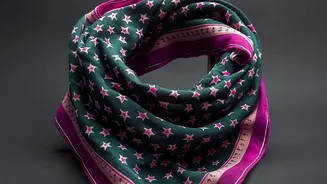
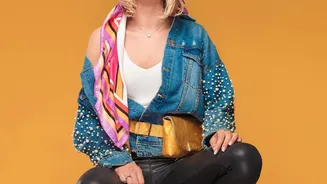
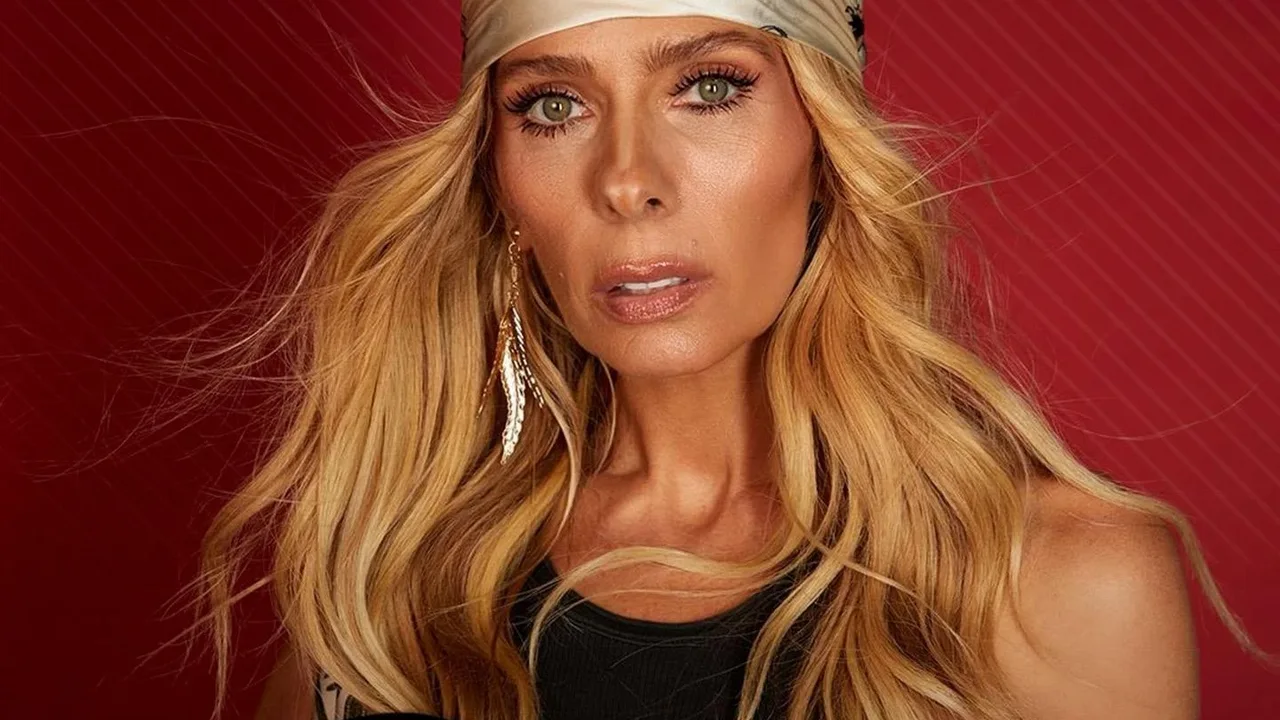
Today's bandana revival sees the accessory shed some of its more fraught connotations, though its history remains woven into the fabric. The 2026 trend is less about a single subculture and more about versatile styling. Fashion enthusiasts are wearing oversized silk versions as scarves, tying them as crop tops, braiding them into their hair, or looping them through their belts. Searches on secondhand sites have soared as people look for unique vintage styles. The modern approach is to treat the bandana as the main statement piece, pairing it with simpler basics to avoid a costume-like feel. It’s a playful nod to a '90s or Y2K aesthetic for some, and a chic, Jackie O-inspired head covering for others.