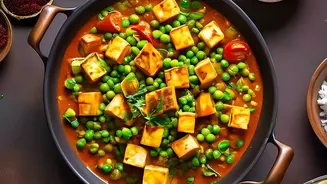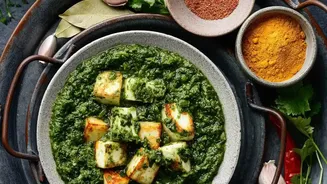


The perfect palak paneer is a thing of beauty: soft cubes of paneer suspended in a vibrant, creamy green sauce. But how is that iconic colour and texture achieved? It’s not magic, but a combination of key ingredients and careful technique.
The Secret to a Vibrant Green
The single most
important step to achieving a bright, beautiful green sauce is how you treat the spinach. Overcooking is the main culprit behind a dull, olive-coloured gravy. The restaurant-quality secret is a technique called blanching. This involves briefly boiling the fresh spinach leaves for just a minute or two until they wilt. Immediately after, they are plunged into a bowl of ice-cold water. This 'shock' instantly stops the cooking process, locking in the chlorophyll and preserving that vivid green hue. Some cooks prefer to simply sauté the spinach just until it wilts, which also helps prevent overcooking and nutrient loss while keeping the colour bright. Regardless of the method, the key is to apply heat for a very short time before puréeing.
Achieving That Silky, Creamy Texture
Creaminess in palak paneer comes from a few potential sources, each offering a slightly different result. The most common addition is heavy cream or malai, stirred in towards the end of cooking to add richness and a luxurious mouthfeel. Full-fat yogurt is another popular choice, contributing both creaminess and a subtle tang that brightens the earthy spinach flavour. For a dairy-free but equally rich alternative, many recipes call for soaking and blending raw cashews into a smooth paste. This nut cream not only thickens the sauce but also gives it a wonderfully silky consistency. The power of the blend is also crucial; using a high-speed blender to purée the spinach mixture breaks everything down to create that signature smooth, restaurant-style texture.
Building the Foundation of Flavour
While spinach is the star, the sauce's deep, aromatic flavour is built on a foundation of classic Indian spices and aromatics. The process almost always begins by heating ghee or oil and sizzling whole spices like cumin seeds. Then, finely chopped onions are sautéed until soft and translucent, followed by essential aromatics like minced garlic and grated ginger. Ground spices such as coriander, turmeric, and garam masala are then added and toasted for a minute to release their fragrant oils. Some recipes also include tomatoes, though usually in small amounts to avoid overpowering the green colour. Finally, many chefs swear by a pinch of kasuri methi (dried fenugreek leaves) added at the end for an authentic, slightly earthy aroma that is characteristic of the dish.
Bringing It All Together
The final stage is where all the components unite. The puréed spinach is added to the cooked masala base and gently simmered. It's important not to boil the sauce aggressively at this stage, as prolonged heat can still dull the colour you worked so hard to preserve. After a few minutes of simmering to allow the flavours to meld, the creamy element—be it cream, yogurt, or cashew paste—is stirred in. Finally, cubes of paneer are gently folded into the sauce. Some cooks prefer to pan-fry the paneer cubes until golden before adding them, which gives them a pleasant crust and helps them hold their shape. A final simmer for a few more minutes allows the paneer to soften and absorb the delicious flavours of the sauce before serving.