







The Ground Isn't Solid
It’s easy to think of the ground beneath our feet as a dense, solid mass. In reality, healthy soil is a porous world, full of tiny interconnected spaces and channels. These pores are typically filled with air. This underground atmosphere is vital for
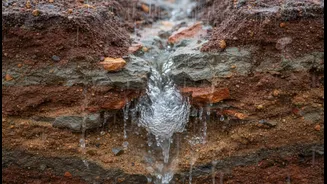
plant roots and microorganisms to breathe. Crucially, these air-filled spaces are also the primary pathways for rainwater to soak into the ground, a process known as infiltration. When soil is loose and well-structured, it acts like a giant sponge, with plenty of room to accommodate both air and incoming water.
When Rain Arrives Too Fast
During an extreme rainfall event, like the intense downpours common during the Indian monsoon, water hits the ground faster than it can be absorbed. This rapid influx of water creates a seal at the soil surface, effectively capping the pores. The air that was previously occupying those spaces suddenly has nowhere to go. It becomes trapped underground, caught between the descending sheet of water from above and the soil below. This phenomenon, known as soil air entrapment, is the beginning of a major underground struggle.
The Trapped Air Fights Back
This trapped subterranean air doesn't just sit passively. As more water tries to enter the soil, it compresses the air, causing the pressure to build up. This pressurized air then pushes back against the column of infiltrating water, acting as a powerful resistive force. Scientific studies have shown that this effect, sometimes called the 'Lisse effect', can dramatically slow down the rate of water absorption. Experiments reveal that infiltration can decrease by a factor of three to ten when air is confined. Instead of soaking in, the rainwater is held at bay, forced to pool on the surface or run off sideways.
The Urban Amplification Problem
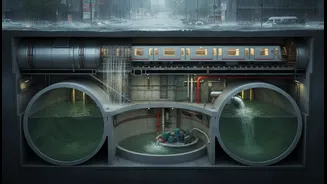
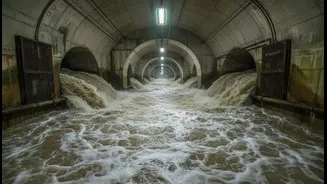
In natural landscapes, this effect is often temporary and localised. However, in urban environments across India, the problem is massively amplified. Cities like Mumbai, Bengaluru, and Delhi are covered in vast stretches of non-porous surfaces like concrete and asphalt. Even our parks and gardens often suffer from soil compaction, where foot traffic and machinery have squeezed the air out of the soil, reducing its pore space. When heavy rain falls on these compacted and sealed surfaces, there are far fewer pathways for both water to enter and for trapped air to escape. This leads to much faster and more extensive surface runoff, overwhelming outdated drainage systems and causing the flash floods that have become a recurring crisis.
Why This Hidden Battle Matters
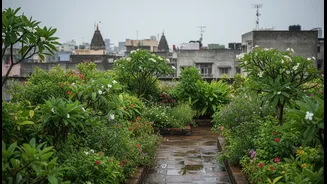
Understanding this hidden science is critical for building more resilient cities. The fight between water and trapped air directly contributes to more severe flooding, less groundwater recharge, and increased soil erosion. When water can't penetrate the ground, it not only causes immediate flood damage but also means that our precious underground aquifers are not being replenished. This is a double blow for a country that relies heavily on groundwater. The runoff also carries pollutants from urban surfaces into our rivers and lakes. Recognizing the role of soil air is the first step toward better management, prompting a shift toward solutions that work with nature, not against it.