








The High-Altitude Advantage
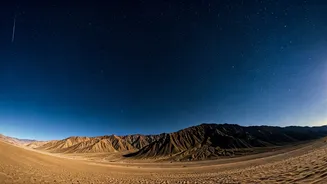
One of the biggest factors is Ladakh's elevation. Most of the region lies above 10,000 feet (3,000 metres), with key astronomical sites like the Hanle Observatory situated at a staggering 14,800 feet. At this height, the atmosphere is significantly thinner.
A thinner atmosphere means there are fewer particles like dust and aerosols to scatter and distort starlight, resulting in sharper, brighter, and clearer views of celestial objects. This high-altitude advantage essentially brings you closer to the stars, reducing the atmospheric interference that plagues observers at lower elevations.
A Cold, Dry Desert Climate
Ladakh is a cold desert, and this unique climate is a stargazer's best friend. The region receives very little rainfall and has extremely low humidity. Moisture in the air, or water vapour, can absorb parts of the light spectrum and cause a hazy effect, blurring our view of the night sky. The dry, crisp air of Ladakh is largely free of this water vapour, which means the atmosphere is exceptionally transparent. This clarity, combined with an average of 270 clear, cloudless nights a year, provides an unparalleled window to the universe.
Freedom from Light Pollution
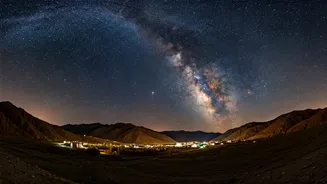
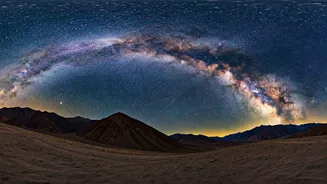
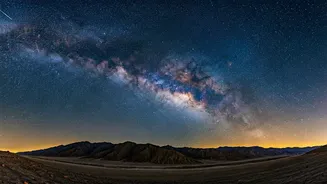
In most urban and suburban areas, artificial light from cities creates a bright glow that washes out all but the brightest stars. Ladakh, with its remote location and sparse population, has some of the darkest skies in the world. This near-total absence of light pollution allows the naked eye to see an incredible amount of detail, from the dense starfields of the Milky Way galaxy stretching across the sky to faint nebulae and distant galaxies. This natural darkness is so prized that the area around Hanle has been officially designated as India's first Dark Sky Reserve, with regulations in place to limit artificial lighting and preserve the pristine night sky for both tourism and scientific research.
A Hub for Science and Tourism
These ideal conditions haven't gone unnoticed by the scientific community. Ladakh is home to the Indian Astronomical Observatory in Hanle, one of the highest observatories in the world. It hosts powerful telescopes like the Himalayan Chandra Telescope, which researchers use to study everything from comets to distant galaxies. This scientific pedigree has fueled a boom in astro-tourism. Local communities are now involved, with trained guides leading stargazing sessions for visitors. Homestays in Hanle are even equipped with telescopes, allowing travellers to experience the cosmos in a profound, personal way while supporting the local economy.