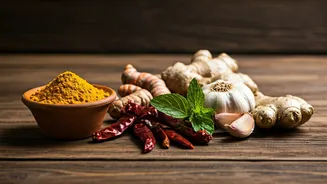









1. Embrace Traditional Herbal Brews
Our grandmothers were onto something. The monsoon is the perfect time to bring back the habit of drinking warm herbal concoctions. A simple 'kadha' made by boiling tulsi (holy basil), ginger, black pepper, and a little honey can do wonders. Tulsi is known
for its antibacterial and antiviral properties, while ginger is a powerful anti-inflammatory agent. Starting your day with a warm glass of ginger-lemon-honey water or ending it with a comforting cup of this traditional brew helps soothe the throat, improve digestion, and keep seasonal infections at bay. These ingredients work together to create a warm, protective shield for your body.
2. Harness the Power of Spices
Indian cooking is already rich in immune-supporting spices, and the monsoon is the time to use them wisely. Turmeric, the golden spice, is a superstar. Its active compound, curcumin, has potent anti-inflammatory and antioxidant effects. Add a pinch of turmeric to a glass of warm milk for the classic 'haldi doodh' before bed. It helps fight off infections and promotes restful sleep. Other spices like cloves, cinnamon, and black pepper not only add flavour to your food but also possess antimicrobial properties that help your body combat pathogens common during this season. Don't be afraid to add a little extra spice to your dals and curries.
3. Load Up on Vitamin C
Vitamin C is a vital nutrient for the immune system, as it helps in the production of white blood cells, which are our body's primary soldiers against infection. While it's tempting to reach for fried pakoras, focus on including Vitamin C-rich fruits and vegetables in your diet. Amla (Indian gooseberry) is an excellent source. You can have it as a juice, murabba, or even just raw with a sprinkle of salt. Citrus fruits like oranges, lemons, and sweet limes (mosambi) are also great choices. Bell peppers and leafy greens, when washed properly, can also contribute to your daily Vitamin C intake, keeping your defences robust.
4. Befriend Probiotics for Gut Health
A significant portion of your immune system resides in your gut. A healthy gut microbiome is your first line of defence against many pathogens. Probiotics are beneficial bacteria that help maintain this healthy balance. The easiest and most accessible source of probiotics in the Indian diet is dahi (yoghurt) or buttermilk (chaas). Including a bowl of homemade dahi with your lunch helps improve gut health, which in turn strengthens your overall immunity. It’s a simple, cooling, and effective way to support your body's natural ability to fight off illness, especially digestive issues that are common in the monsoon.
5. Stay Hydrated, but Wisely
While the weather is cooler, it's still crucial to stay hydrated. However, the source of your water becomes extremely important during the monsoon due to the increased risk of contamination. Always drink boiled or filtered water. Carrying your own water bottle when you go out is a wise habit. Furthermore, opting for warm water throughout the day can aid digestion and help flush out toxins from the body. Herbal teas and clear soups are also excellent ways to meet your fluid requirements while providing additional warmth and nutrients. Avoid cold drinks and ice from unknown sources, as they can be a source of infection.
6. Prioritise Sleep and Rest
Never underestimate the power of a good night's sleep. During sleep, your body undergoes critical repair and regeneration processes. Your immune system releases proteins called cytokines, some of which help promote sleep and are needed to fight infection and inflammation. Chronic sleep deprivation can suppress your immune system, making you more susceptible to colds and flu. Aim for 7-8 hours of quality sleep each night. A consistent sleep schedule, even on weekends, helps regulate your body's internal clock and optimises immune function. It’s a simple, free, and highly effective way to keep yourself healthy.