






The Myth of the Direct Flight
Let’s start with a reality check: true nonstop flights from most tier-two American airports (think Austin, Raleigh, or Nashville) to Southeast Asia are practically nonexistent. The immense distance requires massive passenger demand and specialized ultra-long-haul
aircraft that are typically only profitable from mega-hubs like Los Angeles (LAX) or New York (JFK). For instance, while Austin airport officials are in serious talks to land a coveted nonstop route to Seoul, these discussions have been ongoing and aren't a bookable reality yet. Flight search data confirms it: as of 2026, you simply won’t find a nonstop flight from most mid-sized U.S. cities to Bangkok, Manila, or Ho Chi Minh City. The headline’s claim of “direct flights” isn't telling the whole story, but the conclusion that travel is getting simpler is still correct.
The Real Game-Changer: Better Connections
The real revolution isn't nonstop flights; it's the rise of the seamless single-stop journey. Instead of the old, painful model of flying from a regional airport to a chaotic U.S. hub for a stressful international transfer, travelers can now bypass the domestic hassle altogether. Airports like Austin now feature nonstop flights to European hubs like Amsterdam and Frankfurt. From there, a single ticket connects you onward to Asia. This strategy has two major advantages. First, you clear U.S. customs and immigration on the way back at your smaller home airport, which is often a much faster and less crowded experience than doing so at a major gateway like SFO or JFK. Second, you spend your layover in a world-class international hub like Seoul-Incheon (ICN) or Dubai (DXB), which are designed for efficient, comfortable transfers.
A Single Ticket Changes Everything
The key to this newfound simplicity lies in airline partnerships and codeshare agreements. A recent example from August 2026 saw Alaska Airlines expand its partnership with Korean Air. This allows a traveler to buy a single ticket from, say, Seattle to Bangkok under an Alaska Airlines flight number, even though the leg from Seoul to Bangkok is operated by Korean Air. For the passenger, this means a single check-in process, baggage checked through to the final destination, and airline protection in case of a missed connection. It transforms what used to be a complicated, self-managed itinerary with two separate bookings into one streamlined trip. This is the “simple” part of the headline made real—not by eliminating stops, but by eliminating the logistical headaches that used to come with them.
How This Impacts Your Budget
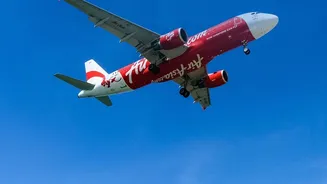
While a seamless one-stop itinerary might not always be the absolute cheapest option compared to a 30-hour, three-stop marathon, it offers vastly superior value. The time saved and stress avoided are significant. More importantly, landing at a major Southeast Asian hub like Bangkok (BKK) or Singapore (SIN) unlocks the region’s incredible network of low-cost carriers. Airlines like AirAsia and VietJet can get you from a major city to a remote island for as little as $50, a cost that’s easy to absorb when your main intercontinental flight was booked efficiently. A smart itinerary focuses on getting to the region comfortably, then leveraging local budget options. With daily on-the-ground costs in countries like Vietnam, Cambodia, and Laos still hovering between $30 and $50 a day for budget travelers in 2026, the biggest financial hurdle remains the flight from the U.S. Simplifying that first step is a major win for budget holidays.
The New Generation of Gateways
While most mid-sized airports are still pursuing their first Asia nonstops, some are breaking through. Phoenix (PHX) recently became a new gateway, welcoming nonstop flights to Taipei. This proves that as U.S. cities grow, airlines are willing to bet on new markets. But the more immediate trend is watching how airlines are pivoting from traditional markets. United Airlines, for example, is shifting capacity away from China and launching massive expansions into Southeast Asia from its San Francisco hub, adding service to Manila and one-stop routes to Ho Chi Minh City. This surge in interest from major carriers creates a ripple effect, increasing competition and putting pressure on other airlines to offer convenient connecting routes from across the country. It all points to a future where your journey to Southeast Asia is far less dependent on your proximity to a traditional mega-hub.