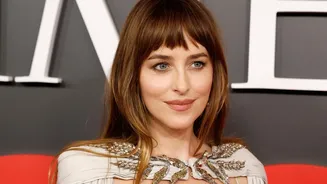






Why Your Hair Texture Matters
Before you commit to a fringe, it's crucial to consider your hair's natural texture. A style can look stunning on a model, but if it fights your hair's density and behaviour, you'll face a daily styling battle. The perfect fringe works with your texture,
not against it, making maintenance easier and ensuring the cut complements your overall look. Whether your hair is fine, thick, wavy, or curly determines which styles will hold their shape and which will fall flat or become bulky. A stylist who understands this relationship can create a fringe that looks just as good when you style it at home as it does leaving the salon.
For Fine or Thin Hair: Creating Fullness
The challenge with fine hair is creating the illusion of fullness without sacrificing precious density from the rest of your hair. Heavy, blunt bangs are often a trap, as they require a lot of hair and can look sparse or separate easily. Instead, opt for lighter, softer styles. Wispy or 'see-through' bangs are an excellent choice because they are delicate and don't require much hair to look intentional. Curtain bangs are another fantastic option, as they part in the middle and sweep outwards, blending seamlessly with the rest of your hair and creating a soft frame. Side-swept bangs can also add flattering diagonal lines and the appearance of more volume.
For Thick Hair: Managing Volume
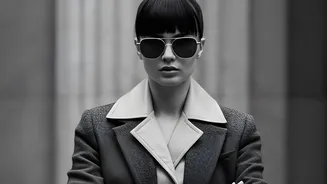
Thick hair provides a dense canvas, making it ideal for structured, statement-making fringes. A classic blunt-cut fringe, cut straight across the forehead, can look incredibly chic and polished on thick hair because there's enough volume to create a solid, clean line. However, thick hair can also appear too heavy or 'puffy' if not handled correctly. To avoid this, a stylist might incorporate texturizing or subtle layering to remove some bulk without losing the shape. Textured, choppy bangs are another great way to manage the weight while adding a modern, piecey finish that’s more forgiving as it grows out.
For Wavy Hair: Embracing Natural Movement
Wavy hair has a natural bend and movement that pairs beautifully with relaxed, effortless fringe styles. Trying to force wavy hair into a severe, blunt fringe can be high-maintenance. It's often better to choose styles that embrace the texture. Curtain bangs are a standout choice, as they naturally fall into a soft, face-framing wave. Shaggy or layered bangs also work well, blending with the hair's layers and enhancing its relaxed feel. A longer, side-swept fringe is another low-fuss option that complements the natural flow of wavy hair.
For Curly and Coily Hair: The Art of the Dry Cut
Getting a fringe with curly hair requires a specialised approach, but the results can be stunning. The most critical rule is that curly bangs should be cut dry, curl by curl. This allows the stylist to see exactly how each curl will sit and account for 'shrinkage'—the tendency for curls to spring up as they dry. Styles that work with the curl pattern, rather than against it, are best. A soft, curly fringe that hangs loosely on the forehead can highlight your features beautifully. Curly curtain bangs are also very popular, as they frame the face while celebrating the hair's natural volume and bounce.