






The Source of the Sparkle
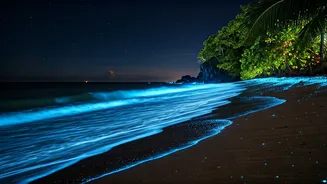
The mesmerising phenomenon lighting up our coastlines is called bioluminescence, often nicknamed 'sea sparkle'. It’s the result of living organisms producing and emitting light. The primary artist behind this marine light show in India is a type of single-celled
plankton called a dinoflagellate, scientifically known as *Noctiluca scintillans*. These microscopic beings are too small to see individually, but when they gather in the millions, their collective glow is powerful enough to transform a dark sea into a scene from a fantasy film. They float near the water's surface, carried by currents, waiting for the right moment to shine.
The Science Behind the Glow
So, why do they glow? It's a defence mechanism. When *Noctiluca* are disturbed—by a crashing wave, a passing boat, or even your feet splashing in the water—they trigger a chemical reaction inside their cells. An enzyme called luciferase acts on a light-producing compound called luciferin. This reaction releases energy in the form of a brilliant blue-green light. The sudden flash is meant to startle potential predators, like small crustaceans, making them vulnerable to their own, larger predators. In essence, the plankton uses light as a burglar alarm, hoping to attract the 'police' to deal with the threat. For us, it’s a breathtaking visual treat; for the plankton, it’s a life-or-death strategy.
Monsoon's Perfect Recipe
This spectacle is intrinsically linked to the monsoon season. The heavy rains wash a huge amount of nutrients from the land into the coastal waters. This influx of freshwater, rich in phosphates and nitrates, creates a feast for the phytoplankton. With an abundant food supply and favourable water temperatures, the *Noctiluca* population explodes, resulting in a 'bloom'. This high concentration of organisms is what makes the bioluminescence so vivid and widespread during and immediately after the monsoon months. The combination of nutrient-rich runoff, water agitation from winds and waves, and the massive plankton bloom creates the perfect conditions for the 'viral' light show we see.
Where to Witness This Magic
While unpredictable, this natural light show has become a major draw in several coastal states. In Maharashtra, beaches like Juhu in Mumbai and those along the Konkan coast, such as Devgad and Velas, have reported stunning displays. Goa is another hotspot, with beaches like Betalbatim, Morjim, and Palolem known for their glowing waves, especially between September and November. Further south, the coast of Karnataka near Udupi and Mangalore has also witnessed the phenomenon. Even the Andaman and Nicobar Islands, particularly Havelock Island, offer opportunities for kayaking through bioluminescent waters, providing an even more immersive experience. The best time to go hunting for the glow is on a dark, moonless night, away from city lights.
A Beautiful Warning Sign?
As enchanting as it is, scientists view these massive *Noctiluca* blooms with caution. While the organism itself is not toxic, it feeds on other plankton, including diatoms, which form the base of many marine food webs. Large blooms of *Noctiluca* can outcompete these essential organisms. Furthermore, as the bloom dies and decomposes, it consumes large amounts of oxygen, which can lead to 'dead zones' where other marine life cannot survive. Some studies suggest that the increasing frequency and intensity of these blooms may be linked to water pollution and rising sea temperatures. So, while we admire the beauty, it also serves as a delicate and complex indicator of the health of our oceans.